DKA is a life-threatening diabetes emergency. Know the warning signs — fruity breath, vomiting, confusion — and when to seek emergency help immediately.
Diabetic ketoacidosis (DKA) is a life-threatening emergency where the body breaks down fat for fuel, producing acidic ketones that accumulate in the blood. It occurs primarily in type 1 diabetes when insulin is severely deficient, and less commonly in type 2. Unlike hyperglycemia, which can sometimes be managed at home, DKA requires immediate emergency treatment — do not wait to see if it improves. Warning signs: excessive thirst, frequent urination, nausea, abdominal pain, fruity breath, confusion, and laboured breathing.
In this article
At a Glance
- DKA is caused by severe insulin deficiency — the body cannot use glucose and burns fat instead, producing ketones.
- Most common in type 1 diabetes but can occur in type 2.
- Warning signs develop over hours — fruity breath, nausea, abdominal pain, rapid deep breathing.
- Blood sugar is usually above 250 mg/dL, but "euglycaemic DKA" can occur at lower levels with SGLT2 inhibitors.
- Ketones in urine or blood confirm DKA — test if blood sugar is above 250 mg/dL and you feel unwell.
- DKA is a medical emergency — call emergency services immediately.
What Causes DKA?
DKA develops when the body has insufficient insulin to allow cells to use glucose for energy. Instead, the body turns to fat stores, breaking them down into fatty acids and converting them to ketones in the liver. As ketones accumulate faster than the body can clear them, blood acidity rises — a state called metabolic acidosis. This process can begin within hours of insulin deficiency and escalates rapidly without intervention.
- Absolute insulin deficiency — forgotten or missed doses in type 1 diabetes.
- Illness or infection — even a mild illness dramatically increases insulin requirements.
- Insulin pump failure — a kinked or dislodged cannula means no insulin delivery for hours.
- Newly diagnosed type 1 diabetes — DKA may be the first presentation.
- SGLT2 inhibitor medications (empagliflozin, dapagliflozin) can rarely cause DKA even at near-normal blood sugar.
- Extreme physical or emotional stress — substantially increases counter-regulatory hormones.
Warning Signs of DKA
Symptoms typically develop over 24 hours and worsen rapidly if untreated.
- Excessive thirst and dry mouth.
- Frequent urination.
- Nausea and vomiting.
- Abdominal pain or stomach cramps.
- Fruity or acetone-smelling breath — caused by exhaled ketones.
- Fatigue and weakness.
- Blurred vision.
- Rapid, deep, laboured breathing (Kussmaul breathing) — the body's attempt to blow off carbon dioxide and compensate for acid.
- Confusion, difficulty concentrating, or altered consciousness — a late sign indicating severe DKA.
How to Check for Ketones
- Urine ketone strips (available without prescription at pharmacies) — dip in urine; results read as negative, trace, small, moderate, or large.
- Blood ketone meters (e.g. Abbott Precision Xtra) provide more accurate readings — above 1.5 mmol/L is significant.
- Check ketones whenever blood sugar is above 250 mg/dL and you feel unwell.
- Check ketones if you have been vomiting or unable to keep fluids down.
- Some CGM systems display a "ketone alert" feature when glucose is persistently high.
When to Call Emergency Services
Do not wait to see if DKA resolves on its own. DKA does not improve without medical treatment, and delaying care significantly worsens outcomes. If you recognise any of the following, act immediately.
- Blood sugar above 300 mg/dL that does not respond to correction doses — call your diabetes team or go to A&E.
- Moderate or large ketones in urine (2+ on a urine strip), or blood ketones above 3.0 mmol/L.
- Vomiting that prevents keeping fluids down for more than 2 hours.
- Fruity breath combined with abdominal pain — a classic DKA presentation.
- Any altered consciousness, confusion, or difficulty breathing — call 999/911 immediately.
DKA Treatment in Hospital
DKA is treated in hospital with IV fluids, IV insulin, and electrolyte replacement. Treatment must be carefully monitored as correcting DKA too rapidly carries its own risks, including cerebral oedema, particularly in children.
- IV fluids correct dehydration and dilute ketones.
- IV insulin stops ketone production and lowers blood sugar.
- Potassium replacement — insulin drives potassium into cells, causing dangerous hypokalaemia without supplementation.
- Continuous monitoring of blood sugar, ketones, and electrolytes until DKA resolves (usually 12–24 hours).
How to Prevent DKA
- Never skip insulin — even if you are not eating (you still need basal insulin).
- Sick-day rules: during illness, check blood sugar and ketones every 2–4 hours and increase fluid intake.
- If blood sugar is above 250 mg/dL with any illness symptoms, check ketones immediately.
- Carry a glucagon kit (or nasal glucagon) and make sure those around you know how to use it.
- If using an insulin pump, learn to recognise pump failure signs and have a backup pen and insulin.
- Know your sick-day plan — discuss it with your diabetes team before you need it.
- Wear a medical ID so emergency responders know you have type 1 diabetes.
DKA in Type 2 Diabetes
DKA was historically considered a type 1 condition, but it can occur in type 2 diabetes, particularly during severe illness, after surgical stress, or in people taking SGLT2 inhibitor medications (such as empagliflozin, dapagliflozin, or canagliflozin). SGLT2 inhibitor-associated DKA is unusual because blood sugar may be only mildly elevated — a phenomenon called euglycaemic DKA. Anyone on an SGLT2 inhibitor who develops DKA symptoms should seek emergency care regardless of their blood sugar reading.
Frequently Asked Questions
How quickly does DKA develop?
DKA typically develops over 24 hours in type 1 diabetes, though it can progress faster with severe insulin deficiency (e.g. a failed pump). Symptoms such as nausea, thirst, and frequent urination appear first, followed by vomiting, abdominal pain, and altered breathing as the condition progresses. In newly diagnosed type 1 diabetes, DKA may develop over several days as insulin deficiency worsens gradually.
What is the difference between DKA and HHS?
DKA (diabetic ketoacidosis) occurs primarily in type 1 diabetes with severe insulin deficiency — ketones are the key feature. HHS (hyperosmolar hyperglycaemic state) occurs in type 2 diabetes with very high blood sugar (often above 600 mg/dL) and severe dehydration — but without significant ketones (some insulin is still present). Both are medical emergencies. HHS has a higher mortality rate than DKA.
Can DKA occur with normal blood sugar?
Yes — this is called euglycaemic DKA. It is most commonly associated with SGLT2 inhibitor medications, which cause glucose to be excreted in the urine, keeping blood sugar near-normal even as ketones accumulate to dangerous levels. Euglycaemic DKA can also occur during pregnancy. It is dangerous precisely because a normal blood sugar reading may provide false reassurance — symptoms and ketone testing are essential.
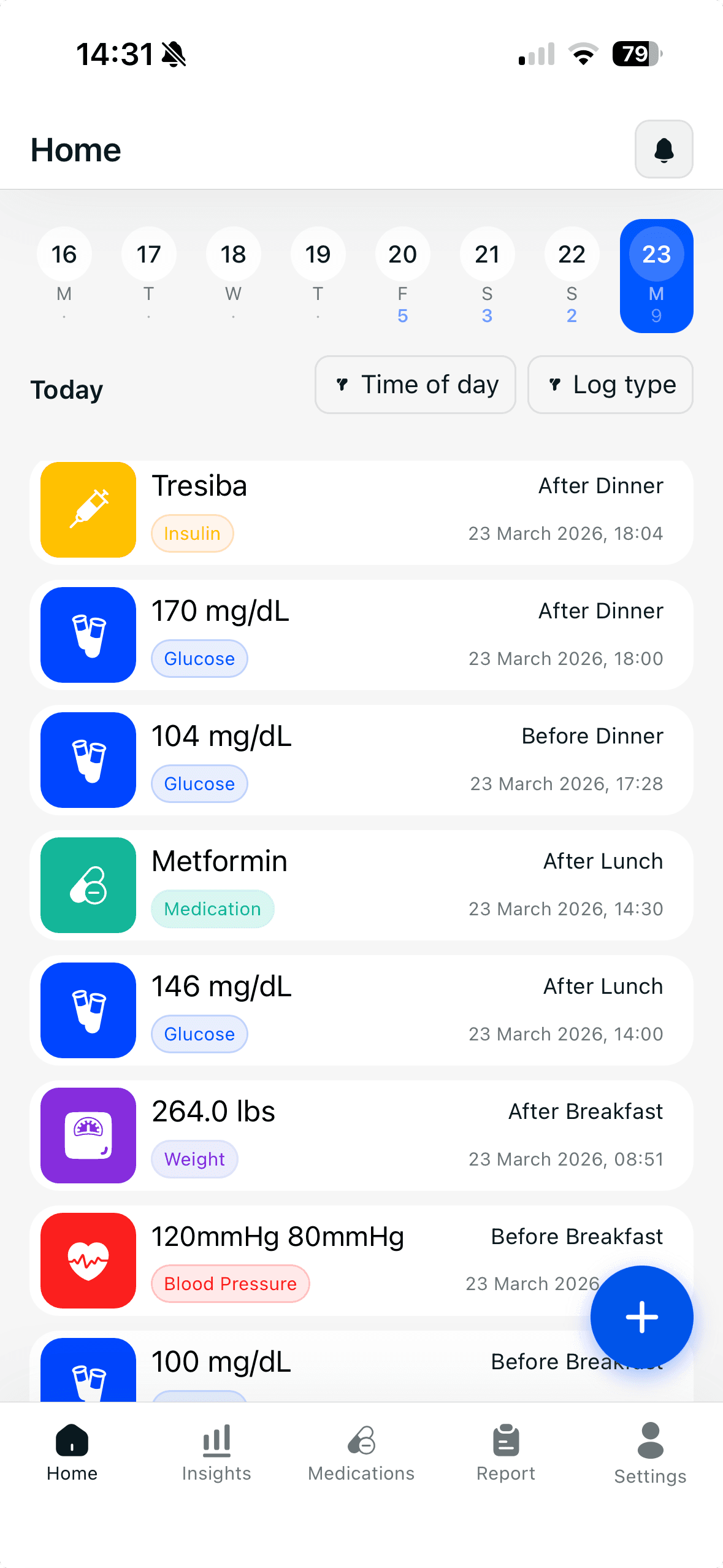
Spot rising blood sugar early by logging readings in Glucoly — free to download with unlimited logging, manual entry or Apple Health/Dexcom sync, plus Glucoly Premium for estimated A1C and detailed reports.
Download GlucolySources
- American Diabetes Association (ADA) — diabetes.org
- NHS — nhs.uk
- Mayo Clinic — mayoclinic.org
- National Institute of Diabetes and Digestive and Kidney Diseases (NIDDK) — niddk.nih.gov
Share this article
Related Posts
What Is LADA (Type 1.5 Diabetes)? Symptoms and How It Differs from Type 1 and Type 2
LADA (type 1.5 diabetes) is autoimmune diabetes that develops slowly in adults, often misdiagnosed as type 2.…
Read more →EducationDiabetic Retinopathy: How Diabetes Affects Your Eyes (and How to Protect Them)
Diabetic retinopathy is the leading cause of blindness in adults — largely preventable. Learn the stages, symp…
Read more →EducationDiabetic Foot Care: How to Prevent Serious Complications
Diabetic foot complications cause 80,000 amputations a year in the US — but 85% are preventable. Learn the dai…
Read more →