Prediabetes often has no symptoms — but it can become Type 2 diabetes in 5 years. Learn the warning signs and 5 evidence-based steps to reverse it now.
Prediabetes is a condition where blood sugar is higher than normal but not yet high enough for a type 2 diabetes diagnosis. The American Diabetes Association defines it as a fasting blood sugar of 100 to 125 mg/dL (5.6 to 6.9 mmol/L), or an A1C of 5.7% to 6.4%. Most people have no symptoms: the CDC estimates 88 million American adults have prediabetes, and more than 84% are unaware.
In this article
- Why Prediabetes Is Often Silent
- Prediabetes Blood Sugar Reference Ranges
- Who Is at Risk of Prediabetes?
- Can You Reverse Prediabetes? What the Evidence Shows
- How Much Weight Loss Helps?
- 5 Proven Steps to Reverse Prediabetes
- How Often Should You Monitor Blood Sugar with Prediabetes?
- How Glucoly Supports Prediabetes Monitoring
- Is prediabetes the same as borderline diabetes?
- How long does it take for prediabetes to turn into type 2 diabetes?
- Does prediabetes cause damage to the body?
- At a Glance: Prediabetes is defined as a fasting blood sugar of 100 to 125 mg/dL (5.6 to 6.9 mmol/L) or an A1C of 5.7% to 6.4%.
- Most people with prediabetes have no symptoms, making screening essential for anyone with risk factors.
- The CDC estimates 88 million American adults have prediabetes; more than 84% do not know it.
- The Diabetes Prevention Program (DPP) trial found that structured lifestyle changes reduced progression to type 2 diabetes by 58% over three years.
- A modest weight loss of 5% to 7% of body weight combined with 150 minutes of moderate activity per week is the evidence-based goal.
- Regular blood sugar monitoring and tracking in Glucoly helps you and your doctor see whether lifestyle changes are working.
Why Prediabetes Is Often Silent
Unlike type 2 diabetes, which can produce noticeable symptoms as blood sugar climbs higher, prediabetes rarely causes any symptoms at all. This is its most dangerous characteristic: without symptoms, most people do not realize anything is wrong until a routine blood test or a full diabetes diagnosis arrives.
A small percentage of people with prediabetes notice subtle signs, including increased thirst, slightly more frequent urination, or unusual fatigue. Acanthosis nigricans, a darkening of the skin in the neck, armpits, or groin, can also signal insulin resistance. However, these signs are non-specific and easily attributed to other causes.
Prediabetes Blood Sugar Reference Ranges
Doctors use three tests to identify prediabetes. These are the diagnostic thresholds established by the American Diabetes Association.
- Fasting plasma glucose, normal: below 100 mg/dL (5.6 mmol/L), measured after at least 8 hours without food.
- Fasting plasma glucose, prediabetes: 100 to 125 mg/dL (5.6 to 6.9 mmol/L).
- Fasting plasma glucose, diabetes: 126 mg/dL (7.0 mmol/L) or above, confirmed on two occasions.
- A1C, normal: below 5.7%.
- A1C, prediabetes: 5.7% to 6.4%.
- A1C, diabetes: 6.5% or above.
- Oral glucose tolerance test (OGTT), prediabetes: 2-hour blood sugar of 140 to 199 mg/dL (7.8 to 11.0 mmol/L) after a 75-gram glucose load.
Who Is at Risk of Prediabetes?
Prediabetes is strongly linked to lifestyle factors, family history, and metabolic health. The ADA recommends screening for anyone with one or more of these risk factors, even without symptoms.
- Overweight or obesity: carrying excess weight, particularly around the abdomen, promotes insulin resistance, the underlying driver of prediabetes.
- Physical inactivity: sedentary behavior reduces insulin sensitivity and increases risk regardless of body weight.
- Age 35 or older: risk increases with age, though prediabetes is increasingly diagnosed in younger adults.
- Family history: having a parent or sibling with type 2 diabetes doubles or triples personal risk.
- History of gestational diabetes or delivering a baby weighing over 9 pounds.
- Certain ethnic backgrounds: Black, Hispanic/Latino, Asian American, and Indigenous populations face disproportionately higher rates.
- Polycystic ovary syndrome (PCOS): associated with significant insulin resistance even in the absence of excess weight.
- History of high blood pressure or abnormal cholesterol levels: both are markers of metabolic dysregulation linked to prediabetes.
Can You Reverse Prediabetes? What the Evidence Shows
Yes, prediabetes can be reversed or substantially delayed. The strongest evidence comes from the Diabetes Prevention Program (DPP), a landmark clinical trial funded by the National Institutes of Health and published in the New England Journal of Medicine.
The DPP found that a structured lifestyle intervention reduced progression from prediabetes to type 2 diabetes by 58% over three years, compared to a placebo group. In adults over 60, the reduction was even greater at 71%. The lifestyle program focused on losing 5% to 7% of body weight and achieving at least 150 minutes of moderate-intensity physical activity per week.
- 58% reduction in progression to type 2 diabetes with lifestyle intervention (DPP trial, New England Journal of Medicine, 2002).
- 71% reduction in adults over 60, the highest benefit of any age group in the trial.
- Metformin, a medication, reduced progression by 31% in the same trial, showing lifestyle changes are nearly twice as effective.
- The CDC-recognized National Diabetes Prevention Program offers structured group programs based on the DPP curriculum. Ask your doctor for a referral.
- Blood sugar improvements are often measurable within weeks of starting consistent lifestyle changes.
How Much Weight Loss Helps?
Weight loss does not need to be dramatic to make a significant difference. Research from the DPP and subsequent studies consistently shows that modest, sustained weight loss has a meaningful impact on blood sugar and insulin sensitivity.
- Goal: lose 5% to 7% of your current body weight. For a person weighing 200 pounds (91 kg), that is 10 to 14 pounds (4.5 to 6.4 kg).
- Even a 5% reduction in body weight has been shown to meaningfully improve insulin sensitivity and lower fasting blood sugar.
- Weight loss achieved through dietary changes and regular walking both independently improve blood sugar; the combination is more effective than either alone.
- Sustaining weight loss over time matters more than rapid initial loss. Focus on gradual, consistent progress.
5 Proven Steps to Reverse Prediabetes
The Diabetes Prevention Program and subsequent research identify five evidence-based lifestyle changes that consistently lower blood sugar and improve insulin sensitivity. These are the same steps used in the CDC-recognized National Diabetes Prevention Program.
- Cut refined carbohydrates and added sugars: reducing white bread, white rice, sugary drinks, and ultra-processed snacks lowers post-meal blood sugar spikes — the primary driver of rising A1C in prediabetes. Focus on vegetables, legumes, whole grains, and lean protein at each meal.
- Walk at least 150 minutes per week: brisk walking five days a week for 30 minutes improves insulin sensitivity within days, independent of weight loss. Resistance training two days per week adds additional benefit by increasing muscle mass, which absorbs glucose more efficiently.
- Lose 5% to 7% of body weight: even modest weight loss — roughly 10 to 14 pounds for a 200-pound person — reduces the risk of progression to type 2 diabetes by 58%, according to the DPP trial. Gradual loss of 0.5 to 1 pound per week is more sustainable than crash dieting.
- Prioritize sleep and manage stress: poor sleep and chronic stress raise cortisol, which directly elevates fasting blood sugar. Aim for 7 to 9 hours of sleep per night and use evidence-based stress reduction techniques such as mindfulness or regular outdoor activity.
- Track your blood sugar, weight, and meals consistently: people who monitor their progress are significantly more likely to sustain lifestyle changes. Log fasting readings and post-meal glucose in a tracker like Glucoly to see which habits are moving your numbers in the right direction.
How Often Should You Monitor Blood Sugar with Prediabetes?
The ADA does not recommend continuous glucose monitoring or daily home testing for most people with prediabetes. However, periodic testing helps confirm whether your lifestyle efforts are moving numbers in the right direction.
- Annual fasting blood sugar or A1C testing is typically recommended for people with prediabetes to track progression or regression.
- If your doctor recommends more frequent home testing, a consistent logging routine in Glucoly makes it easy to see trends over weeks and months.
- People with prediabetes enrolled in a structured prevention program may benefit from more frequent monitoring as motivation and accountability.
- Even without a meter, logging weight, activity, and dietary patterns alongside any blood sugar readings in Glucoly provides context that helps your care team interpret test results.
How Glucoly Supports Prediabetes Monitoring
For people with prediabetes who choose to track blood sugar at home, Glucoly provides a clear, organized record without clinical complexity. It is designed for people at every stage, from prediabetes through active T1D and T2D management.
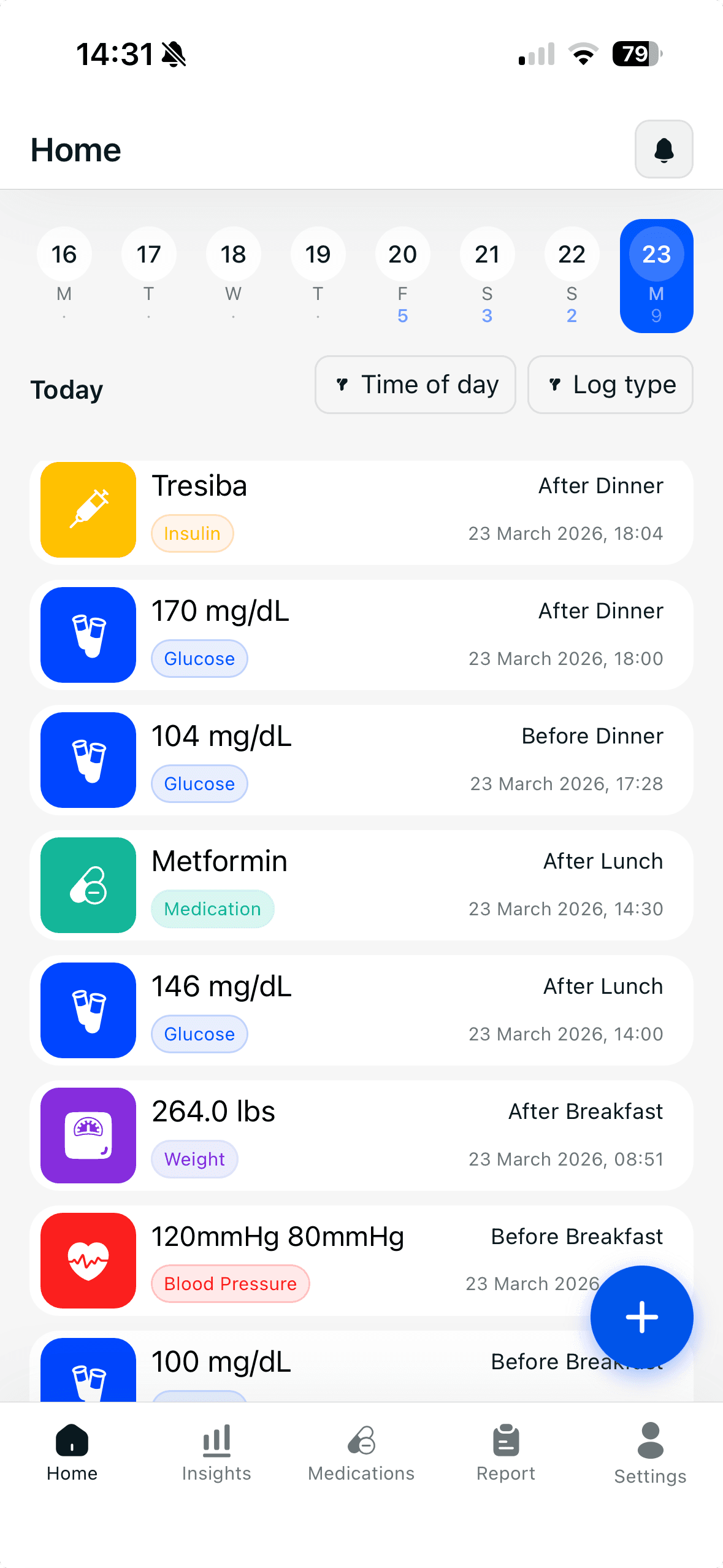
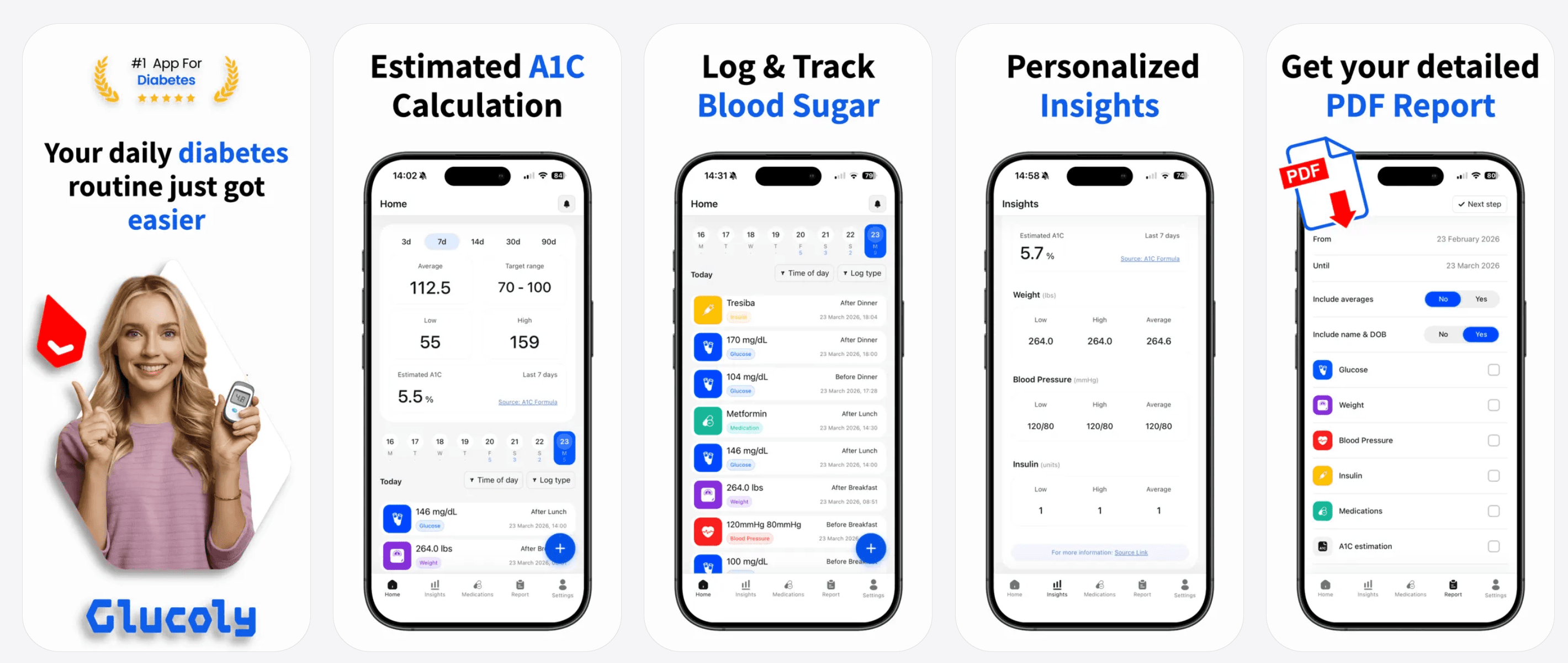
- Log fasting and post-meal blood sugar readings with a tap. Trend windows of 7, 14, 30, and 90 days show whether readings are improving.
- Estimated A1C: Glucoly calculates a daily estimated A1C from your glucose logs, so you can see your long-term average without waiting for a lab visit.
- Weight tracking: monitor your weight alongside blood sugar to see how gradual weight loss correlates with improving glucose readings.
- Doctor-ready PDF export: bring a complete log to your next appointment instead of trying to recall readings from memory.
This article is for general education and is not a substitute for medical advice. Consult your healthcare provider before making changes to your treatment plan. Prediabetes and diabetes diagnoses require confirmation by a qualified clinician using approved laboratory tests.
Frequently Asked Questions
Is prediabetes the same as borderline diabetes?
- Yes. 'Borderline diabetes' is a common informal term for prediabetes, though the clinical term used by the ADA and most healthcare providers is prediabetes.
- Both terms refer to the same blood sugar range: fasting 100 to 125 mg/dL (5.6 to 6.9 mmol/L) or A1C 5.7% to 6.4%.
- The term 'borderline' can be misleading because it implies a lesser condition. Prediabetes is a serious metabolic state that warrants prompt action, as it can progress to type 2 diabetes without intervention.
How long does it take for prediabetes to turn into type 2 diabetes?
- Without lifestyle changes, the ADA estimates that 15% to 30% of people with prediabetes develop type 2 diabetes within 5 years.
- The timeline varies considerably based on individual risk factors, degree of insulin resistance, and how blood sugar levels change over time.
- Prediabetes does not always progress. With sustained lifestyle changes, many people return to normal blood sugar ranges and maintain that improvement long-term.
- Tracking blood sugar consistently and reviewing trends with your doctor is the best way to know where you stand.
Does prediabetes cause damage to the body?
- Research suggests that some long-term complications associated with diabetes, particularly neuropathy (nerve damage), may begin developing even at prediabetes blood sugar levels, before a full diabetes diagnosis.
- Cardiovascular risk is also elevated with prediabetes: a meta-analysis published in The Lancet found that prediabetes increased the risk of cardiovascular disease by approximately 15%.
- This is why the ADA recommends treating prediabetes as a serious risk state requiring active lifestyle intervention, not a wait-and-see situation.
Sources
- American Diabetes Association. Standards of Medical Care in Diabetes 2024. diabetes.org
- Centers for Disease Control and Prevention. National Diabetes Statistics Report 2024. cdc.gov/diabetes
- Knowler WC, et al. Reduction in the incidence of type 2 diabetes with lifestyle intervention or metformin (DPP). New England Journal of Medicine. 2002.
- Centers for Disease Control and Prevention. National Diabetes Prevention Program. cdc.gov/diabetes/prevention
Track your blood sugar and spot patterns with Glucoly - free on iOS and Android.
Download GlucolyShare this article
Related Posts
What Is LADA (Type 1.5 Diabetes)? Symptoms and How It Differs from Type 1 and Type 2
LADA (type 1.5 diabetes) is autoimmune diabetes that develops slowly in adults, often misdiagnosed as type 2.…
Read more →EducationDiabetic Retinopathy: How Diabetes Affects Your Eyes (and How to Protect Them)
Diabetic retinopathy is the leading cause of blindness in adults — largely preventable. Learn the stages, symp…
Read more →EducationWhat Is Diabetic Ketoacidosis (DKA)? Warning Signs You Must Know
DKA is a life-threatening diabetes emergency. Know the warning signs — fruity breath, vomiting, confusion — an…
Read more →