People with diabetes can generally donate blood if their condition is well-controlled. Learn the eligibility rules, what disqualifies you, and how to prepare safely.
People with diabetes can generally donate blood - but a few conditions apply. Your diabetes must be well-controlled, you must feel well on donation day, and you must be free of complications that affect donation safety. Both Type 1 and Type 2 diabetes are accepted by most blood banks worldwide, and insulin use alone is not a reason for deferral in most countries. Always confirm the specific rules with your local blood donation center before booking an appointment.
In this article
- General Eligibility: What Most Blood Banks Require
- Type 1 Diabetes and Blood Donation
- Type 2 Diabetes and Blood Donation
- What Disqualifies You from Donating Blood?
- Pre-Donation Tips for People with Diabetes
- What to Expect After Donating Blood
- How Glucoly Helps You Prepare and Recover
- Can Type 1 diabetics donate blood?
- Does donating blood affect blood sugar?
- Can I donate blood if I take Metformin?
- At a Glance: Most people with diabetes can donate blood if their condition is well-controlled.
- Insulin use (Type 1 or Type 2) is generally accepted by major blood banks.
- GLP-1 medications such as semaglutide (Ozempic, Wegovy) may carry a deferral period - check with your blood bank before donating.
- A recent hypoglycemic episode or uncontrolled glucose on donation day will likely defer you.
- Eat a full meal, stay hydrated, and check your glucose before heading to the donation center.
- Blood sugar may dip after donation - monitor carefully and bring snacks for the recovery period.
General Eligibility: What Most Blood Banks Require
The core requirements for donating blood with diabetes are the same as for any donor, with a few additional checkpoints. Most donation centers follow guidelines from organizations such as the American Red Cross, NHS Blood and Transplant, or their national equivalents - and the rules are broadly similar across high-income countries.
In general, you are eligible to donate blood if your diabetes is well-controlled, you feel healthy on the day, you have not had a recent hypoglycemic episode, and your glucose-related complications do not affect your veins or overall donation safety. Meeting these conditions, your blood is as safe and valuable as any other donor's.
- Diabetes must be well-controlled - most centers assess this based on how you feel and whether you have any acute symptoms on the day.
- You must meet the standard weight, age, and hemoglobin requirements for your donation center.
- You must not have experienced a hypoglycemic episode recently - typically within the last few days to a week, depending on the center.
- Certain diabetes-related complications may disqualify you - see the section on disqualifying conditions below.
- Requirements differ by country and by individual blood bank - call ahead or check your center's website before assuming you are eligible.
Type 1 Diabetes and Blood Donation
Type 1 diabetes does not automatically disqualify you from donating blood. Insulin use is accepted at most major blood banks, including the American Red Cross, which states that insulin-dependent diabetes does not disqualify a donor as long as the condition is well-managed. The key concern is not the insulin itself - it is whether your glucose is stable and your health is otherwise good.
Requirements specific to Type 1 may vary slightly by country. In the UK, NHS guidelines allow donation for Type 1 diabetes provided you have no significant complications affecting circulation or veins. Some smaller or regional donation centers have older or more conservative policies - always verify with your specific center directly.
- Insulin use (basal, bolus, or pump therapy) is generally accepted at major blood banks.
- Your glucose must be within a stable, controlled range - not acutely elevated or recently low.
- No severe hypoglycemic episode in the days leading up to donation - the exact timeframe varies by center.
- Complications such as proliferative retinopathy or severe peripheral neuropathy may disqualify you.
- Call your donation center directly if you are unsure - policies vary and staff can give you a definitive answer.
Type 2 Diabetes and Blood Donation
Type 2 diabetes is also generally compatible with blood donation. Oral medications such as metformin are widely accepted and do not trigger a deferral. Most standard Type 2 medications - sulfonylureas, DPP-4 inhibitors, SGLT-2 inhibitors - are also accepted at the major blood banks.
The newer class of GLP-1 receptor agonists - including semaglutide (Ozempic, Wegovy) and liraglutide (Victoza) - is where the picture is less uniform. Some donation centers have introduced deferral periods for these medications as their use has grown. The deferral is not because your blood is unsafe, but because the medication is relatively new and some centers are being cautious. Always check with your specific blood bank.
- Metformin: widely accepted at virtually all major blood banks, no deferral required.
- Sulfonylureas (glipizide, glimepiride, glyburide): generally accepted.
- DPP-4 inhibitors (sitagliptin, saxagliptin): generally accepted.
- SGLT-2 inhibitors (empagliflozin, dapagliflozin): generally accepted at most centers.
- GLP-1 receptor agonists (semaglutide/Ozempic, liraglutide/Victoza): some centers require a deferral period - confirm before donating.
- Insulin (all types): generally accepted at major blood banks.
What Disqualifies You from Donating Blood?
While most people with well-controlled diabetes can donate, certain circumstances will defer or disqualify you. Being aware of these before you go saves time and avoids disappointment at the donation center.
- Uncontrolled glucose on donation day: if your blood sugar is acutely elevated or you have been experiencing frequent swings, most centers will defer you until your control improves.
- Recent hypoglycemic episode: a severe low in the recent past is a deferral trigger at many centers - the exact timeframe varies by location.
- Proliferative diabetic retinopathy: a significant complication affecting the blood vessels in your eyes may disqualify donation in some programs.
- Severe peripheral neuropathy affecting the arms or hands: if neuropathy makes it difficult to safely access a vein, donation is not practical.
- Diabetes-related kidney disease (advanced stages): may result in deferral depending on severity and the center's policy.
- Recent changes in medication: some centers ask you to wait a period after starting a new medication - check if your regimen has changed recently.
- Feeling unwell on the day: if you have any acute illness, infection, or simply feel off, postpone until you are fully recovered.
Pre-Donation Tips for People with Diabetes
Preparing well before donation day reduces the risk of low blood sugar during or after the process and makes for a smoother experience. The donation itself takes only about 10 minutes, but the preparation starts the day before.
- Eat a full, balanced meal in the two to three hours before donation - do not go in fasting or on a light snack.
- Stay well-hydrated: drink extra water in the 24 hours before and another 500 mL (about 16 oz) in the hour just before.
- Check your glucose before leaving home and again at the donation center - most centers will ask about your glucose status.
- Bring a fast-acting glucose source (glucose tablets, juice, or candy) - not just for the recovery period, but in case you feel low during the wait.
- Let the staff know you have diabetes before the process begins - they can monitor you accordingly.
- Avoid strenuous exercise on donation day and the day after.
What to Expect After Donating Blood
After donating, your blood volume temporarily decreases, and your body works to restore it over the following 24–48 hours. For people with diabetes, the post-donation period deserves a little extra attention, because blood sugar can shift unexpectedly as your body adjusts.
Most donation centers provide a recovery snack after donation - accept it. The combination of fluid loss and metabolic adjustment can cause blood glucose to dip, particularly if you are on insulin or a medication that lowers blood sugar. Monitoring your readings in the hours after donation helps you catch and respond to any dip before it becomes a problem.
- Rest for at least 15–20 minutes at the donation center before leaving.
- Eat and drink at the recovery station - do not skip this even if you feel fine.
- Check your glucose again 1–2 hours after donation to see how your body is responding.
- Avoid vigorous exercise for the rest of the day.
- If you feel lightheaded, sit or lie down immediately and let a staff member know.
- Monitor more frequently than usual for the rest of the day if you are on insulin.
How Glucoly Helps You Prepare and Recover
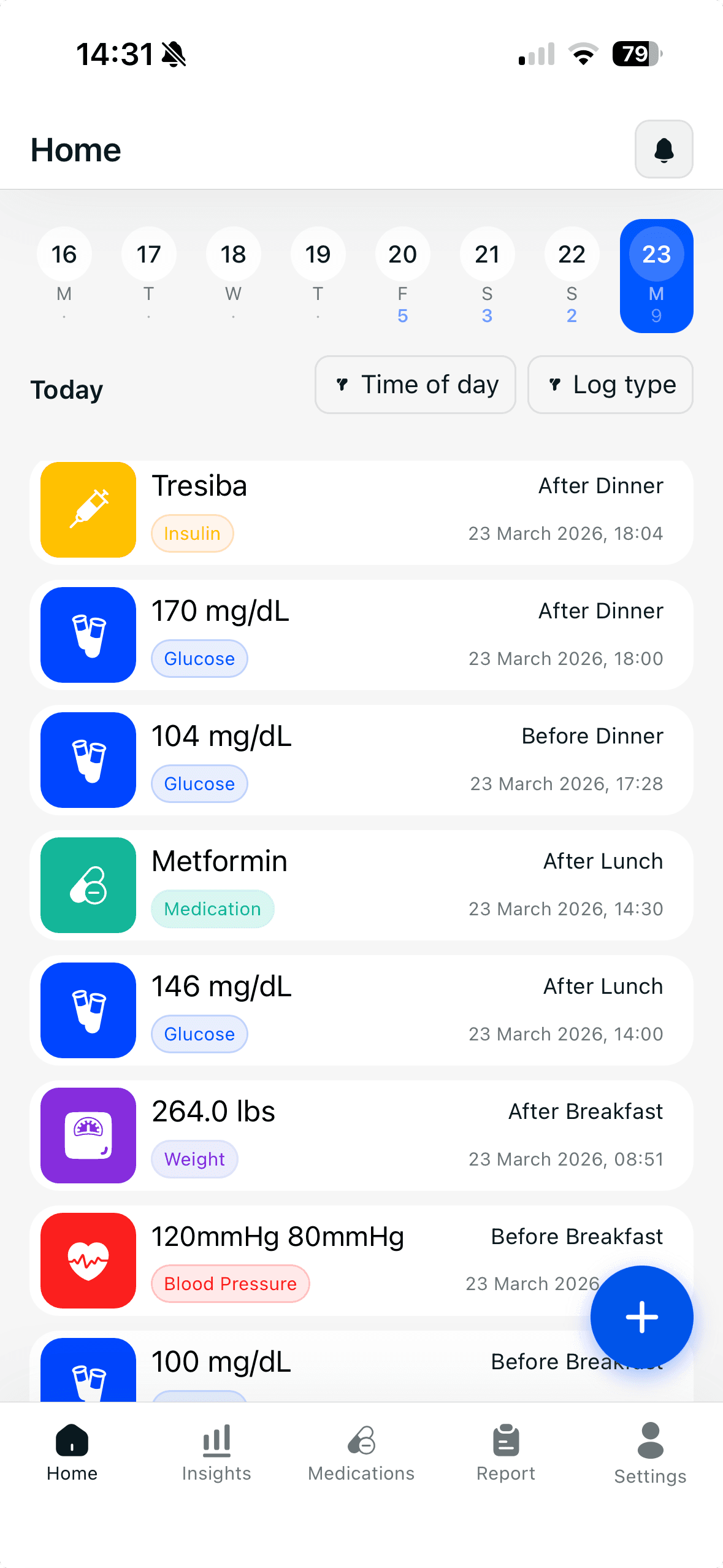
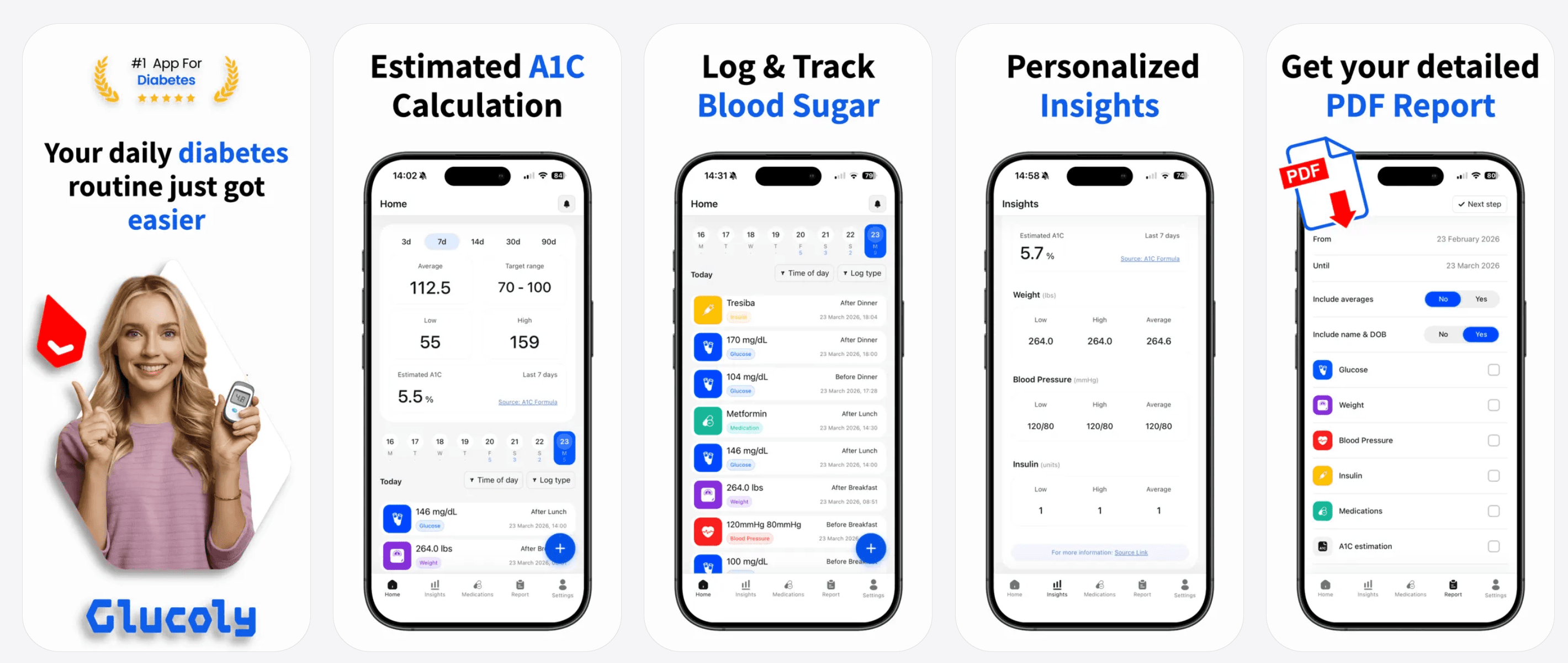
Logging your glucose before and after donation in Glucoly gives you a clear picture of how your body responds to the process. Over one or two donation experiences, you will be able to see your typical pre-donation baseline, how much your glucose shifts post-donation, and whether your usual eating strategy keeps you stable.
Glucoly's before/after meal tagging can also be adapted for donation day - tag the readings relative to your donation time so the data is organized and easy to interpret. If you donate regularly, the 30-day trend window in Glucoly lets you compare donation days against your typical patterns.
This article is for general education and is not medical advice. Consult your healthcare provider before making changes to your treatment plan or if you are unsure whether it is safe for you to donate blood.
Frequently Asked Questions
Can Type 1 diabetics donate blood?
- Yes, in most countries. Type 1 diabetes and insulin use do not automatically disqualify you from donating blood at major blood banks, including the American Red Cross.
- Your diabetes must be well-controlled and you must feel healthy on the day of donation.
- Certain complications - such as proliferative retinopathy or severe peripheral neuropathy - may result in deferral depending on the center.
- Always call your local donation center to confirm their specific policy for Type 1 diabetes, as rules can vary between centers and countries.
Does donating blood affect blood sugar?
- Yes, donating blood can cause a temporary shift in blood glucose levels. The volume loss and your body's metabolic response can cause blood sugar to dip in the hours after donation.
- Eating a full meal before donation and accepting the recovery snack provided afterward helps minimize this effect.
- People on insulin should monitor their glucose more frequently for the rest of the day after donating.
- If you experience lightheadedness, sweating, or confusion after donation, treat it as a potential low and test your glucose immediately.
Can I donate blood if I take Metformin?
- Yes. Metformin is one of the most widely prescribed diabetes medications and is accepted at virtually all major blood donation centers.
- Metformin does not affect the safety of your donated blood for the recipient.
- Other common Type 2 medications - DPP-4 inhibitors, SGLT-2 inhibitors, sulfonylureas - are also generally accepted.
- GLP-1 receptor agonists (such as semaglutide/Ozempic) may have a deferral period at some centers - always confirm before donating if you take one of these medications.
Sources
- American Red Cross. Eligibility Criteria. redcrossblood.org/donate-blood/how-to-donate/eligibility-requirements
- National Health Service. Blood donation. nhs.uk
- American Diabetes Association. Standards of Medical Care in Diabetes 2024. diabetes.org
Log your glucose before and after donation and track your response over time with Glucoly - free on the App Store and Google Play.
Download GlucolyShare this article
Related Posts
What Is LADA (Type 1.5 Diabetes)? Symptoms and How It Differs from Type 1 and Type 2
LADA (type 1.5 diabetes) is autoimmune diabetes that develops slowly in adults, often misdiagnosed as type 2.…
Read more →EducationDiabetic Retinopathy: How Diabetes Affects Your Eyes (and How to Protect Them)
Diabetic retinopathy is the leading cause of blindness in adults — largely preventable. Learn the stages, symp…
Read more →EducationWhat Is Diabetic Ketoacidosis (DKA)? Warning Signs You Must Know
DKA is a life-threatening diabetes emergency. Know the warning signs — fruity breath, vomiting, confusion — an…
Read more →