Eating well with diabetes isn't about banning foods - it's about balance and patterns. Practical principles for meals that keep your glucose steadier.
There's no single “diabetes diet,” and no food is truly off-limits. What matters most is the pattern: how you combine foods, how much, and when. A few simple principles can make your meals far gentler on your blood sugar - without feeling like a punishment.
In this article
It's about patterns, not perfection
One meal won't make or break your control. Consistency over weeks is what moves your averages. Aim for meals you can repeat happily, rather than a strict plan you'll abandon. The goal is steadier glucose most of the time, not a flawless record.
Build a balanced plate
A reliable starting point: fill half your plate with non-starchy vegetables, a quarter with lean protein, and a quarter with smart carbohydrates like whole grains, beans, or fruit. Adding protein, fiber, and healthy fat slows digestion, which blunts the spike that carbohydrates alone would cause.
Carbohydrates and timing
Carbs raise blood sugar the most, but they're not the enemy - quality and quantity are what count. Favor high-fiber, less-refined carbs over sugary or highly processed ones, and keep portions consistent from day to day so your readings become predictable and easier to interpret.
Find your personal triggers
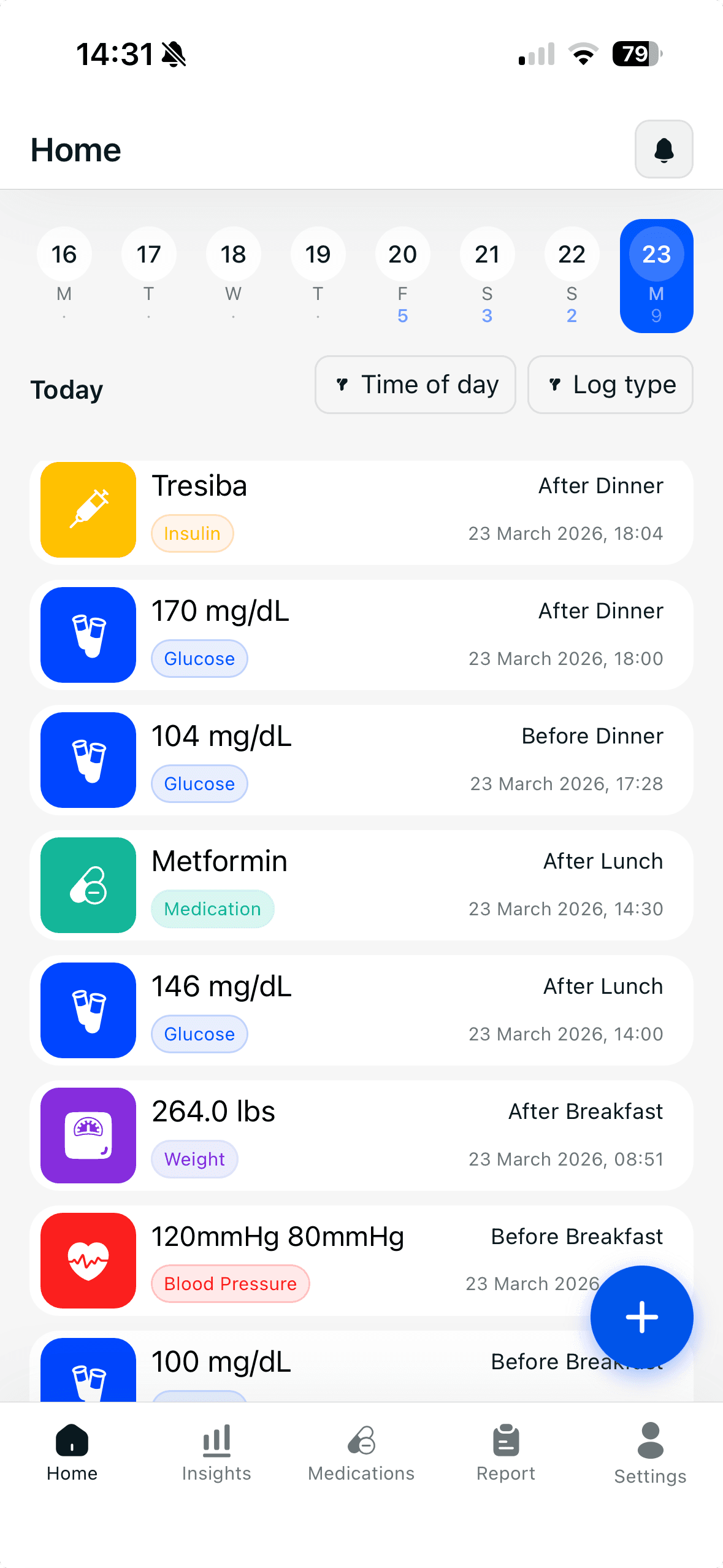
Everyone responds to food a little differently. The only way to know how a meal affects you is to check your blood sugar before and a couple of hours after eating, and log it. Over time you'll spot which meals keep you steady and which send you climbing - and you can adjust with confidence.
Easy swaps that add up
- Swap white bread, rice, and pasta for whole-grain versions.
- Choose water or unsweetened drinks over sugary beverages.
- Add a source of protein or healthy fat to carb-heavy snacks.
- Front-load vegetables and protein, and eat carbs last in the meal.
Frequently Asked Questions
What foods should people with diabetes avoid?
No single food is strictly forbidden, but foods that spike blood sugar quickly or offer little nutritional value are worth limiting. These include sugary drinks (soda, juice, sweetened coffee), highly refined carbohydrates (white bread, pastries, breakfast cereals), and heavily processed snacks. Even these can occasionally fit into a balanced plan - portion size and what you pair them with matter more than blanket avoidance.
Can people with diabetes eat carbohydrates?
Yes - carbohydrates are a normal part of eating and are not off-limits. The key is choosing higher-quality carbs (whole grains, legumes, vegetables, fruit) over refined and sugary ones, keeping portion sizes consistent, and pairing carbs with fiber, protein, or healthy fat to slow digestion. Spreading carbohydrate intake evenly across meals also helps keep glucose steadier throughout the day.
What is the best diet for managing blood sugar?
No single diet works for everyone with diabetes, but patterns consistently supported by research include a Mediterranean-style diet (rich in vegetables, legumes, olive oil, fish, and whole grains), a low-carbohydrate approach, and the DASH diet. What matters most is finding a pattern you can sustain, that keeps your glucose in range, and that you enjoy eating. Working with a registered dietitian who specialises in diabetes can help you tailor an approach to your lifestyle.
Sources
- American Diabetes Association. Diabetes Food Hub. diabetes.org/food-nutrition
- Centers for Disease Control and Prevention. Diabetes and Healthy Eating. cdc.gov/diabetes/healthy-eating
Track how meals affect your glucose with Glucoly - free on the App Store and Google Play.
Download GlucolyShare this article
Related Posts
How Protein Affects Blood Sugar Levels in Diabetes
Protein raises blood sugar slowly and much less than carbs. Learn how gluconeogenesis works, best protein sour…
Read more →NutritionCarb Counting for Diabetes: A Beginner's Step-by-Step Guide
Carb counting helps you manage blood sugar by tracking grams of carbs per meal. This beginner guide covers how…
Read more →NutritionIntermittent Fasting for Type 2 Diabetes: Does It Work?
Intermittent fasting can lower A1C and blood sugar in type 2 diabetes — but carries hypoglycemia risk with ins…
Read more →