Traveling with diabetes is safe with the right preparation. This guide covers packing, airport security, keeping insulin cool, and managing time zones.
Traveling with diabetes requires extra preparation but should not limit where you go. Key steps: pack double the supplies you need, carry a letter from your doctor, keep insulin at the right temperature, adjust insulin timing for time zone changes, plan for airport security screening, and always carry fast-acting carbohydrates for hypoglycemia. With the right preparation, people with diabetes travel safely to any destination.
In this article
- What to Pack: The Essential Diabetes Travel Checklist
- Doctor's Letter: What It Should Include
- Navigating Airport Security with Diabetes Supplies
- Keeping Insulin Safe During Travel
- Managing Blood Sugar Across Time Zones
- Eating and Blood Sugar Management Abroad
- Travel Health Insurance and Emergency Preparation
- Can I take insulin on a plane?
- How do I keep insulin cool while traveling?
- Do I need to tell the airline I have diabetes?
At a Glance
- Pack twice the medication and supplies you expect to need.
- Always carry diabetes supplies in your carry-on — never check them.
- Get a letter from your doctor listing medications, devices, and needles.
- Insulin must be kept cool (2–8°C / 36–46°F) — use a travel insulin cooling case.
- Check blood sugar more frequently when your routine changes.
- Time zone changes require insulin timing adjustments — discuss with your diabetes team before long-haul flights.
What to Pack: The Essential Diabetes Travel Checklist
- Insulin pens or vials (at least double your expected needs).
- Syringes or pen needles.
- Glucometer and extra test strips.
- CGM sensors and transmitter (bring backups).
- Insulin cooling wallet or Frio cooling case.
- Lancets and lancing device.
- Glucose tablets or fast-acting carbohydrates for hypoglycemia.
- Medical ID bracelet or card.
- Doctor's letter (in English and the destination language if possible).
- Prescription labels on all medications.
- Ketone urine strips (especially for type 1).
- Glucagon emergency kit or nasal glucagon (Baqsimi).
Doctor's Letter: What It Should Include
A letter from your doctor is essential for passing through airport security with medical supplies and for getting emergency care abroad.
- Your name and date of birth.
- Diagnosis (type 1 or type 2 diabetes).
- List of all medications with generic names and doses.
- List of devices (insulin pump, CGM, glucometer) with explanation of why they are needed.
- That you carry needles and syringes for medical reasons.
- Doctor's name, signature, clinic address, and contact number.
Navigating Airport Security with Diabetes Supplies
- Inform the security officer before screening that you have diabetes and carry medical supplies.
- Insulin pumps and CGMs can go through body scanners — they should not go through X-ray machines (ask for hand inspection).
- Glucometers, insulin pens, and syringes are permitted in carry-on baggage.
- Liquid insulin is exempt from the 100ml liquids rule in most countries (EU, UK, US) — keep it in its original packaging with the prescription label.
- Pre-filled syringes may need to be in a clear bag.
- In the US, TSA Notification Cards for medical conditions are available to discreetly inform officers.
- Allow extra time at security.
Keeping Insulin Safe During Travel
Insulin loses potency when exposed to temperature extremes — above 30°C (86°F) or below freezing.
- Use a Frio cooling case (activated with water, keeps insulin at 18–26°C for 45+ hours without refrigeration) — ideal for flights and beach holidays.
- In hotels, store insulin in the fridge (not the freezer).
- On flights, keep insulin in your carry-on — cargo holds can freeze.
- In hot climates, never leave insulin in a hot car.
- Opened insulin pens are stable at room temperature (under 30°C) for 28 days.
Managing Blood Sugar Across Time Zones
Long-haul travel across time zones disrupts insulin timing schedules, especially for type 1 and people on fixed basal-bolus regimens.
- Consult your diabetes care team before travel to plan the insulin schedule adjustment.
- Travelling east (shortening the day) generally means taking less long-acting insulin that day.
- Travelling west (lengthening the day) generally means needing extra insulin.
- Set reminders on your phone for medication times in the new time zone.
- Check blood sugar more frequently during the first 24–48 hours after arrival.
Eating and Blood Sugar Management Abroad
- Research local cuisine before you travel — unfamiliar foods make carb estimation harder.
- Keep fast-acting carbohydrates (glucose tablets, fruit juice) accessible at all times.
- Be cautious with buffet-style meals and all-inclusive holidays where overeating is easy.
- Alcohol and sun/heat both lower blood sugar — be extra vigilant at beach destinations.
- If unsure about a meal's carb content, check blood sugar 2 hours after eating.
- Carry snacks in your bag for days when meals are delayed or unpredictable.
Travel Health Insurance and Emergency Preparation
- Always declare diabetes on travel insurance — failure to disclose may invalidate your policy.
- Check that your policy covers medical care abroad including medication and hospitalisation.
- Look up the nearest hospital or clinic to your accommodation before you arrive.
- Carry a list of your medications in the local language for emergency situations.
- Know the local emergency number (not just 999 or 911 — it varies by country).
Frequently Asked Questions
Can I take insulin on a plane?
Yes. Insulin is classified as a medical liquid and is exempt from standard carry-on liquid restrictions (the 100ml rule) in most countries including the US, UK, and EU. Keep insulin in its original packaging with the prescription label and carry your doctor's letter. Always pack insulin in your carry-on — never in checked baggage, as cargo holds can reach freezing temperatures that permanently damage insulin.
How do I keep insulin cool while traveling?
The most practical option for most travelers is a Frio cooling case — a reusable fabric wallet that keeps insulin at a safe temperature (18–26°C) for 45+ hours when activated with cold water. No electricity or ice is needed. In hotels, store insulin in the minibar or room fridge (not the freezer). Avoid leaving insulin in a hot car, in direct sunlight, or in checked luggage.
Do I need to tell the airline I have diabetes?
You are not required to disclose your diabetes diagnosis to the airline, but it is recommended for longer flights. Informing the crew means they can assist if you experience a hypoglycemic episode. You can request a diabetic meal on many airlines when booking. If you use an insulin pump, inform cabin crew so they understand your device if it alarms.
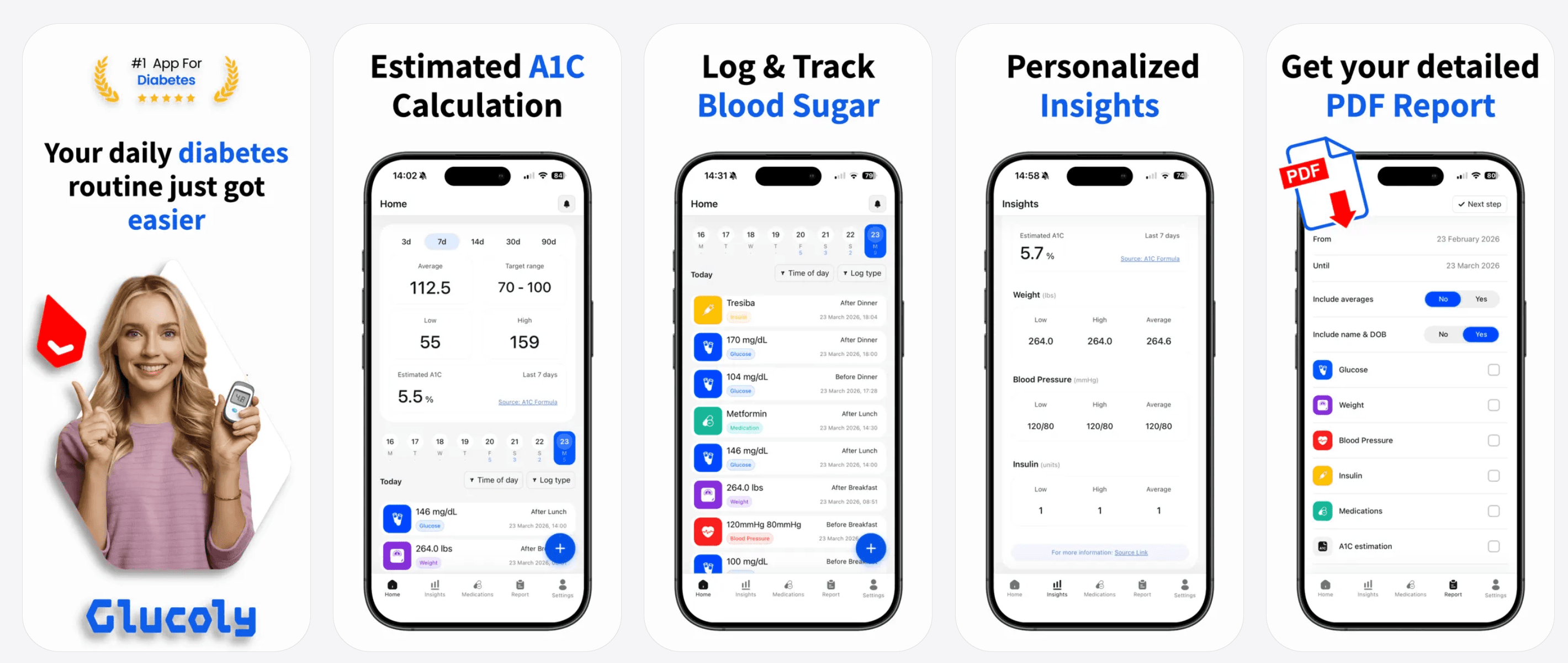
Keep your logs with you wherever you go — Glucoly works offline and syncs from Apple Health and Dexcom. Free to download with unlimited logging; Glucoly Premium adds estimated A1C and detailed reports.
Download GlucolySources
- American Diabetes Association (ADA) — diabetes.org
- Diabetes UK — diabetes.org.uk
- Transportation Security Administration (TSA) — tsa.gov
- NHS — nhs.uk
Share this article
Related Posts
How Stress Affects Blood Sugar Levels (And What to Do About It)
Stress raises blood sugar directly through cortisol and adrenaline. Learn why it happens, how to spot the patt…
Read more →LifestyleHow Exercise Affects Blood Sugar — and How to Manage It
Exercise lowers blood sugar for up to 24–48 hours, but intense workouts can cause temporary spikes. Learn how…
Read more →LifestyleHow Sleep Affects Blood Sugar Levels: The Diabetes Connection
Sleep directly affects how your body processes glucose. Learn how poor or inconsistent sleep disrupts blood su…
Read more →