Stress raises blood sugar directly through cortisol and adrenaline. Learn why it happens, how to spot the pattern, and 6 evidence-based ways to manage it.
Stress raises blood sugar directly — cortisol and adrenaline released during stressful events signal the liver to release stored glucose and reduce insulin sensitivity. This response is designed to fuel the body for a “fight or flight” emergency. In people with diabetes, this glucose surge is not efficiently cleared, causing readings to spike even without eating. Chronic stress compounds the problem by keeping cortisol elevated around the clock.
In this article
- The Science: How Stress Raises Blood Sugar
- Physical vs Emotional Stress: Both Raise Blood Sugar
- How to Tell If Stress Is Affecting Your Blood Sugar
- Strategies to Reduce Stress-Related Blood Sugar Spikes
- Stress and Diabetes Management Behaviour
- When to Seek Help for Stress and Diabetes
- Can stress cause type 2 diabetes?
- How quickly does stress raise blood sugar?
- Does mindfulness actually work for blood sugar?
At a Glance
- Physical and emotional stress both raise blood sugar through cortisol and adrenaline release
- Cortisol reduces insulin sensitivity — cells become less responsive, leaving more glucose in the bloodstream
- Even short-term stress (a difficult meeting, an argument) can spike blood sugar by 20–50 mg/dL
- Chronic stress keeps cortisol elevated, worsening insulin resistance over time
- Stress also disrupts eating habits, sleep, and medication adherence — indirectly worsening blood sugar control
- Mind-body strategies (exercise, sleep, mindfulness) measurably reduce cortisol and improve blood sugar
The Science: How Stress Raises Blood Sugar
When the brain perceives a threat — whether physical danger or emotional pressure — it activates the hypothalamic-pituitary-adrenal (HPA) axis and the sympathetic nervous system. This triggers a rapid hormonal cascade designed to prepare the body for immediate action. The result is a sharp rise in blood glucose that serves as fuel for muscles and the brain during a perceived emergency. Understanding this mechanism explains why stress management is inseparable from blood sugar management.
- The hypothalamus detects a stressor and triggers the release of cortisol from the adrenal glands
- Cortisol stimulates the liver to release stored glycogen as glucose — the body prepares fuel for action
- Adrenaline (epinephrine) is released simultaneously, further stimulating glucose release and reducing insulin action
- These hormones also suppress insulin secretion from the pancreas — a deliberate survival mechanism
- In people without diabetes: insulin quickly clears the stress-induced glucose surge within 30–60 minutes
- In people with diabetes: insufficient insulin means the surge persists, causing elevated readings
Physical vs Emotional Stress: Both Raise Blood Sugar
Many people associate blood sugar spikes only with food, but the stress response does not distinguish between a physical threat and a psychological one. Whether your body is fighting an infection or your mind is racing before a difficult conversation, the cortisol response is real and the blood sugar impact is measurable. The magnitude varies — but all forms of stress can affect your readings.
- Physical stress (illness, injury, surgery, infection): causes a large, sustained cortisol release that can double fasting blood sugar within hours
- Emotional stress (work pressure, relationship conflict, financial worry): causes a smaller but still significant cortisol spike
- Anticipatory stress (waiting for test results, public speaking): can raise blood sugar before the event even happens — the brain triggers the response just from anticipation
- Acute vs chronic: a single stressful event spikes blood sugar temporarily; chronic stress keeps cortisol elevated, worsening long-term control
- Sleep deprivation: even one night of poor sleep raises cortisol the next day, worsening insulin resistance
How to Tell If Stress Is Affecting Your Blood Sugar
- Track your blood sugar alongside a simple stress log — note what you were doing when readings were unexpectedly high
- Use a CGM to see real-time spikes during stressful moments — patterns become obvious within days
- Look for unexplained highs on days that feel particularly stressful, busy, or sleep-deprived
- Check blood sugar before and after known stressors (a difficult conversation, a deadline, a medical appointment)
- Higher A1C without changes in diet or medication often signals chronic stress as a hidden factor
Strategies to Reduce Stress-Related Blood Sugar Spikes
No single strategy eliminates stress entirely, but a combination of evidence-based approaches can significantly reduce both cortisol levels and the blood sugar impact of daily stressors. The most effective interventions address stress directly at the physiological level — lowering cortisol in the body, not just changing how you think about a situation. Understanding how exercise affects blood sugar is particularly useful here: physical activity clears both cortisol and excess glucose from the bloodstream simultaneously.
- Exercise: the most effective cortisol-reducer — even a 10-minute walk after a stressful event clears both adrenaline and excess glucose
- Deep breathing (diaphragmatic breathing): activates the parasympathetic nervous system, lowering cortisol within minutes
- Mindfulness and meditation: regular practice reduces baseline cortisol levels and improves A1C modestly in clinical studies
- Sleep: aim for 7–9 hours — cortisol naturally drops during sleep; chronic sleep deprivation is one of the most underrated causes of poor blood sugar control
- Social support: talking about stress (to a friend, therapist, or support group) reduces cortisol more effectively than distraction alone
- Reduce caffeine: caffeine amplifies cortisol response, especially in the morning — consider switching to green tea or decaf during high-stress periods
Stress and Diabetes Management Behaviour
Stress does not only raise blood sugar directly through hormones — it also affects behaviour. Under high stress, people are more likely to skip medication doses, eat emotionally (reaching for comfort foods), miss exercise, sleep less, and neglect blood sugar monitoring. Each of these behaviours compounds the direct hormonal effect. Addressing stress is therefore not just about wellbeing — it is a core component of effective diabetes management.
When to Seek Help for Stress and Diabetes
- If stress is consistently causing blood sugar readings outside your target range despite your best efforts
- If you notice symptoms of anxiety or depression — both are significantly more common in people with diabetes and both worsen glycaemic control
- If you are regularly skipping medication, meals, or monitoring because of stress or low motivation
- Diabetes distress (burnout from the daily demands of managing the condition) is a real and common phenomenon — ask your diabetes team about psychological support
- A diabetes care team that includes a mental health professional or counsellor is considered best practice by the ADA
Frequently Asked Questions
Can stress cause type 2 diabetes?
Chronic stress does not directly cause type 2 diabetes, but it is a significant contributing factor. Sustained high cortisol causes prolonged insulin resistance and promotes weight gain (particularly abdominal fat), which increases type 2 diabetes risk. People under long-term chronic stress are at higher risk of developing prediabetes and progressing to type 2 diabetes.
How quickly does stress raise blood sugar?
The effect is rapid — cortisol and adrenaline act within minutes of a stressor, and blood sugar can begin rising within 15–30 minutes. The peak effect typically occurs 30–60 minutes after the stressful event. In someone without good blood sugar control, a single stressful event can add 30–60 mg/dL on top of an already elevated baseline.
Does mindfulness actually work for blood sugar?
Yes — there is clinical evidence that regular mindfulness practice modestly improves A1C in people with type 2 diabetes, primarily through cortisol reduction and improved self-management behaviours. The effect is not as large as medication or exercise, but it is measurable. Mindfulness is best thought of as a complement to — not a replacement for — medication, diet, and physical activity.
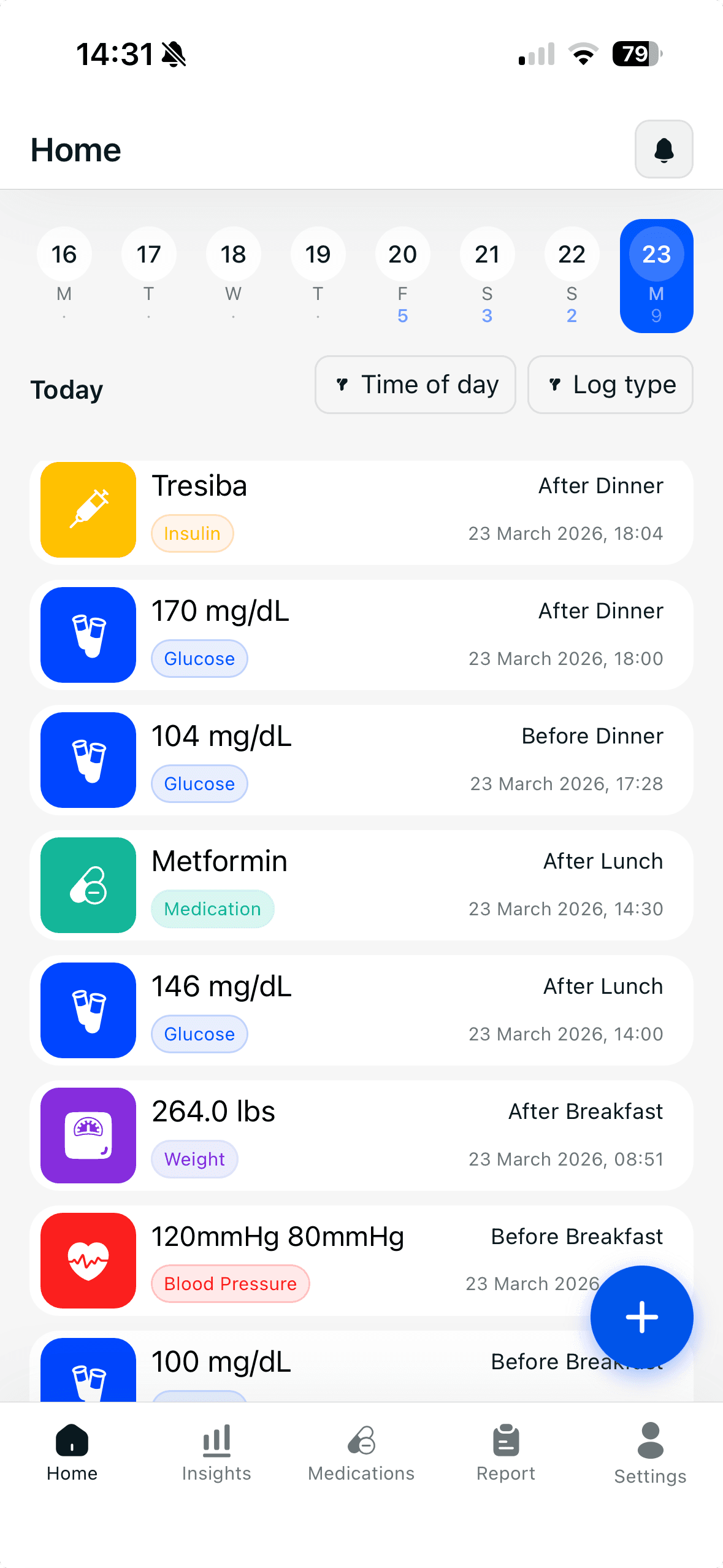
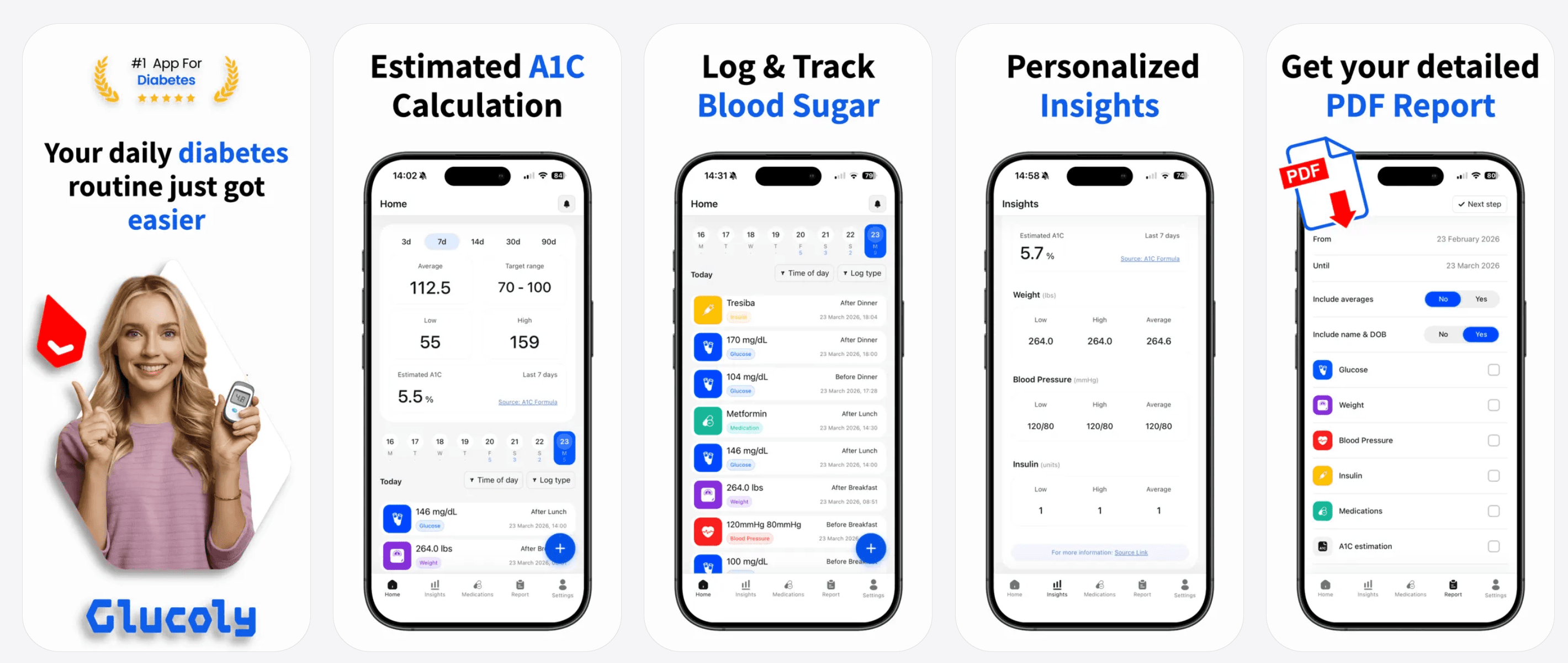
Notice stress-driven spikes by logging glucose alongside your day in Glucoly — free to download with unlimited logging, plus Glucoly Premium for estimated A1C and detailed reports.
Download GlucolySources
- American Diabetes Association (ADA) — diabetes.org
- Mayo Clinic — mayoclinic.org
- National Institute of Diabetes and Digestive and Kidney Diseases (NIDDK) — niddk.nih.gov
- Diabetes UK — diabetes.org.uk
Share this article
Related Posts
Traveling with Diabetes: A Complete Packing and Planning Guide
Traveling with diabetes is safe with the right preparation. This guide covers packing, airport security, keepi…
Read more →LifestyleHow Exercise Affects Blood Sugar — and How to Manage It
Exercise lowers blood sugar for up to 24–48 hours, but intense workouts can cause temporary spikes. Learn how…
Read more →LifestyleHow Sleep Affects Blood Sugar Levels: The Diabetes Connection
Sleep directly affects how your body processes glucose. Learn how poor or inconsistent sleep disrupts blood su…
Read more →