A simple 7-day diabetes meal plan with breakfast, lunch, dinner, snacks, and a full grocery list. Designed for stable blood sugar and easy weekday prep.
A diabetes meal plan should include 45–60g of carbohydrates per meal, emphasise non-starchy vegetables, lean protein, and healthy fats, and avoid refined sugars and processed foods. This 7-day plan follows ADA guidelines, helps stabilise blood sugar, and takes less than 30 minutes of prep per day. Each day provides approximately 1,600–1,800 calories with consistent carb portions.
In this article
At a Glance
- Aim for 45–60g carbohydrates per meal and 15–30g per snack (ADA guideline for type 2)
- Fill half your plate with non-starchy vegetables (broccoli, spinach, salad, green beans)
- One quarter protein (chicken, fish, eggs, tofu, legumes) and one quarter whole-grain carbs
- Eat at consistent times to prevent blood sugar spikes and crashes
- Avoid sugary drinks — swap for water, sparkling water, or unsweetened tea
- Limit ultra-processed foods — they cause rapid glucose spikes and inflammation
Day 1
- Breakfast: Greek yogurt (plain, full-fat) with a handful of blueberries and 1 tablespoon of chia seeds — approx. 25g carbs
- Lunch: Grilled chicken salad with mixed greens, cucumber, cherry tomatoes, olive oil and lemon dressing, 1 slice whole-grain bread — approx. 30g carbs
- Dinner: Baked salmon with roasted broccoli and half a cup of brown rice — approx. 40g carbs
- Snack: 15 almonds and a small apple — approx. 20g carbs
Day 2
- Breakfast: 2 scrambled eggs with spinach, 1 slice whole-grain toast — approx. 20g carbs
- Lunch: Lentil soup with a side salad and olive oil dressing — approx. 35g carbs
- Dinner: Turkey stir-fry with mixed vegetables (bell peppers, snap peas, mushrooms) and a third cup of quinoa — approx. 40g carbs
- Snack: Celery sticks with 2 tablespoons of natural peanut butter — approx. 8g carbs
Day 3
- Breakfast: Overnight oats (half cup rolled oats, unsweetened almond milk, cinnamon) with 1 tablespoon of flaxseed — approx. 30g carbs
- Lunch: Tuna wrap in a whole-wheat tortilla with lettuce, tomato, mustard, and avocado — approx. 35g carbs
- Dinner: Grilled chicken thighs with roasted cauliflower and sweet potato (small, skin-on) — approx. 35g carbs
- Snack: A small pear and a portion of cottage cheese — approx. 20g carbs
Day 4
- Breakfast: Vegetable omelette (2 eggs, mushrooms, peppers, onion) with a side of berries — approx. 15g carbs
- Lunch: Chickpea and vegetable soup with a small whole-grain roll — approx. 40g carbs
- Dinner: Baked cod with steamed green beans and a third cup of farro — approx. 35g carbs
- Snack: A boiled egg and cucumber slices — approx. 3g carbs
Day 5
- Breakfast: Smoothie with unsweetened almond milk, half a banana, a handful of spinach, and a scoop of plain protein powder — approx. 20g carbs
- Lunch: Grilled turkey burger (no bun) in a lettuce wrap with tomato and avocado, side salad — approx. 15g carbs
- Dinner: Beef and vegetable stew (lean beef, carrots, celery, tomatoes) with a small portion of barley — approx. 40g carbs
- Snack: 10 walnut halves and 2 squares of dark chocolate (85%+) — approx. 10g carbs
Day 6
- Breakfast: Whole-grain toast with mashed avocado and 2 poached eggs — approx. 25g carbs
- Lunch: Black bean tacos (2 small corn tortillas, salsa, shredded cabbage, lime) — approx. 40g carbs
- Dinner: Grilled prawns with a large salad, roasted cherry tomatoes, and half a cup of wild rice — approx. 35g carbs
- Snack: Plain rice crackers (4) with hummus — approx. 20g carbs
Day 7
- Breakfast: Cottage cheese pancakes (low-carb version with eggs, oat flour, cinnamon) with fresh strawberries — approx. 25g carbs
- Lunch: Roasted vegetable and feta salad with a small whole-grain pitta — approx. 35g carbs
- Dinner: Slow-cooked chicken thighs with lentils and spinach in a tomato-based sauce — approx. 40g carbs
- Snack: A small orange and a handful of unsalted pistachios — approx. 20g carbs
Grocery List for the Week
- Protein: chicken breast, chicken thighs, salmon fillets, cod, tuna (tinned), turkey mince, lean beef, eggs, Greek yogurt, cottage cheese, tofu
- Vegetables: broccoli, spinach, mixed salad leaves, cucumber, cherry tomatoes, bell peppers, cauliflower, green beans, mushrooms, celery, courgette, onions
- Fruits: blueberries, strawberries, apple, pear, small banana, lemon
- Grains: rolled oats, whole-grain bread, whole-grain tortillas, brown rice, quinoa, farro, barley, small corn tortillas, whole-grain pitta
- Legumes: lentils (dried or tinned), chickpeas (tinned), black beans (tinned)
- Healthy fats: avocados, almonds, walnuts, pistachios, natural peanut butter, olive oil, chia seeds, flaxseed
- Pantry: unsweetened almond milk, dark chocolate (85%+), hummus, mustard, salsa, tinned tomatoes
Diabetes Meal Planning Principles
Understanding the principles behind your meal plan helps you make smart food choices beyond these seven days. These evidence-based guidelines from the ADA and Diabetes UK form the foundation of sustainable blood sugar management.
- The plate method: half non-starchy vegetables, a quarter lean protein, a quarter slow-digesting carbohydrates
- Carb counting: 45–60g of carbs per meal is a common starting point for type 2 — work with your dietitian for your personal target
- Glycaemic index (GI): choose low-GI foods (oats, legumes, most vegetables) over high-GI (white bread, sugary cereal, white rice)
- Fibre is your friend: aim for 25–35g of dietary fibre per day — it slows glucose absorption
- Consistent meal timing: eating at the same time each day prevents blood sugar swings
- Portion sizes matter even for healthy foods — avocado and nuts are nutritious but calorie-dense
Frequently Asked Questions
How many carbs should someone with diabetes eat per day?
The ADA does not recommend a single carb target for everyone — individual needs depend on medication, weight goals, kidney function, and activity level. A common starting point is 45–60g per meal and 15–30g per snack, totalling 130–225g per day. Our carb counting guide for diabetes explains how to apply these numbers to everyday meals. A registered dietitian can further personalise your target based on your blood sugar response and health goals.
Can people with diabetes eat fruit?
Yes. Fruit contains vitamins, fibre, and antioxidants that support health. Choose whole fruit over juice (juice removes the fibre that slows glucose absorption). Lower-sugar fruits like berries, apples, pears, and citrus are better choices than grapes or bananas for blood sugar control. Stick to one portion (about 80–120g) at a time.
Is a low-carb diet better than a balanced diet for diabetes?
Both approaches can be effective for blood sugar control. The ADA acknowledges that low-carb diets (under 130g carbs per day) can reduce A1C and medication needs in type 2 diabetes. However, adherence long-term is the key factor — the best diet is one you can sustain. Always discuss major dietary changes with your healthcare team, especially if you take insulin or blood-sugar-lowering medication.
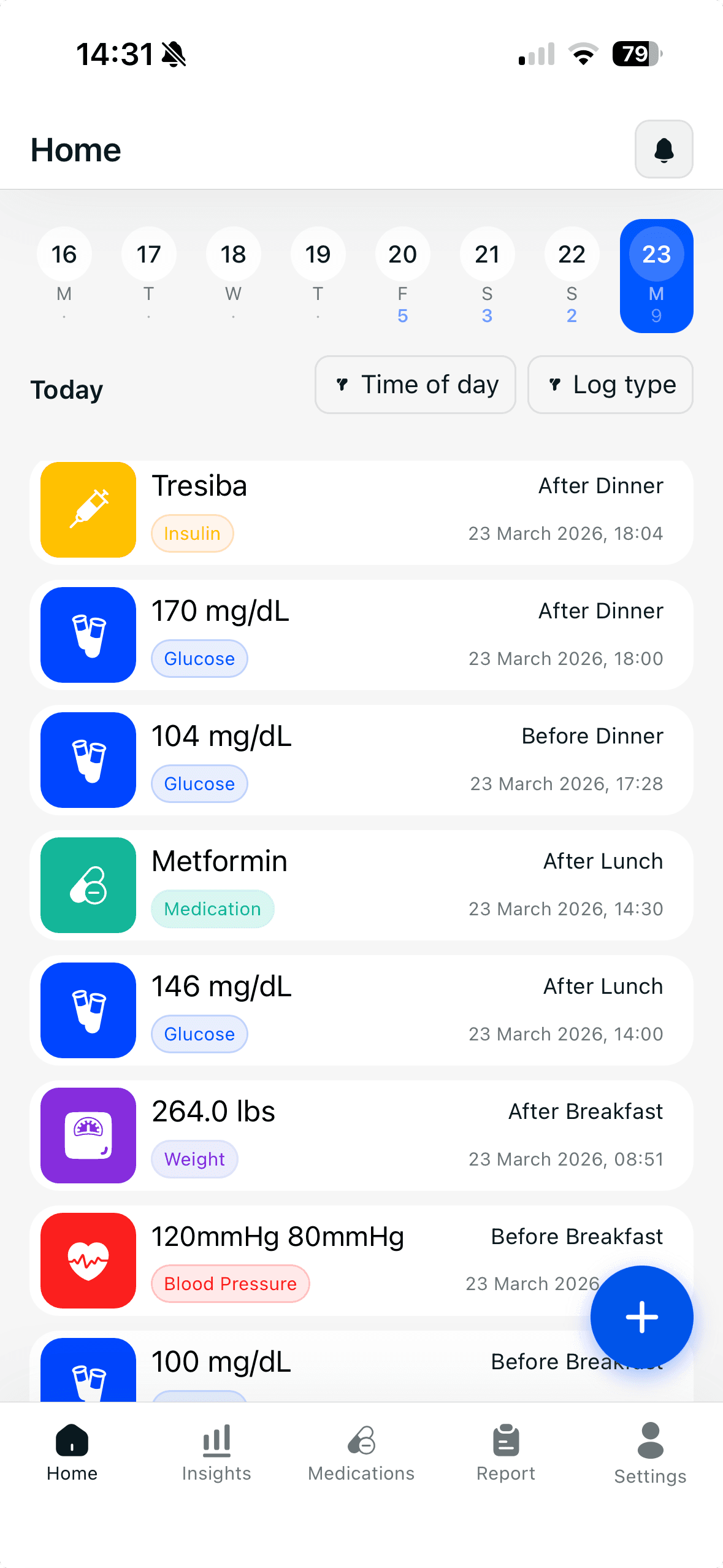
Log each meal and your glucose response in Glucoly to build a plan that works for you — free to download with unlimited logging, plus Glucoly Premium for estimated A1C and detailed reports.
Download GlucolySources
- American Diabetes Association (ADA) — diabetes.org
- Diabetes UK — diabetes.org.uk
- Harvard T.H. Chan School of Public Health — hsph.harvard.edu
- Centers for Disease Control and Prevention (CDC) — cdc.gov/diabetes
Share this article
Related Posts
How Protein Affects Blood Sugar Levels in Diabetes
Protein raises blood sugar slowly and much less than carbs. Learn how gluconeogenesis works, best protein sour…
Read more →NutritionCarb Counting for Diabetes: A Beginner's Step-by-Step Guide
Carb counting helps you manage blood sugar by tracking grams of carbs per meal. This beginner guide covers how…
Read more →NutritionIntermittent Fasting for Type 2 Diabetes: Does It Work?
Intermittent fasting can lower A1C and blood sugar in type 2 diabetes — but carries hypoglycemia risk with ins…
Read more →