Your A1C reflects your average blood sugar over months - so steady daily habits move it more than perfect single days. Practical, doctor-aligned ways to bring it down.
A1C is a measure of your average blood sugar over roughly the past two to three months. Because it's an average, it rewards consistency: small, repeatable habits move it more reliably than a few perfect days followed by a slide back. Here's where that effort tends to pay off most.
In this article
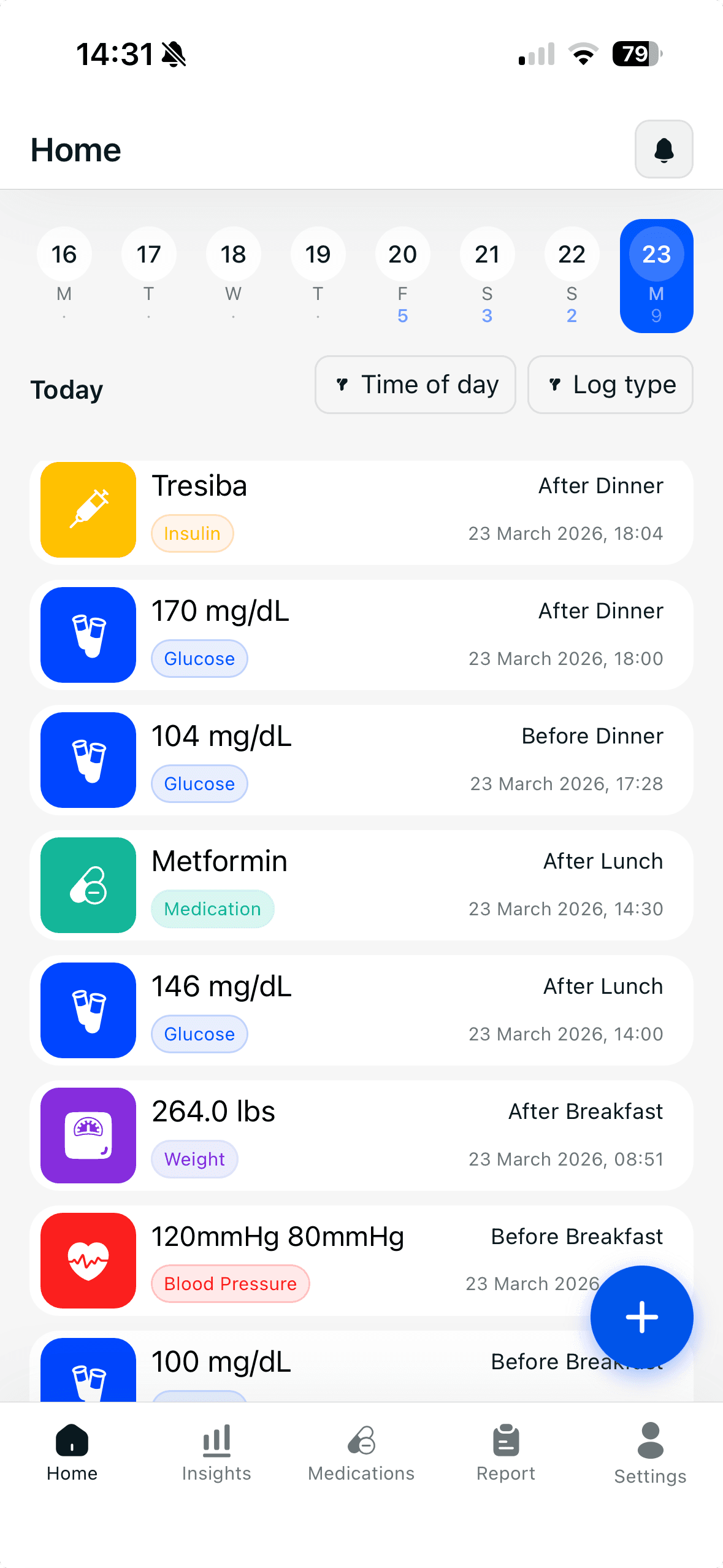
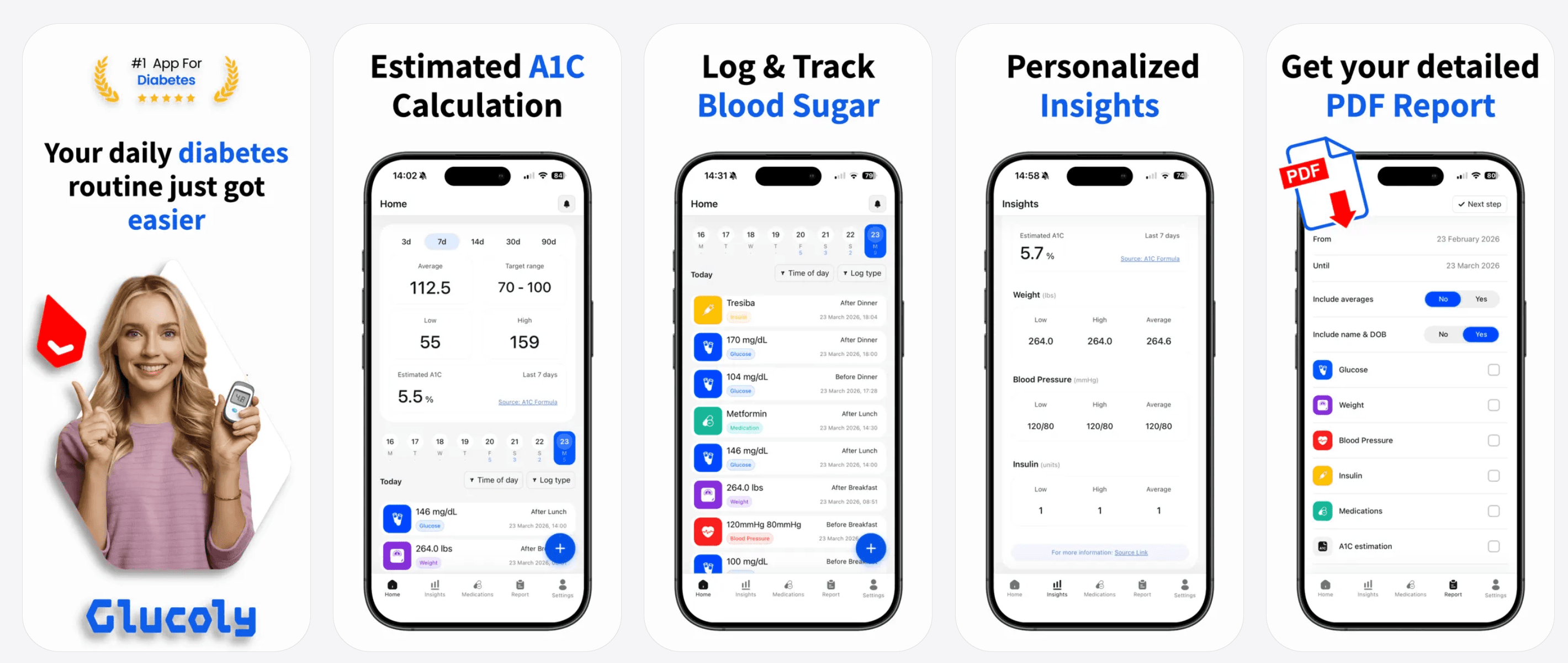
Glucoly estimates your A1C daily from your readings, so you can see progress between lab tests - free on the App Store and Google Play.
Download GlucolyKnow your number first
You can't improve what you can't see. Checking regularly - and tracking an estimated A1C between lab visits - turns a once-a-quarter surprise into something you can steer. Watching the trend month to month tells you quickly whether a change is working.
Build meals around steadier carbs
Carbohydrates have the biggest direct effect on blood sugar. You don't have to cut them out - focus on the type and balance. Pairing carbs with fiber, protein and healthy fats slows the rise, and being aware of portion sizes smooths out the peaks that push your average up.
Move most days
Activity makes your body more sensitive to insulin and helps your muscles pull glucose from your blood - an effect that lasts for hours afterward. A short daily walk you'll actually keep doing beats an intense workout you dread and skip.
Take medications as prescribed
If you're on glucose-lowering medication or insulin, taking it consistently and on time is one of the strongest levers you have. Reminders help - and if you think your regimen isn't working, talk to your doctor rather than adjusting doses on your own.
Don't overlook sleep and stress
Poor sleep and ongoing stress raise cortisol, which nudges blood sugar up. Protecting your sleep and finding ways to decompress aren't extras - they're part of the picture that shows up in your A1C.
Small and steady wins
Pick one or two changes you can sustain, track how they move your numbers, and build from there. Share your logs with your care team so adjustments are based on your real data.
This article is for general education and is not medical advice. Work with your healthcare provider before changing your diet, activity or medication.
Frequently Asked Questions
How fast can you lower your A1C?
Because A1C reflects roughly three months of average glucose, meaningful reductions typically become visible after 6–12 weeks of consistent improvement. People who make significant dietary and lifestyle changes - or whose medication is adjusted - can sometimes lower their A1C by 1–2 percentage points over a three-month period. Faster drops are possible but depend heavily on your starting point, your treatment plan, and how much glucose control improves day-to-day.
What foods lower A1C most effectively?
No single food lowers A1C on its own - it is the overall dietary pattern that matters. Consistently replacing refined carbohydrates and sugary foods with high-fiber vegetables, legumes, whole grains, lean protein, and healthy fats tends to flatten post-meal glucose spikes and reduce the average that A1C captures. Foods high in soluble fiber (oats, lentils, beans) are particularly well-studied for their blood-sugar-blunting effect.
What A1C level requires medication?
There is no single threshold - medication decisions depend on your individual situation, including how long you have had diabetes, other health conditions, and whether lifestyle changes alone are bringing your glucose to target. Many guidelines suggest considering medication when A1C remains above 7–8% despite dietary and lifestyle effort, but some people start medication at diagnosis. Your healthcare provider is the right person to make this call based on your full clinical picture.
Sources
- American Diabetes Association. A1C Test and Diabetes. diabetes.org
- Centers for Disease Control and Prevention. All About Your A1C. cdc.gov/diabetes/managing/managing-blood-sugar/a1c
Turn daily logs into a clear A1C trend and a doctor-ready report with Glucoly - free on iOS and Android.
Download GlucolyShare this article
Related Posts
What Is LADA (Type 1.5 Diabetes)? Symptoms and How It Differs from Type 1 and Type 2
LADA (type 1.5 diabetes) is autoimmune diabetes that develops slowly in adults, often misdiagnosed as type 2.…
Read more →EducationDiabetic Retinopathy: How Diabetes Affects Your Eyes (and How to Protect Them)
Diabetic retinopathy is the leading cause of blindness in adults — largely preventable. Learn the stages, symp…
Read more →EducationWhat Is Diabetic Ketoacidosis (DKA)? Warning Signs You Must Know
DKA is a life-threatening diabetes emergency. Know the warning signs — fruity breath, vomiting, confusion — an…
Read more →