You eat a meal and within an hour your blood sugar climbs, then crashes, leaving you tired and foggy. Here's why glucose spikes happen and five evidence-backed strategies to flatten your curve.
You eat a meal, and within 30 to 60 minutes your blood sugar climbs sharply, then crashes an hour later, leaving you tired, foggy, and hungry again. This is a glucose spike, and it is more common than most people realize. The good news is that simple, evidence-backed strategies can dramatically flatten your glucose curve.
In this article
- What Causes a Glucose Spike?
- 5 Evidence-Based Ways to Reduce Glucose Spikes
- 1. Eat Vegetables and Protein Before Carbohydrates
- 2. Take a 10-Minute Walk After Eating
- 3. Add Vinegar or Fermented Foods
- 4. Prioritize Sleep
- 5. Track and Learn Your Personal Patterns
- The Bottom Line
- What foods cause the biggest blood sugar spikes?
- How long does a glucose spike last?
- Can you prevent post-meal glucose spikes without medication?
What Causes a Glucose Spike?
When you eat carbohydrates, they are broken down into glucose and absorbed into your bloodstream. How fast this happens depends on the type of carbohydrate, what you ate it with, your activity level, your sleep quality, and even the order in which you ate your food. Highly processed carbohydrates - white bread, sugary drinks, breakfast cereals - absorb very quickly. Whole foods with fiber, protein, and fat absorb more slowly, producing a gentler, more manageable rise.
5 Evidence-Based Ways to Reduce Glucose Spikes
1. Eat Vegetables and Protein Before Carbohydrates
Research published in Diabetes Care found that eating vegetables and protein before carbohydrates at the same meal reduced post-meal glucose by up to 36% compared to eating carbohydrates first. The order of eating matters more than most people expect.
2. Take a 10-Minute Walk After Eating
Even a brief walk activates muscles, which absorb glucose without needing insulin. Studies show a 10 to 15 minute walk after a meal reduces the post-meal spike significantly. This is one of the highest-return habits you can build.
3. Add Vinegar or Fermented Foods
Acetic acid in vinegar slows the digestion of carbohydrates. A small amount of apple cider vinegar with water before a meal, or fermented foods like pickles or kimchi alongside a meal, can measurably blunt the glucose response.
4. Prioritize Sleep
Even one night of poor sleep (fewer than six hours) increases insulin resistance the following day, meaning the same meal produces a larger spike. Sleep is not optional for metabolic health.
5. Track and Learn Your Personal Patterns
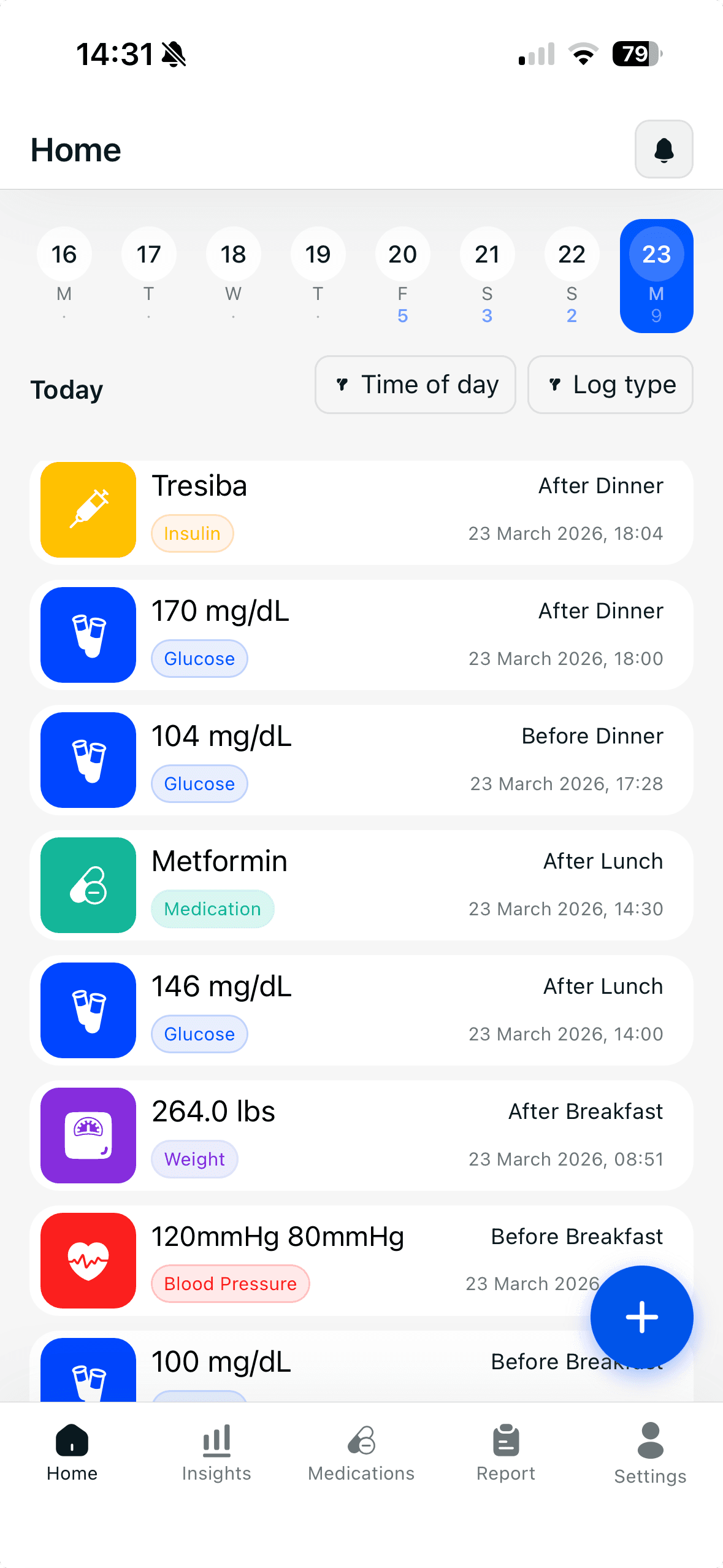
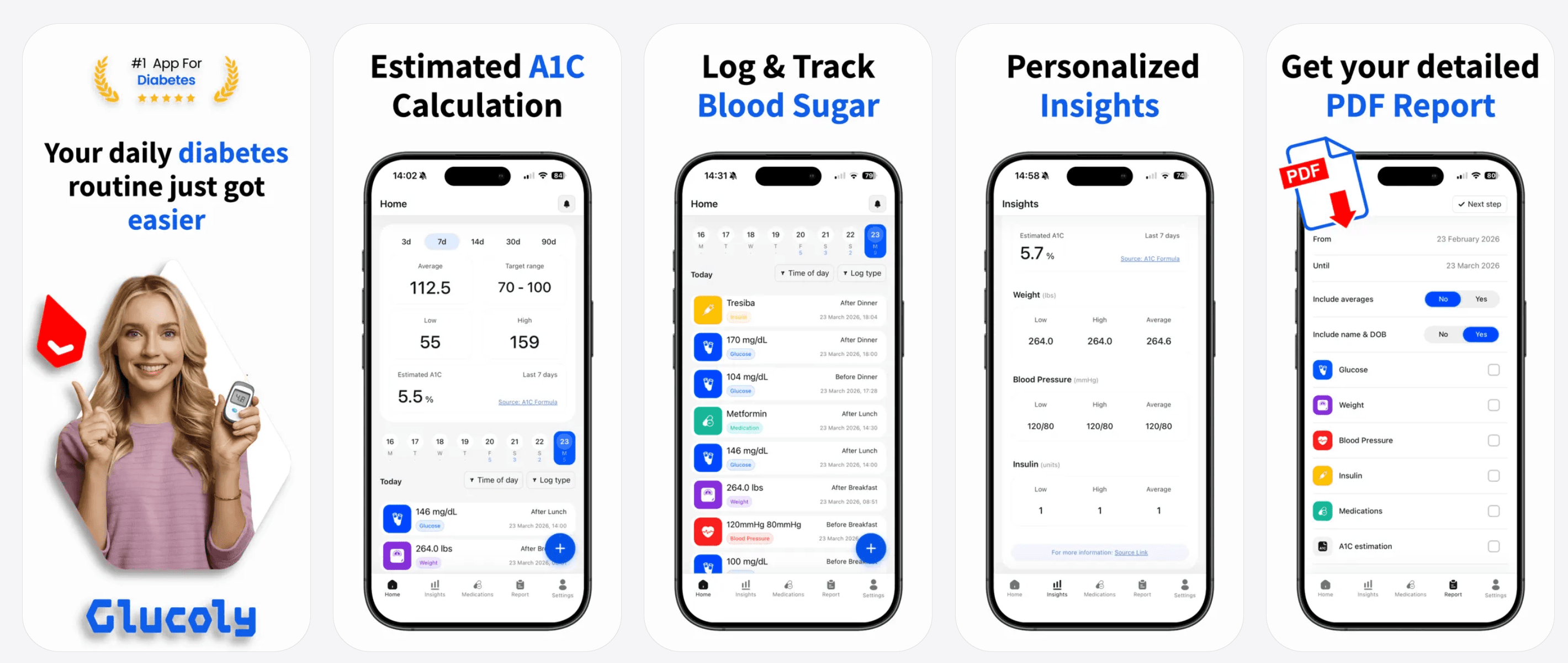
Everyone responds differently to food. What spikes one person's glucose may barely affect another. The only way to know your personal patterns is to track consistently. Glucoly lets you log meals and readings together so you can identify which foods, times of day, and habits affect your glucose most.
The Bottom Line
Glucose spikes are not inevitable. Small, consistent changes to meal composition, eating order, and post-meal movement can meaningfully improve your metabolic health over time. The key is awareness - and awareness starts with tracking.
Frequently Asked Questions
What foods cause the biggest blood sugar spikes?
Foods that digest quickly and flood the bloodstream with glucose tend to cause the largest spikes. Common culprits include sugary drinks (soda, juice, sports drinks), white bread and refined flour products, white rice, breakfast cereals, candy, and baked goods made with little fiber or protein. The glycaemic index (GI) is a useful guide - high-GI foods produce rapid glucose rises. Eating high-GI foods alongside protein, fat, or fiber substantially blunts the spike, so meal composition matters as much as the food itself.
How long does a glucose spike last?
For most people without diabetes, blood sugar typically peaks 30–60 minutes after eating and returns to pre-meal levels within 2 hours. In people with diabetes or insulin resistance, the peak may be higher and the return to baseline slower - sometimes taking 3–4 hours or longer depending on the meal and medication. Repeated or prolonged spikes are associated with oxidative stress and inflammation, which is why flattening the curve matters for long-term health, not just the immediate number.
Can you prevent post-meal glucose spikes without medication?
Yes, significantly. Eating vegetables and protein before carbohydrates, taking a 10–15 minute walk after a meal, choosing high-fiber whole foods over refined ones, and including fermented foods or a small amount of vinegar before eating are all evidence-backed strategies that can reduce post-meal spikes by 20–36% in studies. These approaches work for both people with and without diabetes. For those already on medication, lifestyle strategies complement treatment - they rarely replace it, but they can reduce the amount of medication needed over time.
Sources
- American Diabetes Association. Standards of Medical Care in Diabetes 2024. diabetes.org
- Centers for Disease Control and Prevention. Diabetes and Healthy Eating. cdc.gov/diabetes/healthy-eating
Download Glucoly to start understanding your glucose patterns today.
Download GlucolyShare this article
Related Posts
How Protein Affects Blood Sugar Levels in Diabetes
Protein raises blood sugar slowly and much less than carbs. Learn how gluconeogenesis works, best protein sour…
Read more →NutritionCarb Counting for Diabetes: A Beginner's Step-by-Step Guide
Carb counting helps you manage blood sugar by tracking grams of carbs per meal. This beginner guide covers how…
Read more →NutritionIntermittent Fasting for Type 2 Diabetes: Does It Work?
Intermittent fasting can lower A1C and blood sugar in type 2 diabetes — but carries hypoglycemia risk with ins…
Read more →