Insulin resistance can be reversed. Learn 7 proven strategies — exercise, diet, sleep, and stress — backed by research to improve insulin sensitivity.
Insulin resistance means your cells do not respond properly to insulin, so the pancreas produces more to achieve the same effect. Over time, as demand exceeds supply, blood sugar rises - eventually progressing to prediabetes and Type 2 diabetes. The good news is that insulin resistance is significantly reversible. Regular exercise, even modest weight loss, reducing refined carbohydrates, improving sleep, and managing stress are all proven to improve how well your cells respond to insulin.
In this article
- What Is Insulin Resistance and How Does It Develop?
- Signs and Symptoms of Insulin Resistance
- Exercise: The Most Powerful Tool Against Insulin Resistance
- Weight Loss: Even 5–7% Makes a Measurable Difference
- Diet: Reduce Refined Carbs and Prioritize Fiber
- Foods That Improve Insulin Sensitivity
- Sleep: One Bad Night Measurably Worsens Insulin Sensitivity
- Stress Management: Cortisol Directly Raises Blood Sugar
- Additional Evidence-Based Strategies
- Intermittent Fasting: Emerging and Promising
- How Glucoly Helps You Track Whether Your Efforts Are Working
- Can insulin resistance be reversed?
- What foods cause insulin resistance?
- How long does it take to improve insulin resistance?
At a Glance
- Insulin resistance means your cells respond poorly to insulin, causing blood sugar to rise
- Exercise — especially strength training and HIIT — is the fastest way to improve insulin sensitivity
- Losing 5–10% of body weight significantly reduces insulin resistance
- A low-glycaemic diet rich in fibre and lean protein helps stabilise blood sugar
- Poor sleep (under 6 hours) worsens insulin resistance within days
- Chronic stress raises cortisol, which directly increases insulin resistance
What Is Insulin Resistance and How Does It Develop?
When you eat carbohydrates, glucose enters the bloodstream and the pancreas releases insulin. Insulin acts like a key that unlocks cells - particularly muscle, liver, and fat cells - allowing glucose to enter and be used for energy or stored. In insulin resistance, that lock-and-key mechanism is impaired: the same amount of insulin achieves less glucose uptake than it should.
As a result, the pancreas works harder, secreting more and more insulin to compensate. For years, this overproduction can keep blood sugar in a normal or near-normal range - but it comes at a cost. Eventually the beta cells of the pancreas can no longer keep up with demand, insulin output falls, and blood glucose rises into the prediabetes and then diabetes range. According to the American Diabetes Association, this progression from insulin resistance to Type 2 diabetes often takes years to decades and is not inevitable.
- Insulin resistance typically develops silently - there are no obvious symptoms in early stages.
- Major drivers include excess body fat (especially visceral abdominal fat), physical inactivity, poor diet quality, chronic sleep deprivation, and chronic stress.
- Genetics also play a role - family history of Type 2 diabetes increases susceptibility.
- Insulin resistance is closely associated with metabolic syndrome: a cluster of high blood pressure, high triglycerides, low HDL, elevated blood sugar, and abdominal obesity.
Signs and Symptoms of Insulin Resistance
Insulin resistance often has no dramatic symptoms early on, which is why it frequently goes undetected until prediabetes or Type 2 diabetes is already diagnosed. Certain patterns - in lab results and in how you feel day-to-day - can signal that insulin sensitivity has declined. According to the American Diabetes Association, fasting glucose between 100–125 mg/dL (5.6–6.9 mmol/L) is the prediabetes range and a strong indicator of underlying insulin resistance.
- Fasting glucose 100–125 mg/dL (5.6–6.9 mmol/L): prediabetes range - a key lab signal of declining insulin sensitivity.
- High fasting triglycerides (above 150 mg/dL / 1.7 mmol/L): the liver converts excess glucose to fat when insulin cannot clear it efficiently.
- Low HDL cholesterol (below 40 mg/dL for men, below 50 mg/dL for women): consistently associated with insulin resistance.
- Abdominal obesity: visceral fat - stored around the abdominal organs - is the most metabolically active and most strongly linked to insulin resistance.
- Acanthosis nigricans: dark, velvety skin patches in the neck folds, armpits, or groin - a visible skin sign of chronic high insulin levels.
- Fatigue and mental fog after carb-heavy meals: cells are not efficiently absorbing glucose, leaving you energy-depleted despite eating.
- Elevated blood pressure: insulin resistance is tightly linked to hypertension via multiple metabolic pathways.
Exercise: The Most Powerful Tool Against Insulin Resistance
Muscle tissue is the body's largest glucose sink. When muscle cells contract during exercise, they absorb glucose from the bloodstream through a pathway that bypasses insulin - meaning they improve glucose uptake even in the presence of insulin resistance. This effect persists for 24–48 hours after exercise, which is why regular daily movement has a cumulative benefit that occasional intense workouts do not.
Both aerobic exercise (walking, cycling, swimming) and resistance training (weightlifting, bodyweight exercise) independently improve insulin sensitivity - and they work through different mechanisms, so combining them is more effective than either alone. According to a meta-analysis published in Diabetes Care, combined aerobic and resistance training produces greater A1C reduction than either modality alone.
- Aerobic exercise (walking, cycling, swimming): aim for 150 minutes per week at moderate intensity
- Resistance training: 2–3 sessions per week builds muscle, which is the primary site of glucose uptake
- HIIT (High-Intensity Interval Training): even 10–20 minutes improves insulin sensitivity markedly
- Walk after meals: a 10-minute post-meal walk reduces glucose spikes by up to 30%
- Reduce sitting time: breaking up sedentary periods every 30 minutes helps
Weight Loss: Even 5–7% Makes a Measurable Difference
Excess body fat - particularly visceral fat stored around the abdominal organs - is the strongest modifiable driver of insulin resistance. Visceral fat releases fatty acids and inflammatory cytokines that directly impair insulin signaling in liver, muscle, and fat cells. The good news is that you do not need to reach an ideal weight to see meaningful improvements in insulin sensitivity.
According to the American Diabetes Association and the Diabetes Prevention Program (DPP) clinical trial - one of the largest lifestyle intervention studies ever conducted - losing just 5–7% of body weight in people with prediabetes reduced the risk of progressing to Type 2 diabetes by 58%. That is roughly 4–6 kg (10–13 lbs) for someone weighing 90 kg (200 lbs). A modest, achievable goal with a dramatic benefit.
- Visceral abdominal fat is disproportionately harmful - a reduction in waist circumference often reflects visceral fat loss even before overall weight changes are large.
- Less visceral fat means fewer inflammatory signals disrupting insulin receptors in muscle and liver cells.
- Caloric deficit plus exercise is more effective than either alone - exercise preserves muscle mass while fat is lost, maintaining the body's glucose-clearing capacity.
- Crash diets and very-low-calorie approaches often lose muscle as well as fat - consult a registered dietitian for a sustainable plan.
Diet: Reduce Refined Carbs and Prioritize Fiber
Diet is the most direct lever for managing day-to-day glucose and insulin levels. The core principle is simple: reduce foods that cause rapid glucose spikes and replace them with foods that digest slowly. Refined carbohydrates - white bread, white rice, sugary drinks, pastries - produce sharp spikes in glucose that require large bursts of insulin to manage. Over time, repeatedly high insulin levels worsen insulin resistance in a feedback loop.
Dietary fiber is the most evidence-supported dietary component for improving insulin sensitivity. Soluble fiber - found in oats (beta-glucan), legumes, psyllium, and many fruits - slows glucose absorption and feeds beneficial gut bacteria that produce short-chain fatty acids, which improve insulin signaling at the cellular level.
- Reduce: sugary drinks, fruit juice, white bread, white rice, pastries, and most packaged snack foods.
- Prioritize: legumes (lentils, chickpeas, kidney beans), oats, barley, sweet potato, non-starchy vegetables, and whole fruit.
- Aim for at least 25–38 g of dietary fiber per day, per ADA guidelines.
- Low-carbohydrate diets (20–45 g carbs per meal) have strong clinical evidence for improving insulin sensitivity in Type 2 diabetes - discuss with your care team.
- The Mediterranean diet and the DASH diet both consistently improve insulin sensitivity in clinical trials.
- Avoid ultra-processed foods: processing removes fiber and adds refined starches and sugars that spike glucose regardless of how the product is marketed.
Foods That Improve Insulin Sensitivity
- Non-starchy vegetables: broccoli, spinach, kale — high fibre, low glycaemic load
- Fatty fish: salmon, sardines — omega-3s reduce inflammation linked to insulin resistance
- Apple cider vinegar: 1–2 tablespoons before meals may blunt post-meal glucose spikes
- Nuts and seeds: almonds, walnuts — improve insulin sensitivity in multiple studies
- Berries: high in antioxidants and fibre, low in sugar
- Whole grains over refined: oats, quinoa, brown rice cause slower glucose rises
Sleep: One Bad Night Measurably Worsens Insulin Sensitivity
Sleep deprivation directly impairs insulin sensitivity - and the effect appears after a single poor night. Research from the University of Chicago published in the Annals of Internal Medicine showed that just four nights of sleep restriction (4.5 hours per night) reduced insulin sensitivity by 16% and reduced the acute insulin response to glucose by 30%. In practical terms, the same meal produces a higher glucose spike after a bad night's sleep.
The mechanism involves cortisol and growth hormone: poor sleep elevates cortisol and disrupts growth hormone patterns, both of which directly counteract insulin's action. Chronic sleep deprivation - habitually less than 6–7 hours - is independently associated with a significantly higher risk of developing Type 2 diabetes, even when controlling for diet and exercise.
- Aim for 7–9 hours of sleep per night - the range consistently associated with optimal metabolic health in adults.
- Sleep regularity matters: going to bed and waking at consistent times stabilizes cortisol rhythms and improves insulin sensitivity.
- Sleep apnea is strongly associated with insulin resistance - untreated sleep apnea worsens glucose control even with good diet and exercise habits. Discuss screening with your doctor if you snore heavily or wake feeling unrefreshed.
- Avoiding screens for 60 minutes before bed helps melatonin levels rise naturally and improves sleep quality.
Stress Management: Cortisol Directly Raises Blood Sugar
Stress hormones - primarily cortisol and adrenaline - mobilize energy quickly by raising blood glucose and reducing insulin sensitivity so more glucose stays available for rapid muscle use. Acute stress is a normal, healthy response. Chronic stress means these hormones are elevated more of the time, chronically worsening insulin sensitivity and keeping baseline glucose elevated.
- Evidence-based stress management: mindfulness meditation, progressive muscle relaxation, and diaphragmatic breathing (5–10 minutes daily) have measurable cortisol-lowering effects.
- Regular aerobic exercise is one of the best stress-reduction tools available - it burns off stress hormones while simultaneously improving insulin sensitivity.
- Social connection reduces cortisol: regular meaningful contact with others is associated with lower chronic stress hormone levels.
- Identify and address structural stressors where possible - work, financial pressure, and relationship stress have larger ongoing cortisol impacts than acute events.
Additional Evidence-Based Strategies
Beyond the major interventions above, several other lifestyle factors have solid evidence behind them. None of these replace the core pillars of exercise, diet, sleep, and stress management - but together they add up to a meaningful improvement in overall insulin sensitivity.
- Stay hydrated: even mild dehydration (1–2% of body weight) can impair glucose metabolism. Drink water consistently throughout the day.
- Limit alcohol: alcohol impairs liver glucose regulation and can unpredictably raise or lower blood sugar. The ADA recommends no more than one standard drink per day for women and two for men with diabetes.
- Magnesium intake: magnesium deficiency is associated with insulin resistance, and supplementation in deficient individuals has been shown to improve insulin sensitivity. Food sources: dark leafy greens, nuts, seeds, and whole grains.
- Reduce visceral fat: waist circumference is a better indicator of metabolic risk than overall weight - even small reductions in abdominal girth improve insulin receptor signaling.
- Eat more fiber: it deserves repeated emphasis as the most consistently beneficial dietary component for insulin sensitivity across clinical trials.
Intermittent Fasting: Emerging and Promising
Intermittent fasting (IF) - eating within a restricted time window each day, such as 16:8 (eating within 8 hours, fasting for 16) - has generated growing interest for its effects on insulin resistance. During fasting periods, insulin levels fall significantly, giving cells extended time to restore insulin sensitivity. Several trials have shown improvements in fasting insulin, HOMA-IR (a validated measure of insulin resistance), and fasting glucose with various IF protocols.
However, the evidence is still emerging and the research base is smaller than for exercise or dietary fiber. Intermittent fasting is not appropriate for everyone - it carries real risks for people on insulin or certain oral medications that can cause hypoglycemia during fasting windows. Discuss it with your healthcare provider before trying, particularly if you are on glucose-lowering medications.
- Time-restricted eating (16:8 or 14:10): eating all meals within a defined daily window - the most studied and most practical IF approach.
- Potential benefits: lower fasting insulin, reduced visceral fat, improved insulin sensitivity - especially when combined with a nutritious diet.
- Risks for people with diabetes: hypoglycemia risk with insulin or sulfonylureas during fasting windows. Medication timing must be adjusted.
- IF is not a magic solution - it works primarily through lower overall insulin exposure and, often, a caloric deficit. Always consult your healthcare provider before starting.
How Glucoly Helps You Track Whether Your Efforts Are Working
Insulin resistance improves gradually - day-to-day fluctuations can mask an improving trend. The most reliable way to know whether your lifestyle changes are having an effect is to track your fasting glucose consistently over weeks and months. A declining fasting glucose trend - even within the normal range - is a measurable sign that insulin sensitivity is improving.
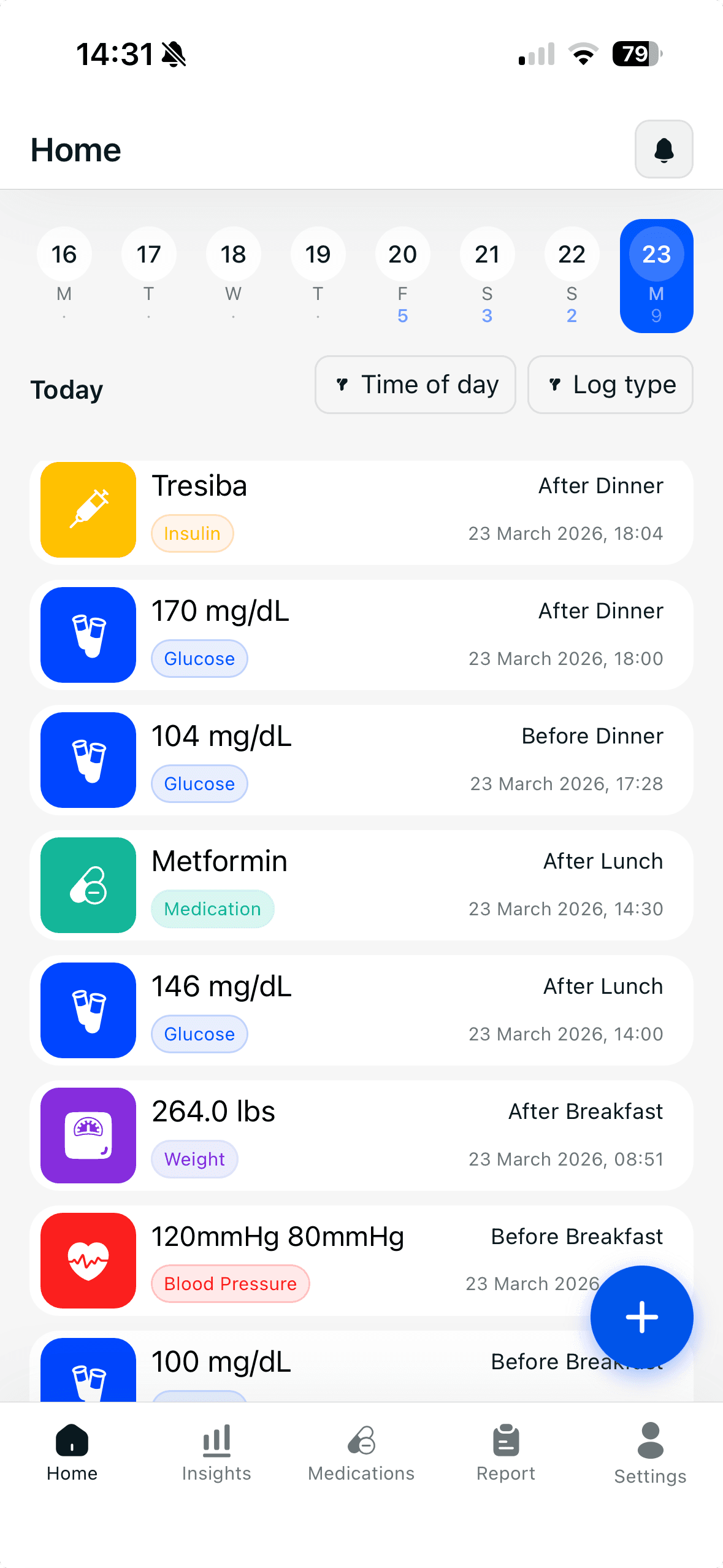
Glucoly's fasting glucose log and estimated A1C give you a daily running view of your progress. The 30-day and 90-day trend windows make gradual improvements visible that are invisible in day-to-day readings. Post-meal glucose patterns also improve as insulin sensitivity recovers - spikes become smaller and return to baseline faster. Glucoly's before/after meal tagging lets you track exactly this.
- Log your fasting glucose every morning - this is the clearest early indicator of improving insulin sensitivity.
- Watch your estimated A1C trend over 30 and 90 days - a gradual decline reflects real, cumulative improvement.
- Use before/after meal glucose tagging to see whether post-meal spikes are decreasing as your insulin sensitivity recovers.
- Export a PDF report from Glucoly before your next appointment - your provider can see the trend and adjust your treatment plan based on real data.
This article is for general education and is not medical advice. Consult your healthcare provider before making changes to your treatment plan, starting a new exercise program, or changing your diet significantly.
Frequently Asked Questions
Can insulin resistance be reversed?
- Yes - insulin resistance is significantly reversible through lifestyle changes, particularly in the early stages before Type 2 diabetes develops.
- The American Diabetes Association's Diabetes Prevention Program showed that lifestyle intervention (exercise plus 5–7% weight loss) reduced progression to Type 2 diabetes by 58% in people with prediabetes.
- Even in people who already have Type 2 diabetes, improving diet, increasing exercise, and losing weight can substantially improve insulin sensitivity - sometimes enough to reduce or eliminate medication needs.
- The extent of reversal depends on how long insulin resistance has been present, how much beta cell function remains, and how consistently lifestyle changes are maintained.
What foods cause insulin resistance?
- The foods most consistently linked to worsening insulin resistance are those that produce frequent, high spikes in glucose and insulin: refined carbohydrates (white bread, white rice, sugary drinks, pastries) and ultra-processed foods.
- Trans fats (partially hydrogenated oils) directly impair insulin receptor signaling - they are now banned in many countries but still found in some processed foods.
- Excess added sugar - particularly large amounts of fructose from sweetened beverages - drives visceral fat accumulation and worsens insulin resistance.
- Highly processed foods in general tend to be low in fiber and high in refined starches and sugars, promoting insulin resistance through repeated glucose and insulin spikes.
- Alcohol in large quantities impairs liver function and disrupts glucose regulation.
How long does it take to improve insulin resistance?
- Some improvements are rapid: a single session of aerobic or resistance exercise improves insulin sensitivity for 24–48 hours afterward. Post-meal blood sugar often improves within days of starting regular activity.
- Fasting glucose typically begins declining within 2–4 weeks of consistent lifestyle changes (exercise plus dietary improvement), though the degree of change varies by individual.
- More substantial improvements - reflected in a declining estimated A1C or fasting insulin - typically become measurable over 4–12 weeks of consistent effort.
- Full reversal of prediabetes to normal glucose can take months to a year of sustained lifestyle change.
- Track your fasting glucose daily in Glucoly - the 30-day trend view will show you whether you are on the right trajectory.
Sources
- American Diabetes Association. Standards of Medical Care in Diabetes 2024. diabetes.org
- Knowler WC, et al. Reduction in the incidence of type 2 diabetes with lifestyle intervention or metformin (DPP). New England Journal of Medicine. 2002.
- Centers for Disease Control and Prevention. National Diabetes Statistics Report 2024. cdc.gov/diabetes
Track your fasting glucose trend and watch your estimated A1C improve as your insulin sensitivity recovers - with Glucoly, free on the App Store and Google Play.
Download GlucolyShare this article
Related Posts
What Is LADA (Type 1.5 Diabetes)? Symptoms and How It Differs from Type 1 and Type 2
LADA (type 1.5 diabetes) is autoimmune diabetes that develops slowly in adults, often misdiagnosed as type 2.…
Read more →EducationDiabetic Retinopathy: How Diabetes Affects Your Eyes (and How to Protect Them)
Diabetic retinopathy is the leading cause of blindness in adults — largely preventable. Learn the stages, symp…
Read more →EducationWhat Is Diabetic Ketoacidosis (DKA)? Warning Signs You Must Know
DKA is a life-threatening diabetes emergency. Know the warning signs — fruity breath, vomiting, confusion — an…
Read more →