Gestational diabetes affects 6–9% of pregnancies with no symptoms. Learn the risks for mother and baby, blood sugar targets, and how to manage it safely.
Gestational diabetes is high blood sugar that develops during pregnancy in women who did not have diabetes before. It affects approximately 6–9% of pregnancies and usually resolves after delivery. Left unmanaged, it increases risks for the baby (large birth size, early delivery, low blood sugar at birth) and mother (pre-eclampsia, C-section). It is managed through diet, exercise, blood sugar monitoring, and sometimes insulin or metformin.
In this article
- What Is Gestational Diabetes?
- Risk Factors for Gestational Diabetes
- Symptoms of Gestational Diabetes
- Gestational Diabetes Screening and Diagnosis
- Blood Sugar Targets During Gestational Diabetes
- Managing Gestational Diabetes with Diet
- When Medication Is Needed
- Risks for Baby and Mother If Gestational Diabetes Is Poorly Controlled
- After Delivery: What Happens to Gestational Diabetes?
- Can gestational diabetes harm the baby?
- Does gestational diabetes mean I will get type 2 diabetes?
- Can I prevent gestational diabetes?
At a Glance
- Affects 6–9% of pregnancies worldwide.
- Usually no symptoms — detected by screening at 24–28 weeks of pregnancy.
- Risks for baby: macrosomia (large birth size), shoulder dystocia, neonatal hypoglycemia.
- Risks for mother: pre-eclampsia, C-section, and type 2 diabetes later in life.
- Managed with diet, exercise, blood sugar monitoring, and medication if needed.
- Usually resolves after delivery, but approximately 50% of women develop type 2 diabetes within 10 years.
What Is Gestational Diabetes?
Gestational diabetes occurs because pregnancy hormones — especially human placental lactogen — cause insulin resistance in the mother's cells. The pancreas responds by producing more insulin, but in some women it cannot produce enough to compensate for the increased resistance, so glucose accumulates in the bloodstream. It is not caused by eating sugar. It is more common in women with established risk factors, but it can develop in women with none of them.
Risk Factors for Gestational Diabetes
- BMI over 25 before pregnancy.
- Previously had gestational diabetes in a prior pregnancy.
- Family history of type 2 diabetes in a first-degree relative.
- Age over 35 at time of pregnancy.
- Polycystic ovary syndrome (PCOS).
- Previous baby weighing over 4.5 kg (10 lbs) at birth.
- Certain ethnicities — South Asian, Black, Hispanic, and East Asian women have higher rates.
- Prediabetes (impaired fasting glucose or impaired glucose tolerance) before pregnancy.
Symptoms of Gestational Diabetes
Gestational diabetes usually causes no obvious symptoms — this is why screening between 24 and 28 weeks of pregnancy is offered universally. Some women notice increased thirst, frequent urination, fatigue, or blurred vision, but these overlap with normal pregnancy changes and are not reliable warning signs. The diagnosis is made by blood tests, not symptoms.
- Increased thirst (polydipsia).
- Frequent urination beyond normal pregnancy levels.
- Unusual or excessive fatigue.
- Blurred vision.
Gestational Diabetes Screening and Diagnosis
- Initial screening at 24–28 weeks using a glucose challenge test (GCT): drink 50 g of glucose, then blood is drawn one hour later.
- If the GCT result is 130–140 mg/dL or above, a 3-hour oral glucose tolerance test (OGTT) is performed.
- 3-hour OGTT: blood is drawn fasting, then after drinking 100 g of glucose, at 1, 2, and 3 hours.
- Diagnosis is made if two or more values exceed the thresholds: fasting 95 mg/dL, 1-hour 180 mg/dL, 2-hour 155 mg/dL, 3-hour 140 mg/dL.
- Some countries use a 2-hour 75 g OGTT, where a single elevated result is sufficient for diagnosis.
- Women with risk factors may be offered screening in the first trimester rather than waiting until 24–28 weeks.
Blood Sugar Targets During Gestational Diabetes
- Fasting blood sugar: under 95 mg/dL.
- 1 hour after eating: under 140 mg/dL.
- 2 hours after eating: under 120 mg/dL.
- HbA1c (A1C) target during pregnancy: 6.0–6.5%.
- Blood sugar should be checked 4 or more times per day — fasting and after each main meal.
Managing Gestational Diabetes with Diet
Dietary changes are the first-line treatment and control blood sugar in the majority of cases. The goal is to keep blood glucose within pregnancy-specific target ranges — which are stricter than normal blood sugar levels outside pregnancy — without restricting calories to a level that harms fetal growth.
- Focus on low glycaemic index carbohydrates spread evenly across 3 meals and 2–3 snacks throughout the day.
- Limit portions of starchy foods at each meal — starch should occupy roughly one quarter of the plate.
- Non-starchy vegetables (salad, broccoli, courgette, spinach) should fill at least half the plate.
- Choose whole grains over white rice, white bread, and potatoes.
- Include a source of protein with every meal to slow glucose absorption.
- Avoid sugary drinks, fruit juice, and desserts, which cause rapid blood sugar spikes.
When Medication Is Needed
- Diet and exercise control blood sugar in approximately 70–80% of women with gestational diabetes.
- If blood sugar remains above targets after 1–2 weeks of lifestyle changes, medication is added.
- Insulin is the first-line medication — it does not cross the placenta and has a long safety record in pregnancy.
- Metformin is used as an alternative in some cases — discuss the benefits and risks with your obstetrician.
- Medication requirements often increase as pregnancy progresses because placental hormone levels rise throughout the third trimester.
Risks for Baby and Mother If Gestational Diabetes Is Poorly Controlled
- Macrosomia — a baby weighing over 4 kg — which increases the risk of C-section and birth injury.
- Shoulder dystocia — the baby's shoulder becoming trapped behind the mother's pubic bone during delivery.
- Neonatal hypoglycemia — the baby's blood sugar drops sharply after birth when the placenta, which had been providing excess glucose, is removed.
- Preterm birth — labour beginning before 37 weeks.
- Increased risk of respiratory distress syndrome and breathing difficulties in the newborn.
- Pre-eclampsia in the mother — high blood pressure with organ involvement.
- Increased long-term risk of type 2 diabetes for both the mother and the child.
After Delivery: What Happens to Gestational Diabetes?
- Blood sugar typically returns to normal within 6 weeks of delivery as placental hormones clear.
- All women who had gestational diabetes should have a 75 g OGTT at 6–12 weeks postpartum to confirm that blood sugar has normalised.
- Approximately 50% of women develop type 2 diabetes within 5–10 years — sustained lifestyle changes significantly reduce this risk.
- Breastfeeding improves insulin sensitivity and is associated with a lower long-term risk of type 2 diabetes for the mother.
- Gestational diabetes recurs in 30–84% of subsequent pregnancies — early screening is recommended in future pregnancies.
Frequently Asked Questions
Can gestational diabetes harm the baby?
Yes, if uncontrolled. The greatest risks are macrosomia (excessively large birth weight), which increases C-section and birth injury risk; neonatal hypoglycemia immediately after birth; and, in severe uncontrolled cases, stillbirth. However, with good blood sugar management through diet, monitoring, and medication if needed, most women with gestational diabetes have healthy babies.
Does gestational diabetes mean I will get type 2 diabetes?
Not automatically, but it significantly raises the risk. Approximately 50% of women with gestational diabetes develop type 2 diabetes within 5–10 years. The risk is substantially reduced by maintaining a healthy weight, exercising regularly, and eating a balanced diet after delivery. An annual blood sugar test is recommended for all women who have had gestational diabetes.
Can I prevent gestational diabetes?
You cannot entirely prevent it, but the risk is lower in women who enter pregnancy at a healthy weight, eat a balanced diet, and exercise regularly. For women who have had gestational diabetes before, evidence shows that lifestyle changes before a subsequent pregnancy reduce the risk of recurrence. Once pregnant, there are no proven interventions to prevent gestational diabetes from developing.
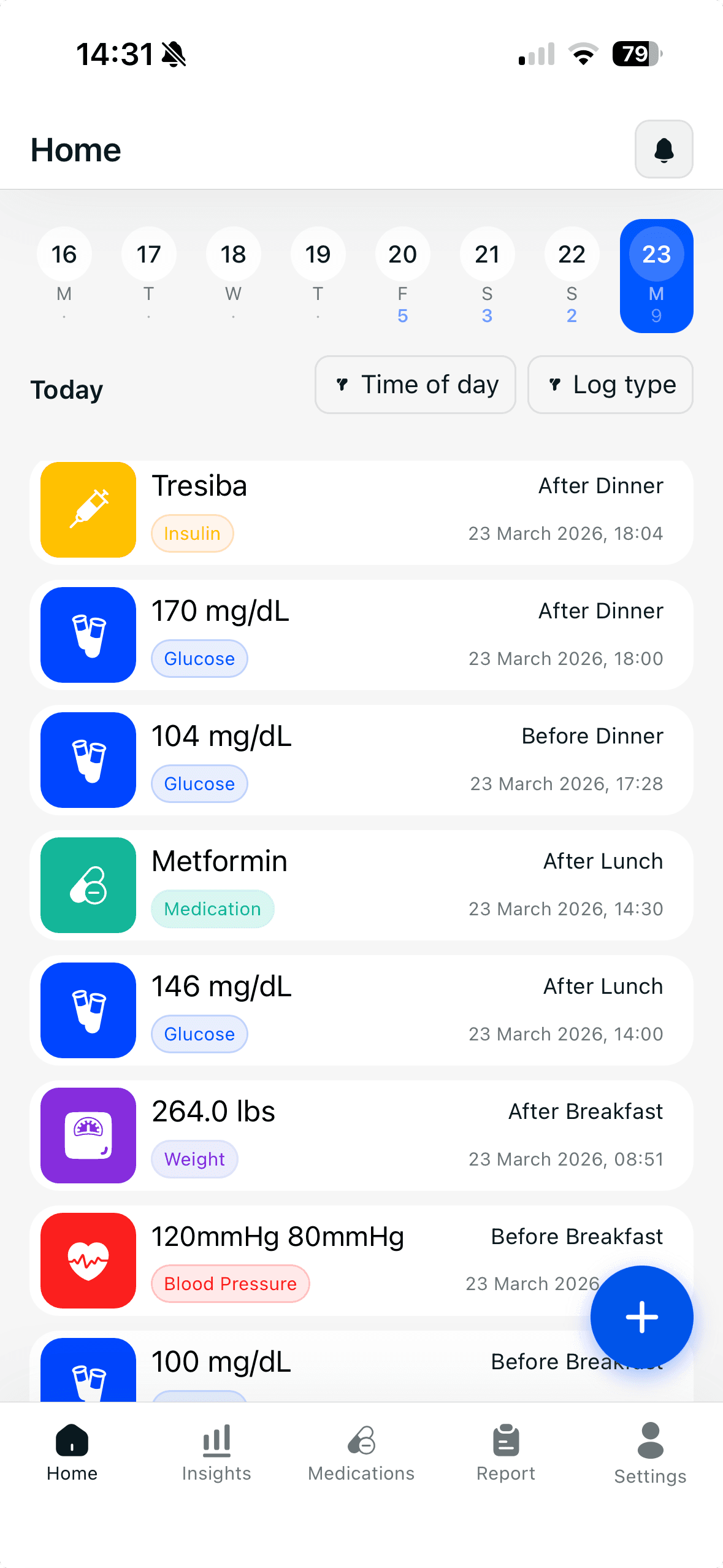
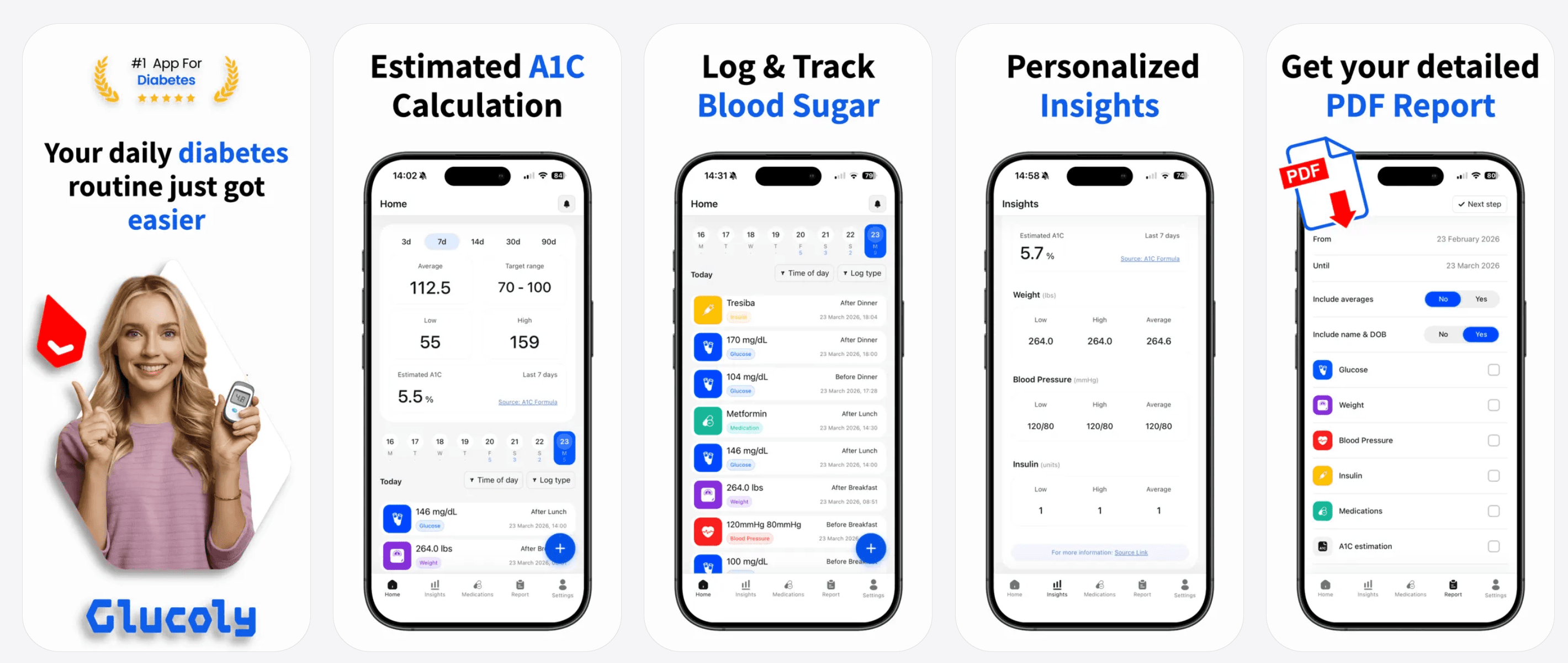
Log your fasting and post-meal readings in Glucoly to share with your care team — free to download, manual entry or Apple Health/Dexcom sync, with Glucoly Premium for detailed reports.
Download GlucolySources
- American Diabetes Association (ADA) — diabetes.org
- NHS — nhs.uk
- Centers for Disease Control and Prevention (CDC) — cdc.gov/diabetes
- National Institute of Diabetes and Digestive and Kidney Diseases (NIDDK) — niddk.nih.gov
Share this article
Related Posts
What Is LADA (Type 1.5 Diabetes)? Symptoms and How It Differs from Type 1 and Type 2
LADA (type 1.5 diabetes) is autoimmune diabetes that develops slowly in adults, often misdiagnosed as type 2.…
Read more →EducationDiabetic Retinopathy: How Diabetes Affects Your Eyes (and How to Protect Them)
Diabetic retinopathy is the leading cause of blindness in adults — largely preventable. Learn the stages, symp…
Read more →EducationWhat Is Diabetic Ketoacidosis (DKA)? Warning Signs You Must Know
DKA is a life-threatening diabetes emergency. Know the warning signs — fruity breath, vomiting, confusion — an…
Read more →