Your estimated A1C turns daily glucose readings into a picture of long-term control. Here's what it measures, how it differs from a lab test, and how to use it.
If you live with diabetes, you've probably heard about A1C - but the number can feel abstract. An estimated A1C bridges the gap between lab visits, turning the readings you log every day into a single, meaningful measure of how your blood sugar is trending over time. Understanding what it represents makes it far easier to act on.
In this article
What A1C actually measures
A1C reflects the percentage of your hemoglobin that has glucose attached to it. Because red blood cells live for about three months, A1C is essentially an average of your blood sugar over that period. A higher A1C means your average glucose has been higher; a lower A1C means it's been closer to target. It's the metric clinicians use to judge long-term control.
Estimated A1C vs a lab test
A lab A1C is measured from a blood draw. An estimated A1C is calculated from the glucose readings you log - the more consistently you track, the more representative it is. It won't replace your lab result, but it gives you something a lab test can't: a running view between appointments, so you're never guessing where you stand for months at a time.
Why a daily estimate helps
Seeing your estimated A1C move day to day turns an abstract target into immediate feedback. If a change in diet, activity, or medication is working, the trend reflects it within days rather than at your next visit. That faster feedback loop is one of the most motivating things about tracking - small wins become visible.
What's a healthy target?
Targets are personal. Many adults aim for an A1C below 7%, but the right goal depends on your age, health, and how long you've had diabetes - your care team sets it with you. Use your estimated A1C to understand direction and consistency, and bring it to your doctor to confirm your individual target.
How Glucoly estimates your A1C
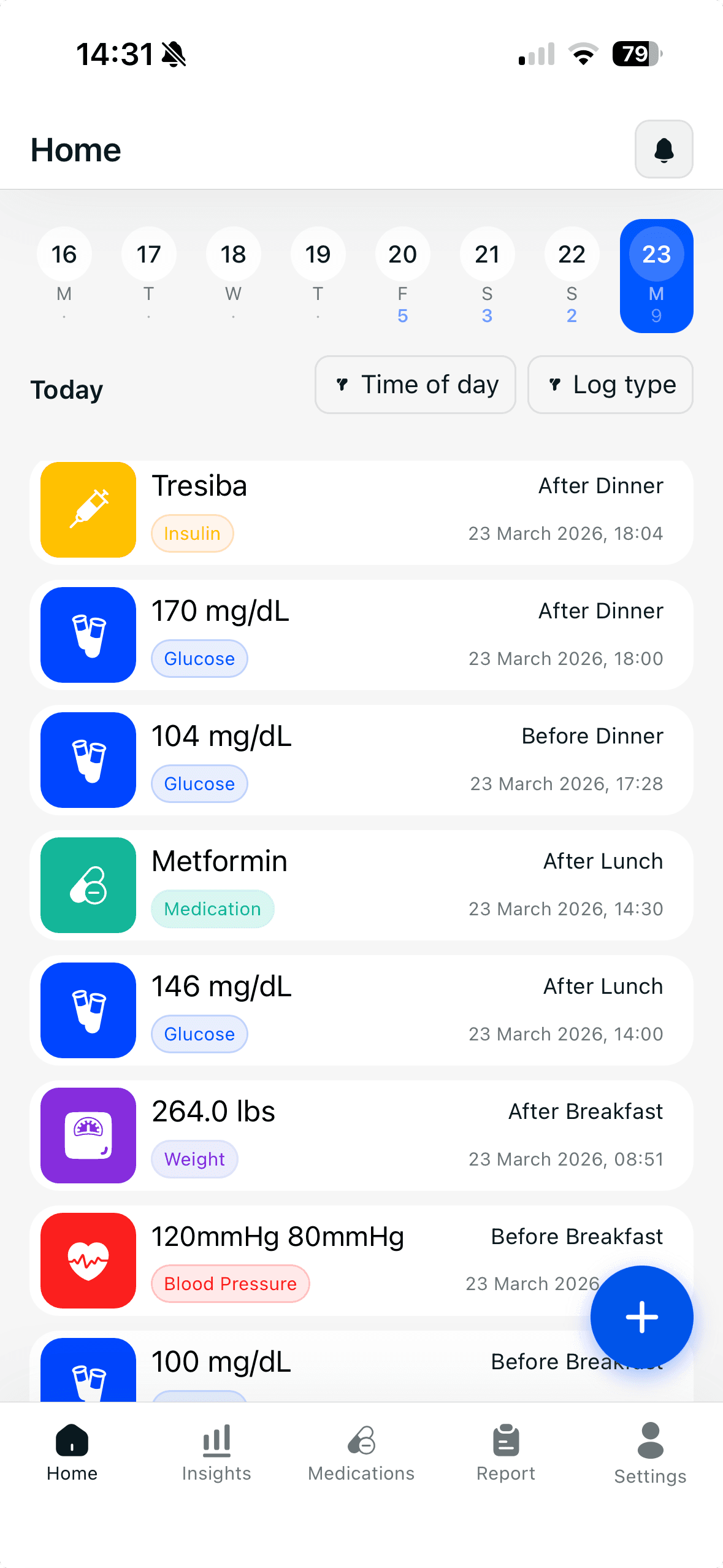
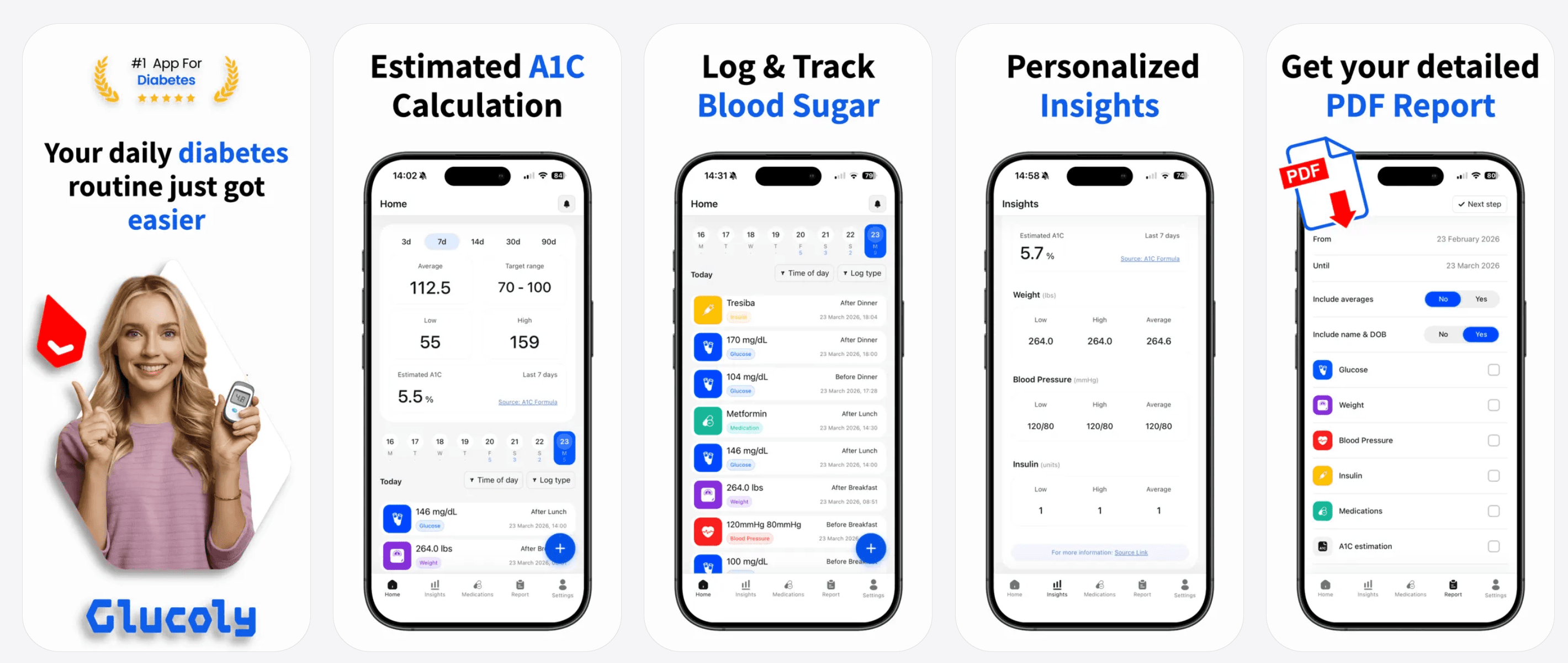
Glucoly calculates a daily estimated A1C from the glucose readings you log, alongside your average, target-range time, lows and highs across 7, 14, 30, and 90-day views. It's a clear, at-a-glance picture of your long-term control - and it exports straight into a doctor-ready PDF for your next appointment.
Frequently Asked Questions
What is a normal estimated A1C?
For most non-pregnant adults with diabetes, many clinicians aim for an A1C below 7%. For people without diabetes, a normal A1C is generally below 5.7%. Values between 5.7% and 6.4% indicate prediabetes. Your personal target may differ - always confirm it with your healthcare provider, since age, other health conditions, and risk of hypoglycemia all affect what's appropriate for you.
How accurate is an estimated A1C compared to a lab test?
An estimated A1C calculated from logged glucose readings is a useful daily trend indicator, but it is not a replacement for a laboratory A1C. Lab tests measure glycated hemoglobin directly from a blood sample and are considered the clinical standard. The more consistently you log readings - and the more you spread them across fasting, pre-meal, and post-meal times - the more representative your estimated A1C will be.
How quickly can my A1C improve?
Because A1C reflects roughly three months of average glucose, meaningful changes typically become visible after 6–12 weeks of consistently better blood sugar control. Some people see the estimated A1C trend start to shift within a few weeks of dietary or medication changes. Sustainable improvements come from daily habits - not short bursts of effort followed by a slide back.
Sources
- American Diabetes Association. A1C Test and Diabetes. diabetes.org
- Centers for Disease Control and Prevention. All About Your A1C. cdc.gov/diabetes/managing/managing-blood-sugar/a1c
Want to see your estimated A1C update every day? Download Glucoly free on the App Store and Google Play.
Download GlucolyShare this article
Related Posts
What Is LADA (Type 1.5 Diabetes)? Symptoms and How It Differs from Type 1 and Type 2
LADA (type 1.5 diabetes) is autoimmune diabetes that develops slowly in adults, often misdiagnosed as type 2.…
Read more →EducationDiabetic Retinopathy: How Diabetes Affects Your Eyes (and How to Protect Them)
Diabetic retinopathy is the leading cause of blindness in adults — largely preventable. Learn the stages, symp…
Read more →EducationWhat Is Diabetic Ketoacidosis (DKA)? Warning Signs You Must Know
DKA is a life-threatening diabetes emergency. Know the warning signs — fruity breath, vomiting, confusion — an…
Read more →