Discover which fruits have the least sugar and lowest glycemic index for people with diabetes - plus how to test your personal glucose response.
For people with diabetes, the fruits with the least impact on blood sugar are those lowest in total sugar and highest in fiber - notably avocado (1.8g sugar per 100g), raspberries (4.4g), strawberries (4.9g), and blackberries (4.9g). No fruit is completely sugar-free, but many can be enjoyed regularly in appropriate portions without significant glucose spikes. The key factors are total sugar content, glycemic index, fiber, and portion size.
In this article
- Why Fruit Is Not All Equal for Blood Sugar
- Lowest-Sugar Fruits (per 100g)
- Medium-Sugar Fruits Fine in Moderation
- High-Sugar Fruits to Limit
- Whole Fruit vs Fruit Juice
- Glycemic Index of Common Fruits
- Pairing Fruit with Protein or Fat
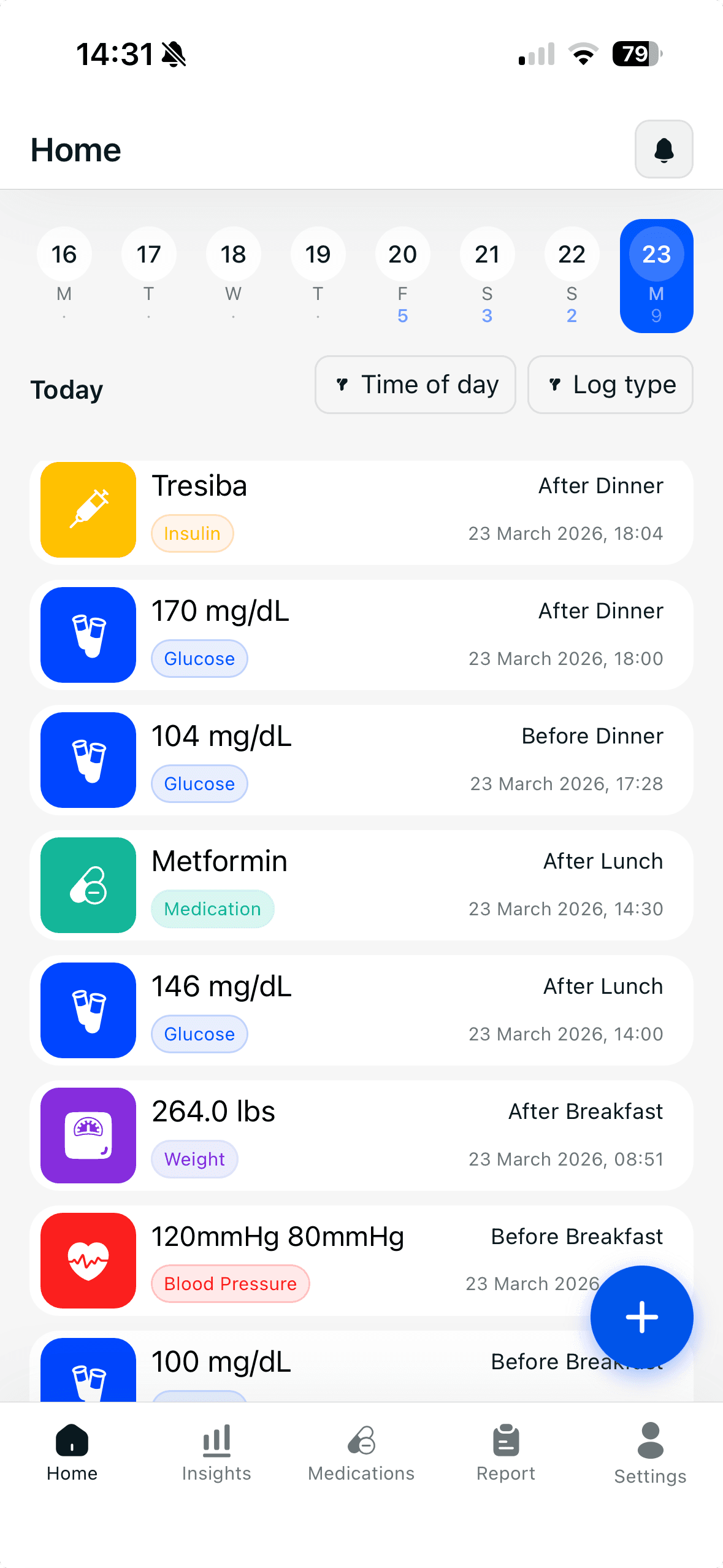
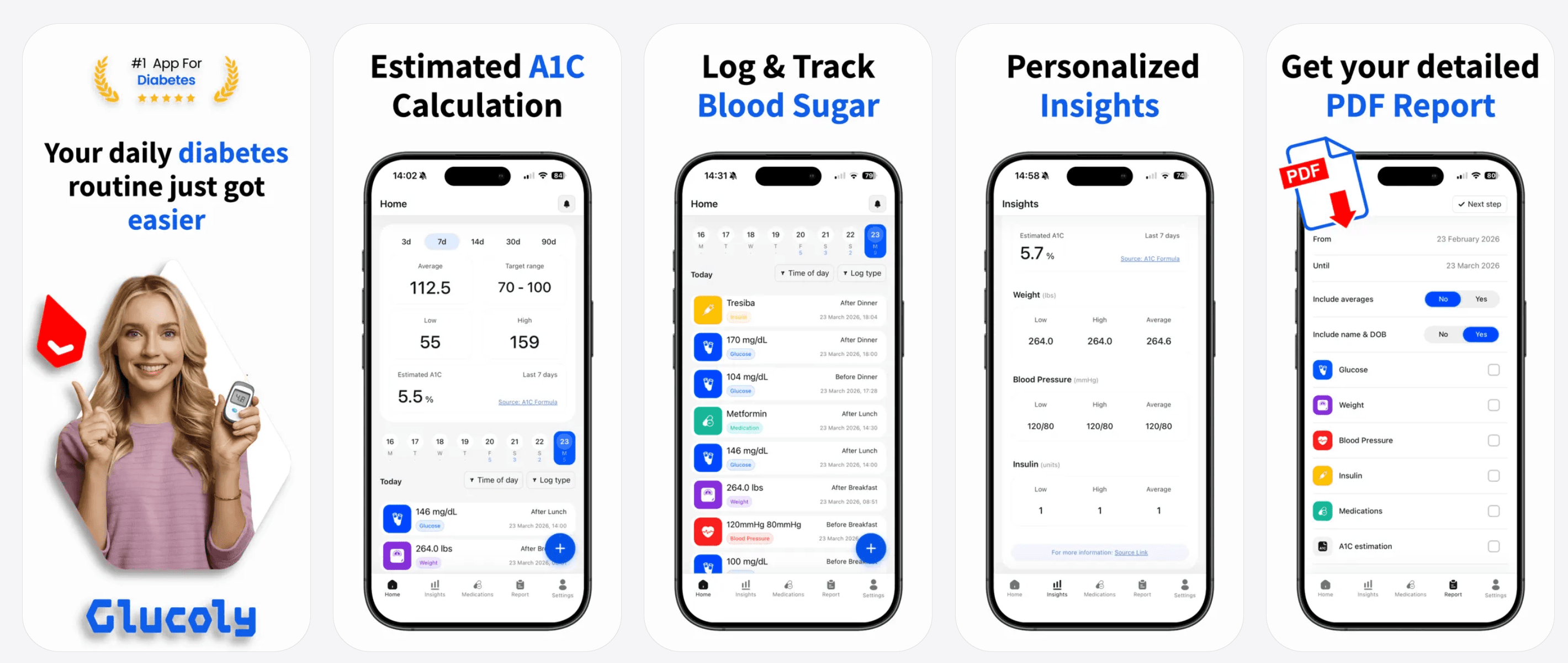
- Testing Your Personal Response with Glucoly
- What fruits can diabetics eat freely?
- Is banana good for diabetes?
- What is the lowest glycemic fruit?
- At a Glance: Lowest-sugar fruits - avocado, lemon/lime, raspberries, strawberries, blackberries - all under 5g sugar per 100g.
- Fiber slows glucose absorption - whole fruit is always better than fruit juice.
- Glycemic index matters: strawberries (GI ~25), apple (GI ~36), banana (GI ~51–62), watermelon (GI ~72).
- High-sugar fruits to limit: grapes (16g/100g), dried fruit, mango (14g/100g) - keep portions small.
- Pairing fruit with protein or fat (almond butter, Greek yogurt) slows absorption further.
- Log pre- and post-fruit glucose readings in Glucoly to learn which fruits work for your blood sugar personally.
Why Fruit Is Not All Equal for Blood Sugar
The phrase 'eat more fruit' is common dietary advice - but for people with diabetes, fruit quality and quantity matter enormously. Three factors determine how much a specific fruit will raise your blood sugar.
- Total sugar content: grams of sugar per 100g of fruit gives you the raw glucose load.
- Glycemic index (GI): measures how quickly a food raises blood sugar compared to pure glucose (GI 100). Low GI (below 55) means a slower, gentler rise.
- Fiber content: dietary fiber slows carbohydrate absorption in the gut. High-fiber fruits - berries, pears, apples - produce a much gentler glucose response than low-fiber options like watermelon.
Lowest-Sugar Fruits (per 100g)
These fruits contain the least total sugar and are the safest daily options for most people with diabetes - in appropriate portions.
- Avocado: ~1.8g sugar - technically a fruit; virtually all its carbohydrates are fiber.
- Lemon / lime: ~2.5g sugar - typically used as flavoring; minimal direct intake of sugar.
- Raspberry: ~4.4g sugar - also high in fiber (6.5g per 100g); excellent glycemic profile.
- Strawberry: ~4.9g sugar - rich in vitamin C and antioxidants; glycemic index of approximately 25.
- Blackberry: ~4.9g sugar - good fiber content; among the lowest-GI berry options.
- Cantaloupe: ~7.9g sugar - high water content keeps the glycemic load moderate.
- Peach: ~8.4g sugar - contains fiber and sorbitol, which is absorbed more slowly than glucose.
Medium-Sugar Fruits Fine in Moderation
These fruits have more sugar but also meaningful fiber - which slows absorption. A single serving (roughly one medium piece or one cup) can fit into a diabetes-friendly meal plan. The key is portion: one medium apple is fine; two large apples at once is a significant glucose load.
- Apple: ~10g sugar per 100g - the skin contains most of the fiber; eat it whole, not peeled.
- Orange: ~9g sugar - fiber and flavonoids in whole oranges blunt the glycemic response significantly.
- Pear: ~10g sugar - particularly high in pectin (soluble fiber), which slows digestion.
- Kiwi: ~9g sugar - dense in vitamin C; GI of roughly 38–58 depending on ripeness.
High-Sugar Fruits to Limit
These fruits are nutritious, but their sugar content means portions must be small and carefully timed for people with diabetes.
- Grapes: ~16g sugar per 100g - naturally high in glucose and fructose, and easy to over-eat.
- Banana: ~12–15g sugar per 100g depending on ripeness - riper bananas have higher GI (up to 62) as starch converts to sugar.
- Mango: ~14g sugar per 100g - delicious but glycemically significant; limit to a small slice.
- Dried fruit: highly concentrated - a small box of raisins (~43g) contains roughly 32g of sugar. Dried dates, figs, and apricots carry similar loads.
- Fruit juice: all fiber is removed in production; the glycemic response is much faster than whole fruit - effectively the same as drinking sweetened soda.
Whole Fruit vs Fruit Juice
Choosing whole fruit over juice is one of the most impactful decisions a person with diabetes can make. When fruit is juiced, cell walls are broken down and insoluble fiber is removed. Glucose enters the bloodstream far faster - essentially the same mechanism as drinking sugary soda. A 240ml glass of orange juice contains roughly the same sugar as 3–4 whole oranges, without the fiber that would have slowed absorption.
- 240ml orange juice: approximately 26g of sugar; GI approximately 50–65.
- 1 medium whole orange: approximately 12g of sugar; GI approximately 35–42.
- Smoothies fall in between - they retain fiber but are often calorie-dense and easy to over-consume.
- If juice is the only option available during a hypoglycemic event, 125ml provides approximately 15g of fast-acting carbohydrates - appropriate for treating a low.
Glycemic Index of Common Fruits
The glycemic index ranks foods on a scale of 0–100 based on how fast they raise blood sugar. Below 55 is considered low GI. These values are averages - ripeness, preparation, and individual factors all influence your personal response.
- Cherries: GI approximately 22 - one of the lowest of any fruit.
- Strawberries: GI approximately 25 - excellent low-GI choice.
- Grapefruit: GI approximately 25.
- Apple: GI approximately 36.
- Pear: GI approximately 38.
- Orange: GI approximately 40.
- Banana (ripe): GI approximately 51–62 depending on ripeness.
- Pineapple: GI approximately 59.
- Watermelon: GI approximately 72 - high GI, though glycemic load per typical serving is moderate due to high water content.
Pairing Fruit with Protein or Fat
Even low-GI fruit can be made more blood-sugar-friendly by eating it alongside a protein or fat source. When you eat fat or protein with carbohydrates, gastric emptying slows - meaning glucose enters the bloodstream more gradually, lowering the peak blood sugar response.
- Almond butter + apple slices: fat and protein in almond butter significantly slow apple sugar absorption.
- Greek yogurt + berries: protein in Greek yogurt blunts the berry glucose spike.
- Cheese + a small pear: a classic low-GI pairing.
- Handful of nuts + a few grapes: fats in nuts temper the higher sugar load of grapes.
Testing Your Personal Response with Glucoly
Glycemic index values are population averages - they may not reflect your individual response. Ripeness, food preparation, the rest of your meal, your current insulin levels, and stress all affect how your blood sugar responds to the same fruit. The most reliable way to understand your personal response is to test it directly.
Log your pre-meal glucose reading in Glucoly before eating, consume the fruit, then log your glucose again at 1 hour and 2 hours afterward. Over two or three repetitions, a personal pattern emerges - giving you far more actionable data than any GI table.
This article is for general education and is not medical advice. Individual glucose responses to food vary. Consult your healthcare provider or registered dietitian before making significant changes to your diet.
Frequently Asked Questions
What fruits can diabetics eat freely?
- No fruit should be eaten without awareness of portion size, but the lowest-sugar options - raspberries, strawberries, blackberries, and avocado - can be eaten in generous portions with minimal impact on blood sugar.
- A cup of raspberries (about 123g) contains only about 5g of sugar and 8g of fiber - an excellent choice for most people with diabetes.
- 'Eating freely' still means being aware of cumulative intake. Even low-sugar fruits contribute carbohydrates.
- Test your own response with Glucoly: log before and after readings to confirm a fruit works for your glucose levels.
Is banana good for diabetes?
- Bananas are higher in sugar (12–15g per 100g) with a variable GI (51–62) depending on ripeness - yellow-green bananas have lower GI than ripe, spotted ones.
- A small banana (about 100g) can fit into a diabetes meal plan, especially when eaten with a protein source such as nuts or yogurt.
- Avoid very ripe bananas and large portions. Half a medium banana may be a better serving for most people with Type 2 diabetes.
- Test your individual response - some people manage bananas well while others see significant blood sugar spikes.
What is the lowest glycemic fruit?
- Cherries have one of the lowest GIs of any fruit - approximately 22.
- Strawberries (GI ~25) and grapefruit (GI ~25) are close behind.
- Raspberries and blackberries are also among the lowest, driven by their very high fiber content relative to sugar.
- Avocado has a GI near zero, though it is rarely thought of as a sweet fruit.
Sources
- American Diabetes Association. Fruit. diabetes.org/food-nutrition/understanding-carbs
- Centers for Disease Control and Prevention. Diabetes and Healthy Eating. cdc.gov/diabetes/healthy-eating
Log your glucose before and after eating with Glucoly to discover exactly which foods - including fruit - work for your blood sugar. Free on the App Store and Google Play.
Download GlucolyShare this article
Related Posts
How Protein Affects Blood Sugar Levels in Diabetes
Protein raises blood sugar slowly and much less than carbs. Learn how gluconeogenesis works, best protein sour…
Read more →NutritionCarb Counting for Diabetes: A Beginner's Step-by-Step Guide
Carb counting helps you manage blood sugar by tracking grams of carbs per meal. This beginner guide covers how…
Read more →NutritionIntermittent Fasting for Type 2 Diabetes: Does It Work?
Intermittent fasting can lower A1C and blood sugar in type 2 diabetes — but carries hypoglycemia risk with ins…
Read more →