Simple carbs absorb fast and spike glucose quickly. Complex carbs digest slowly for a gentler rise. A complete guide for people with diabetes managing their carb intake.
Simple carbohydrates are sugars made of one or two sugar units - monosaccharides like glucose and fructose, or disaccharides like sucrose and lactose. They absorb quickly into the bloodstream, causing a rapid glucose rise. Complex carbohydrates are long chains of sugar units (polysaccharides) found in whole grains, legumes, and vegetables. They digest more slowly, producing a gentler, more gradual glucose rise. For people with diabetes, understanding this difference is foundational to meal planning and blood sugar control.
In this article
- What Are Simple Carbohydrates?
- What Are Complex Carbohydrates?
- Glycemic Index: Why It Matters More Than Simple vs Complex
- The Role of Fiber in Blood Sugar Control
- Simple Carbs to Limit
- Complex Carbs to Prioritize
- What 'Refined' Means and Why Processing Removes Fiber
- Building the Diabetes Meal Plate
- How Logging Meals in Glucoly Reveals Your Personal Response
- Are all simple carbs bad for diabetics?
- What are the best complex carbs for diabetics?
- How many carbs should a diabetic eat per day?
- At a Glance: Simple carbs (1–2 sugar units) absorb fast - quick glucose spike. Examples: white bread, sugary drinks, fruit juice, candy.
- Complex carbs (long sugar chains) digest slowly - gentler glucose rise. Examples: oats, lentils, beans, sweet potato, whole grain bread.
- Fiber content is the key differentiator - soluble fiber slows glucose absorption significantly.
- Glycemic index (GI) matters more than the simple/complex label alone - some simple carbs (fructose) have low GI; some complex carbs (white potato) have high GI.
- The word 'refined' means processing has removed most of the fiber - turning a complex carb into a fast-digesting one.
- Logging before and after meal glucose in Glucoly shows which carbs personally spike your blood sugar most.
What Are Simple Carbohydrates?
Simple carbohydrates are monosaccharides (single sugar units: glucose, fructose, galactose) or disaccharides (two sugar units bonded together: sucrose = glucose + fructose, lactose = glucose + galactose, maltose = glucose + glucose). Because they are already small molecules, your digestive system breaks them down very quickly - often within minutes of eating.
The speed of absorption is what makes simple carbohydrates significant for blood sugar management. A rapid influx of glucose hits the bloodstream quickly, triggering a sharp insulin response in people without diabetes, and causing a pronounced spike in people with diabetes, whose insulin response is impaired. The faster the absorption, the steeper the spike - and often the more dramatic the subsequent drop in energy.
- White bread and white rolls: refined flour with almost no fiber - glucose hits the bloodstream within 15–30 minutes.
- White rice: fast-digesting starch with low fiber content - a typical restaurant portion of 1.5 cups cooked contains 60–70 g of carbohydrates.
- Sugary drinks and sodas: liquid fructose and glucose absorb almost immediately - one of the fastest sources of glucose available.
- Fruit juice: the fiber in whole fruit is removed during juicing, leaving concentrated simple sugars. A 250 mL (8 oz) glass of orange juice has approximately 26 g of fast-digesting carbs.
- Candy and sweets: pure sugar, no fiber, no protein - maximum-speed glucose delivery.
- Most breakfast cereals: even those marketed as healthy are often heavily refined and high in added sugar.
- Baked goods (pastries, muffins, cookies): white flour plus added sugar - both components are fast-digesting simple carbs.
What Are Complex Carbohydrates?
Complex carbohydrates are polysaccharides - long chains of hundreds to thousands of sugar units bonded together. Your digestive system has to work much harder to break these down into individual glucose molecules, which is why they digest slowly and release glucose more gradually. This slower release gives insulin (or diabetes medication) more time to respond before glucose levels climb too high.
Complex carbohydrates include both starches (the energy-storage form in plants) and dietary fiber. Starches are digestible; fiber is not fully digested by humans, which is exactly why it is so valuable for blood sugar control. The more intact the structure of a carbohydrate - the less it has been processed - the more slowly it typically digests.
- Oats (steel-cut or rolled): high in beta-glucan soluble fiber - one of the best-studied breakfast foods for post-meal glucose control.
- Brown rice: contains the bran layer with fiber and nutrients that are removed during white rice processing.
- Lentils: high protein and fiber, very low glycemic index (GI approximately 29) - among the most blood-sugar-friendly carbs available.
- Chickpeas and kidney beans: similar to lentils - excellent sources of slow-digesting carbs and plant protein.
- Sweet potato: slower than white potato, with more fiber and a lower GI (approximately 54 versus 78 for white potato).
- Whole grain bread: uses the entire wheat kernel - germ, endosperm, and bran - preserving fiber content.
- Quinoa: a complete protein containing all nine essential amino acids, with moderate complex carbs and decent fiber.
- Barley: one of the highest beta-glucan contents of any grain - particularly effective at blunting glucose spikes.
Glycemic Index: Why It Matters More Than Simple vs Complex
Glycemic index (GI) ranks foods from 0 to 100 based on how much they raise blood sugar compared to pure glucose (GI 100). It is a more practical guide than the simple/complex label alone, because the label does not always predict the actual blood sugar response. Some simple carbohydrates have low GI. Some complex carbohydrates have surprisingly high GI.
Fructose is a simple carbohydrate, but it has a GI of just 23 - because it is metabolized in the liver rather than entering the bloodstream directly as glucose. White potato is a complex carbohydrate, but it has a GI of approximately 78 - nearly as high as pure glucose - because the starch structure is very easy to digest. These exceptions illustrate why GI is the more reliable practical guide than the simple-vs-complex label alone.
- Low GI (55 or below): lentils (~29), chickpeas (~33), whole milk (~35), apple (~36), rolled oats (~55).
- Medium GI (56–69): brown rice (~65), whole grain bread (~56–65), sweet corn (~56), ripe banana (~62).
- High GI (70 or above): white bread (~75), white rice (~73), white potato (~78), cornflakes (~81), pure glucose (100).
- Glycemic load (GI multiplied by grams of carbs, divided by 100) tells you the real-world blood sugar impact of a typical serving - more practical than GI alone.
- Cooking method matters: pasta cooked al dente has lower GI than soft-cooked pasta; cooled cooked rice has lower GI than freshly hot rice.
The Role of Fiber in Blood Sugar Control
Fiber is the most important factor separating beneficial complex carbs from problematic ones - even within the complex carb category. Dietary fiber is a non-digestible carbohydrate that slows the movement of food through the digestive tract, reducing the rate of glucose absorption into the bloodstream. According to research published in Diabetes Care, higher dietary fiber intake is associated with significantly lower fasting glucose, lower A1C, and improved insulin sensitivity.
Soluble fiber - found in oats (beta-glucan), legumes, apples, and psyllium - is especially effective. It forms a gel-like substance in the gut that physically slows the movement of glucose into the bloodstream. Insoluble fiber (in whole wheat bran and vegetable skins) is less directly effective for glucose blunting but supports gut health, which influences overall metabolic function.
- Aim for at least 25–38 g of total dietary fiber per day, per the American Diabetes Association.
- Soluble fiber: oats, barley, psyllium, lentils, chickpeas, apples, pears - most effective for post-meal glucose control.
- Insoluble fiber: whole wheat bread, vegetable skins, nuts, seeds - important for digestive health and satiety.
- Fiber blunts the glucose response of the meal it is part of - eating a salad before pasta reduces the spike from the pasta.
- Processing typically destroys fiber: whole wheat flour has approximately 13 g of fiber per 100 g; refined white flour has approximately 2.7 g.
Simple Carbs to Limit
This is not about eliminating these foods entirely - it is about understanding their impact so you can make informed choices and keep portions in check. The foods below absorb quickly and are among the most significant drivers of post-meal glucose spikes for people with diabetes.
- Sugary drinks: sodas, energy drinks, sweetened teas, and flavored lattes - liquid sugar absorbs faster than virtually any solid food.
- Fruit juice: nutritionally inferior to whole fruit - the fiber is removed, leaving concentrated simple sugars with no buffering effect.
- White bread, white rolls, and bagels: refined flour with minimal fiber. A large bagel can contain 55–65 g of fast-digesting carbs.
- White rice: a typical restaurant portion (1.5 cups cooked) can contain 60–70 g of carbohydrates with very little fiber.
- Most breakfast cereals: typically 20–40 g of fast carbs per serving, with sugar as a top ingredient in many popular brands.
- Candy, chocolate bars, and sweets: pure sugar - maximum glucose spike with minimal nutritional value.
- Pastries, muffins, and donuts: white flour plus sugar plus saturated fat - a combination that blunts satiety while spiking glucose.
- Flavored yogurt: many single-serve fruit-flavored yogurts contain 25–40 g of carbohydrates, most from added sugar. Choose plain Greek yogurt and add fresh berries instead.
Complex Carbs to Prioritize
These foods provide energy from carbohydrates while also delivering fiber, protein, or micronutrients that moderate the glucose response. Building meals around these options gives you more flexibility while staying within your blood sugar targets.
- Lentils (red, green, or black): GI approximately 29, high protein, high fiber - excellent as a soup base, salad topper, or main protein source.
- Chickpeas and kidney beans: GI approximately 33–40, versatile, and slow-digesting.
- Steel-cut or rolled oats: beta-glucan fiber makes these one of the best-studied breakfast options for post-meal glucose control.
- Barley: among the highest fiber content of any grain - add to soups and stews.
- Sweet potato: more fiber than white potato, lower GI - baked or steamed rather than mashed with butter and cream.
- Whole grain bread: look for 'whole wheat' or 'whole grain' as the first ingredient - provides 2–3 times more fiber than white bread.
- Quinoa: complete protein, moderate GI (approximately 53), works well as a rice substitute.
- Non-starchy vegetables (broccoli, spinach, cauliflower, zucchini, peppers): negligible glucose impact - eat freely to add volume and fiber.
- Berries (blueberries, strawberries, raspberries): lower sugar than most fruits, high in fiber and antioxidants - a smart choice for sweetness without a sharp glucose spike.
What 'Refined' Means and Why Processing Removes Fiber
Refining a grain means removing the outer layers - the bran (fiber-rich) and germ (nutrient-rich) - leaving only the starchy endosperm. This creates a white, smooth product with a longer shelf life and a lighter texture. It also creates a food that digests much faster, producing a higher and quicker glucose spike than the original whole grain.
Whole wheat flour retains all three grain layers and contains approximately 13 g of fiber per 100 g. Refined white flour contains only about 2.7 g of fiber per 100 g - roughly one-fifth of the whole grain. Bread made from white flour digests nearly as fast as table sugar. The same principle applies to brown rice versus white rice, and whole corn tortillas versus processed corn chips.
- Whole wheat bread: look for 'whole wheat' or 'whole grain' as the first ingredient - not just 'wheat bread,' which is usually mostly white flour.
- Brown rice versus white rice: brown rice has the bran intact - GI approximately 65 versus 73 for white rice, with significantly more fiber per serving.
- Whole grain pasta cooked al dente: GI approximately 42–50 compared to 60–70 for overcooked white pasta.
- Processing affects texture, shelf life, and cost - but removes the very nutrients that slow glucose absorption and make a carbohydrate source beneficial.
Building the Diabetes Meal Plate
The most practical way to apply the simple-vs-complex principle is at the plate level - building every meal to slow carbohydrate absorption and produce a gentler glucose rise. The American Diabetes Association's Diabetes Plate Method is a simple framework that works well as a daily default.
Fill half your plate with non-starchy vegetables: broccoli, salad greens, peppers, or zucchini. These contribute minimal carbohydrates and significant fiber. Fill one quarter with a lean protein - chicken, fish, eggs, tofu, or Greek yogurt. Protein slows gastric emptying, which blunts the glucose rise from carbs eaten in the same meal. Fill the remaining quarter with a high-fiber complex carbohydrate: lentils, brown rice, sweet potato, or whole grain bread.
- Half plate: non-starchy vegetables - the more, the better for fiber and volume without glucose impact.
- Quarter plate: lean protein - chicken, fish, eggs, legumes, Greek yogurt, or tofu.
- Quarter plate: complex carbohydrate - choose a high-fiber option from the list above.
- Add healthy fat: olive oil dressing, a quarter avocado, or a handful of nuts - fat further slows digestion.
- Research in Diabetes Care found that eating protein and vegetables before carbohydrates at the same meal reduces the post-meal glucose spike by up to 36%.
- Drink water with meals rather than juice or sweetened drinks.
How Logging Meals in Glucoly Reveals Your Personal Response
General guidelines describe how most people respond to simple versus complex carbohydrates. But glucose response is highly individual - two people eating the same meal can have very different blood sugar outcomes. The only way to know how your body responds to specific foods is to log your glucose before and after eating, consistently, over time.
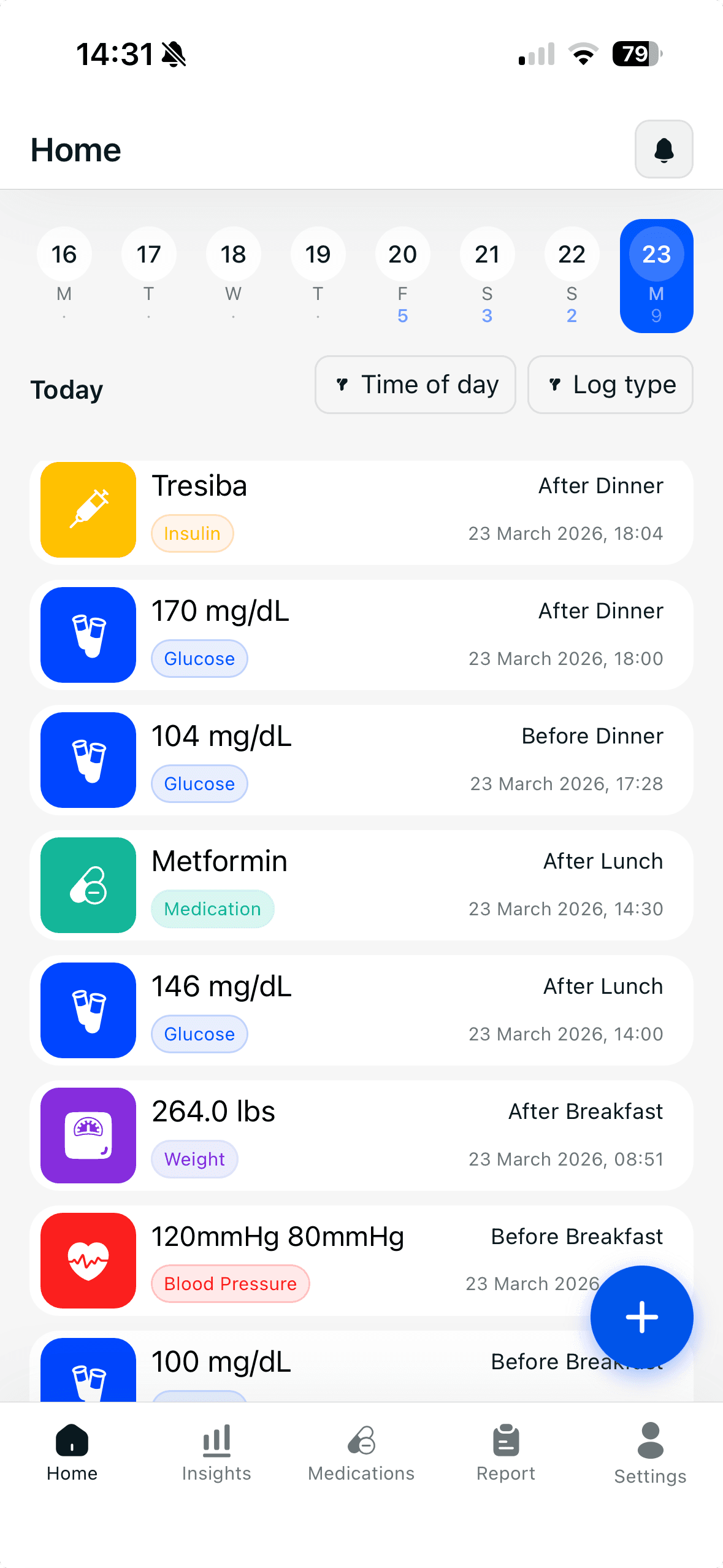
Glucoly's before/after meal tagging makes this easy. Log your pre-meal glucose, eat your meal, and log your post-meal reading 1–2 hours later. Over 7 or 14 days, the trend view shows you which meals keep you in range and which push your numbers up - personalized data that no general food table can give you.
This article is for general education and is not medical advice. Consult your healthcare provider before making changes to your treatment plan.
Frequently Asked Questions
Are all simple carbs bad for diabetics?
- No - the situation is more nuanced. Simple carbohydrates absorb faster and tend to spike blood sugar more than complex carbs, but this is not universal.
- Fructose (a simple sugar in whole fruit) has a low glycemic index (approximately 23) and is metabolized differently than glucose. Eating whole fruit in moderate portions is generally fine for most people with diabetes.
- Lactose (the simple sugar in milk and plain yogurt) also has a low GI and comes packaged with protein that further blunts the glucose response.
- The simple carbs to limit are the refined and added sugars found in sodas, candy, juice, and processed foods - not every food that contains a simple sugar.
- Tracking your own post-meal glucose readings remains the most reliable guide to how specific foods affect you personally.
What are the best complex carbs for diabetics?
- The best complex carbs for people with diabetes are high in fiber, have a low-to-moderate glycemic index, and are eaten in reasonable portions.
- Top choices: lentils (GI approximately 29), chickpeas (GI approximately 33), steel-cut oats (GI approximately 55), barley (GI approximately 28), sweet potato (GI approximately 54), and most non-starchy vegetables.
- Whole grain bread and brown rice are solid choices but have a higher GI than legumes - portion size matters more with these.
- Quinoa is a good rice substitute with a complete amino acid profile and moderate GI (approximately 53).
- Individual response varies - use before/after meal glucose logs in Glucoly to find your personal best choices.
How many carbs should a diabetic eat per day?
- There is no single correct answer - it depends on your type of diabetes, medications, body weight, activity level, and glucose goals.
- A common starting point from the American Diabetes Association is 45–60 g of carbohydrates per meal (135–180 g per day), though lower-carb approaches (20–45 g per meal) have strong clinical evidence for blood sugar control.
- For people with Type 1 diabetes using a fixed insulin-to-carb ratio, the exact carb count directly determines the bolus dose - precision matters.
- Work with your healthcare provider or a registered dietitian to set a target that fits your individual treatment plan and lifestyle.
- Whichever target you use, prioritizing complex, fiber-rich carbohydrates over refined simple carbs makes staying within that target easier and more effective.
Sources
- American Diabetes Association. Understanding Carbohydrates. diabetes.org/food-nutrition/understanding-carbs
- American Diabetes Association. Standards of Medical Care in Diabetes 2024. diabetes.org
See how different carbs affect your personal glucose by logging before and after meals in Glucoly - free on the App Store and Google Play.
Download GlucolyShare this article
Related Posts
How Protein Affects Blood Sugar Levels in Diabetes
Protein raises blood sugar slowly and much less than carbs. Learn how gluconeogenesis works, best protein sour…
Read more →NutritionCarb Counting for Diabetes: A Beginner's Step-by-Step Guide
Carb counting helps you manage blood sugar by tracking grams of carbs per meal. This beginner guide covers how…
Read more →NutritionIntermittent Fasting for Type 2 Diabetes: Does It Work?
Intermittent fasting can lower A1C and blood sugar in type 2 diabetes — but carries hypoglycemia risk with ins…
Read more →