Sugar alcohols sweeten 'sugar-free' foods without spiking blood sugar much - but not all are equal. Here's what diabetics need to know about erythritol, xylitol, and maltitol.
Sugar alcohols are a type of reduced-calorie sweetener - also called polyols - found in many 'sugar-free' candies, protein bars, gum, keto snacks, and low-carb products. Despite the name, they contain neither sugar nor alcohol in the conventional sense. Their effect on blood glucose varies dramatically by type: erythritol has a glycemic index near zero and barely raises blood sugar, while maltitol has a glycemic index of around 35 and can cause meaningful spikes - comparable to some table-sugar-containing foods. Understanding the differences is essential for anyone with diabetes who relies on 'sugar-free' labeling.
In this article
- What Are Sugar Alcohols?
- The Glycemic Impact of Common Sugar Alcohols
- Net Carbs: When the Math Is Misleading
- Do Sugar Alcohols Count as Carbs for Insulin Dosing?
- Digestive Side Effects: The Hidden Cost
- Which Sugar Alcohols Are Safest for People with Diabetes?
- How to Read a Label for Sugar Alcohols
- How Tracking in Glucoly Reveals Your Personal Response
- Is erythritol safe for diabetics?
- Do sugar alcohols spike blood sugar?
- What is the difference between sugar and sugar alcohol?
- At a Glance: Sugar alcohols are sweeteners used in 'sugar-free' products - they are NOT related to drinking alcohol.
- Most raise blood sugar less than regular sugar, but the effect varies greatly by type.
- Erythritol (GI ~0) barely affects glucose; xylitol (GI ~7) and sorbitol (GI ~9) have modest impact.
- Maltitol (GI ~35) is the sneaky one - it raises blood glucose significantly and is common in cheap 'sugar-free' chocolates.
- Digestive side effects (bloating, gas, diarrhea) are common at higher doses with sorbitol, xylitol, and maltitol.
- Always read the full nutrition label - 'sugar-free' does not mean glucose-free.
- Tracking your glucose after eating products with sugar alcohols reveals your personal response.
What Are Sugar Alcohols?
Sugar alcohols are a class of carbohydrates derived from sugars - the name comes from their chemical structure, which has features of both sugar and alcohol molecules, but they are neither table sugar nor ethanol. They occur naturally in small amounts in some fruits and vegetables, but the versions used in processed food are manufactured.
Food manufacturers favor sugar alcohols because they provide sweetness with fewer calories (typically 1.5–2.6 calories per gram vs. 4 calories per gram for sugar) and cause a smaller, slower rise in blood glucose than sucrose. They are not fully absorbed in the small intestine, which is why they have a lower glycemic impact - and also why they can cause digestive discomfort at higher doses.
- Common names on ingredient labels: erythritol, xylitol, sorbitol, maltitol, isomalt, lactitol, mannitol.
- Found in: sugar-free gum and candies, protein bars, keto snacks, 'diabetic-friendly' chocolates, some baked goods.
- Taste: generally similar to sugar, though some (especially erythritol) have a slight cooling sensation.
- Calories: 0–2.6 kcal/g depending on type - fewer than sugar's 4 kcal/g, but not zero for most.
The Glycemic Impact of Common Sugar Alcohols
The glycemic index (GI) measures how much a food raises blood sugar compared to pure glucose (GI = 100). For sugar alcohols, the differences are dramatic - which matters enormously for anyone managing diabetes. The American Diabetes Association advises reading labels carefully because the blood sugar impact of sugar alcohols varies widely.
- Erythritol - GI approximately 0: almost entirely excreted unchanged in urine; causes virtually no blood glucose rise and no insulin response. The safest choice for people with diabetes.
- Xylitol - GI approximately 7: a modest, slow glucose rise; well tolerated by most people in moderate amounts (under 30 g/day).
- Sorbitol - GI approximately 9: similar to xylitol; slowly absorbed and causes a mild glucose rise. Common in sugar-free gum and some diabetic-labeled products.
- Isomalt - GI approximately 9: used in hard candies and sugar-free confectionery; modest glucose impact.
- Maltitol - GI approximately 35: the most problematic sugar alcohol for glucose control. A GI of 35 means it raises blood sugar meaningfully - roughly half the impact of table sugar. Common in cheap 'sugar-free' chocolates. Its net carb subtraction on labels is often misleading.
- Mannitol - GI approximately 2: minimal glucose impact, but high doses cause strong laxative effects.
Net Carbs: When the Math Is Misleading
The 'net carbs' calculation - total carbohydrates minus fiber minus sugar alcohols - became popular in keto and low-carb communities as a way to estimate the carbohydrates that actually raise blood sugar. The logic: fiber and some sugar alcohols aren't fully absorbed, so they shouldn't count.
This works reasonably well for erythritol, which truly has near-zero glucose impact. It works poorly for maltitol. A 'sugar-free' chocolate bar with 20 g of maltitol might advertise 2 g net carbs - but that maltitol still raises your blood sugar meaningfully. Research published in the European Journal of Clinical Nutrition confirms that maltitol's glucose effect is too significant to subtract completely.
- Net carbs = Total Carbs minus Fiber minus Sugar Alcohols - a useful estimate, not a guarantee.
- For erythritol: subtracting it is accurate - GI is essentially zero.
- For xylitol and sorbitol: partial subtraction may be appropriate - they have a real but modest glucose effect.
- For maltitol: the full subtraction is misleading - GI ~35 means it still raises blood glucose.
- When in doubt: check your glucose 1–2 hours after eating a 'net-carb-marketed' product to see your actual response.
Do Sugar Alcohols Count as Carbs for Insulin Dosing?
For people with Type 1 diabetes who use an insulin-to-carb ratio, the question of whether to dose for sugar alcohols is important and depends on which sugar alcohol is present. The general guidance from diabetes care educators is type-dependent.
- Erythritol: no need to dose insulin - its glucose impact is negligible.
- Xylitol and sorbitol: some people count half the grams in their carb total; individual responses vary.
- Maltitol: because its GI is ~35 (roughly half that of table sugar), counting approximately half the maltitol grams as effective carbs is a reasonable starting point - but test your glucose response first.
- Always discuss your personal insulin dosing strategy for sugar alcohols with your endocrinologist or diabetes educator.
- Consult your healthcare provider before making changes to your treatment plan.
Digestive Side Effects: The Hidden Cost
Because sugar alcohols are incompletely absorbed in the small intestine, they pass into the large intestine where gut bacteria ferment them. This fermentation produces gas - and depending on the dose and individual gut sensitivity, it can cause significant bloating, gas, cramping, and diarrhea.
Erythritol is the exception again: it is mostly absorbed in the small intestine and excreted in urine before reaching the colon, so it causes very little digestive disturbance even at higher doses. Sorbitol, xylitol, and especially maltitol are more likely to cause GI symptoms, and sensitivity varies significantly between individuals.
- Erythritol: minimal GI side effects even at 30–50 g per day for most people.
- Xylitol: laxative effects can occur above 30–40 g per day; individual threshold varies.
- Sorbitol: FDA requires a label warning when sorbitol exceeds 50 g per day - strong laxative at higher doses.
- Maltitol: digestive effects can occur at doses as low as 20–30 g in sensitive individuals.
- Many 'sugar-free' products contain mixed sugar alcohols - total grams add up quickly across multiple servings.
Which Sugar Alcohols Are Safest for People with Diabetes?
Based on glycemic impact and digestive tolerability, erythritol stands out as the most diabetes-friendly sugar alcohol currently available. It causes virtually no blood glucose rise, has minimal caloric value, and is well tolerated by most people. Xylitol and sorbitol are reasonable choices in moderate amounts. Maltitol should be used with caution - or avoided - by anyone who is sensitive to post-meal glucose rises.
- Best choice: erythritol - GI ~0, minimal GI side effects, widely available in baking and packaged foods.
- Reasonable choices: xylitol, sorbitol - low GI, mild glucose impact in typical serving sizes.
- Use cautiously: maltitol - GI ~35, misleading on 'sugar-free' labels, meaningful glucose impact.
- Note: xylitol is toxic to dogs - keep xylitol-containing products away from pets.
How to Read a Label for Sugar Alcohols
On US nutrition labels, sugar alcohols appear as a sub-item under Total Carbohydrates, alongside Dietary Fiber and Total Sugars. Not all labels break down which specific sugar alcohol is present - for that, you need to check the ingredients list.
- Step 1: Find 'Sugar Alcohols' under Total Carbohydrates on the Nutrition Facts panel - the grams listed are the total.
- Step 2: Check the ingredients list for the specific name: erythritol, xylitol, sorbitol, maltitol, or others.
- Step 3: If the primary sweetener is maltitol, don't fully subtract it from your carb count - it still raises blood sugar.
- Step 4: Check serving size - many 'sugar-free' products have small serving sizes that make the label look better than the full product.
- Step 5: Consider testing your glucose response - the label is a starting point, not a guarantee.
How Tracking in Glucoly Reveals Your Personal Response
Individual responses to sugar alcohols vary - influenced by gut bacteria composition, gut transit time, and the mix of other foods eaten alongside. The only way to know how a specific product affects your glucose is to test it directly and track the result.
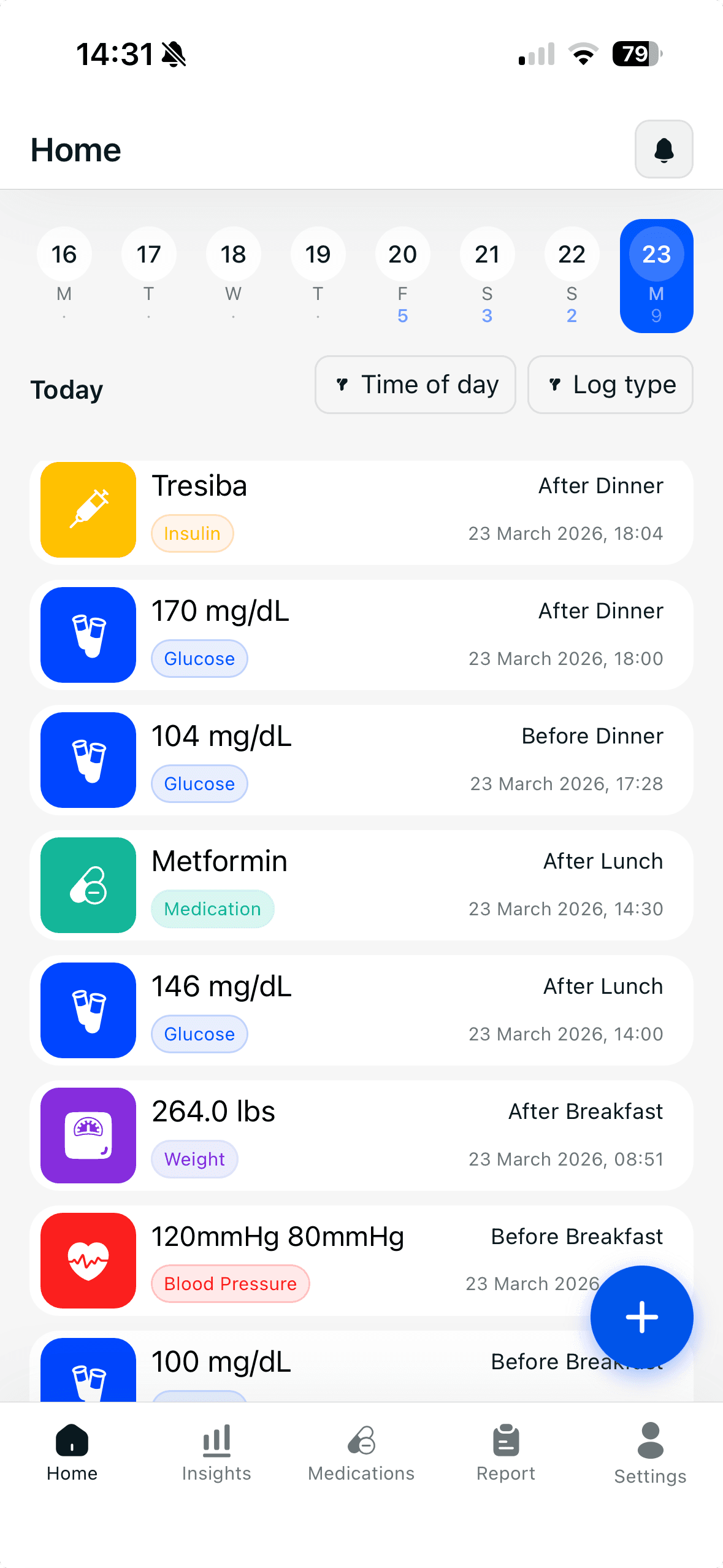
A simple approach: log a pre-meal reading in Glucoly before eating the sugar-free product, then check and log again 1–2 hours after. Do this across several occasions and compare to your baseline for similar meals. Blood sugar typically peaks 1–2 hours after eating, so that window captures the real impact. Over time, you'll know exactly which products fit your personal glucose targets - and which ones are misleadingly labeled.
- Log a fasting or pre-meal reading before eating any new 'sugar-free' product - this is your baseline.
- Check and log again 1–2 hours after eating - that's when glucose typically peaks.
- Tag the reading as 'after meal' in Glucoly and add a note about what you ate.
- Compare the post-meal reading to your usual post-meal baseline - the difference shows the product's real glucose impact.
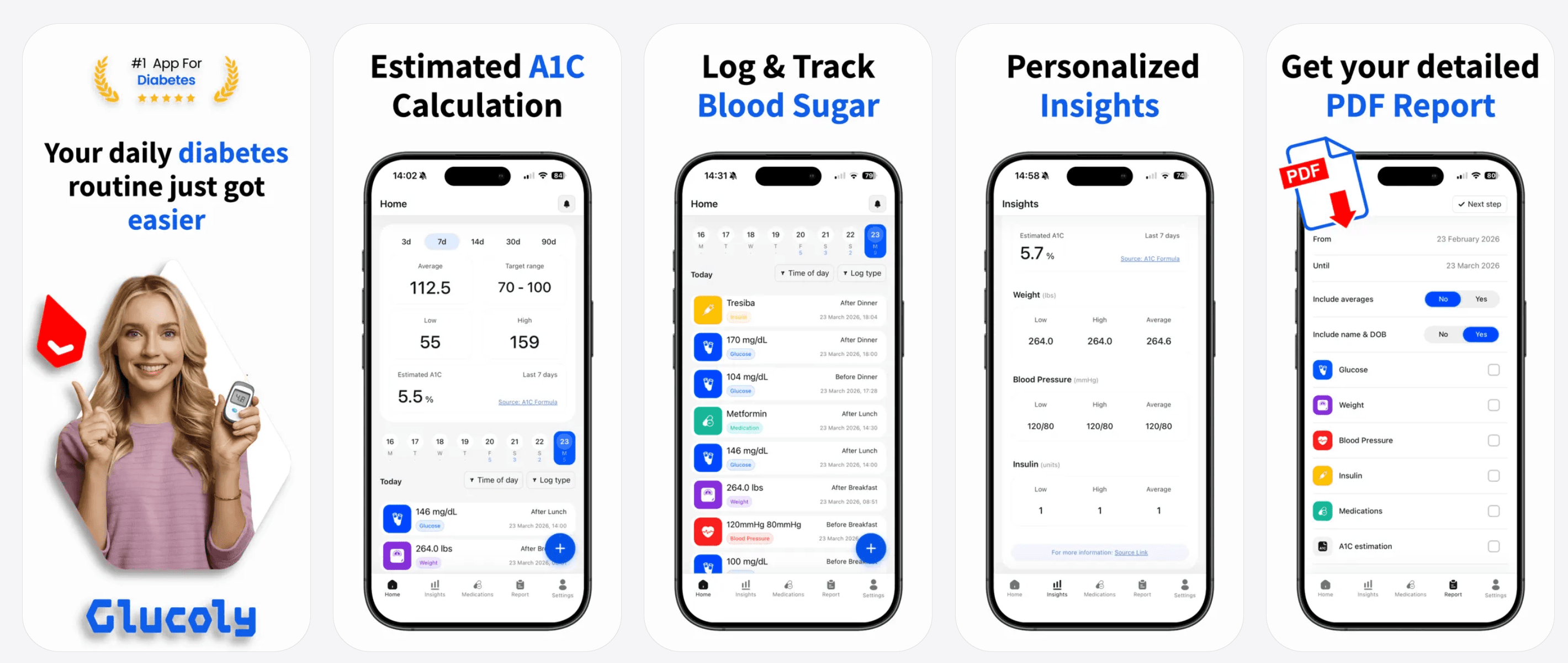
- Use Glucoly's 7-day and 14-day trend views to see whether your overall control changes when you regularly consume certain sugar-free products.
This article is for general education and is not medical advice. Consult your healthcare provider before making changes to your treatment plan. Sugar alcohol tolerance and insulin dosing strategies should be discussed with your diabetes care team.
Frequently Asked Questions
Is erythritol safe for diabetics?
- Erythritol has a glycemic index of approximately 0 and causes virtually no rise in blood glucose or insulin levels, making it one of the safest sweetener options for people with diabetes.
- It is largely absorbed in the small intestine and excreted unchanged in urine, which also makes it one of the most digestively tolerable sugar alcohols.
- Some observational research has raised questions about erythritol and cardiovascular risk - the data is preliminary and based on associations, not causation. Discuss any concerns with your healthcare provider.
- In typical amounts found in food products, erythritol is generally considered safe for people with diabetes by most clinical guidelines.
Do sugar alcohols spike blood sugar?
- Most sugar alcohols cause a smaller blood sugar rise than table sugar - but 'smaller' does not mean 'zero.'
- Erythritol: GI ~0 - essentially no blood sugar impact.
- Xylitol: GI ~7, sorbitol: GI ~9 - modest, slow glucose rise for most people.
- Maltitol: GI ~35 - a meaningful glucose rise, roughly half the impact of table sugar. Products sweetened primarily with maltitol can spike blood sugar noticeably.
- The only way to know your personal response is to measure your glucose before and after eating the product.
What is the difference between sugar and sugar alcohol?
- Table sugar (sucrose) is a disaccharide of glucose and fructose - it is fully absorbed and raises blood glucose rapidly. Glycemic index of sucrose is approximately 65.
- Sugar alcohols are polyols with a different chemical structure - they are incompletely absorbed, providing fewer calories and a slower, smaller glucose rise.
- Sugar alcohols are not fermented by yeast, so they do not contribute to tooth decay the way sugar does - a benefit recognized by the American Dental Association.
- Both are listed on nutrition labels under Total Carbohydrates, but sugar alcohols are typically listed separately so you can distinguish them.
Sources
- American Diabetes Association. Standards of Medical Care in Diabetes 2024. diabetes.org
- American Dental Association. Diet and Tooth Decay. ada.org
Test how 'sugar-free' products affect your glucose by logging before and after in Glucoly - free on the App Store and Google Play.
Download GlucolyShare this article
Related Posts
How Protein Affects Blood Sugar Levels in Diabetes
Protein raises blood sugar slowly and much less than carbs. Learn how gluconeogenesis works, best protein sour…
Read more →NutritionCarb Counting for Diabetes: A Beginner's Step-by-Step Guide
Carb counting helps you manage blood sugar by tracking grams of carbs per meal. This beginner guide covers how…
Read more →NutritionIntermittent Fasting for Type 2 Diabetes: Does It Work?
Intermittent fasting can lower A1C and blood sugar in type 2 diabetes — but carries hypoglycemia risk with ins…
Read more →