Yes — prediabetes, stress, illness, and some medications can raise blood sugar without diabetes. Learn the causes, what numbers to watch, and what to do.
Yes — blood sugar can rise above normal levels in people who do not have diabetes. This is called non-diabetic hyperglycemia. Causes include prediabetes, stress, illness, certain medications, hormonal conditions, and reactive hypoglycemia rebound. A single high reading does not confirm diabetes — diagnosis requires repeated elevated readings or an oral glucose tolerance test. However, consistently high blood sugar without a diabetes diagnosis still warrants medical evaluation.
In this article
- What Is Non-Diabetic Hyperglycemia?
- Causes of High Blood Sugar Without Diabetes
- Prediabetes: The Most Common Cause
- Stress Hyperglycemia: High Blood Sugar During Illness
- High Blood Sugar After Meals in Non-Diabetic People
- When to See a Doctor About High Blood Sugar
- How to Lower Blood Sugar Without Diabetes
- Is a blood sugar of 150 mg/dL after eating normal if I don't have diabetes?
- Can anxiety cause high blood sugar?
- Can you develop diabetes from consistently high non-diabetic blood sugar?
At a Glance
- Normal fasting blood sugar: 70–99 mg/dL; prediabetes: 100–125 mg/dL; diabetes: 126+ mg/dL on two tests
- High blood sugar without diabetes can be caused by prediabetes, stress, illness, steroids, or hormonal disorders
- A single elevated reading does not diagnose diabetes — repeated testing is required
- Approximately 98 million American adults have prediabetes, and most do not know it (CDC)
- Non-diabetic people using CGMs often see temporary spikes above 140 mg/dL after high-carb meals — this is not necessarily a sign of disease
- If fasting blood sugar is consistently above 100 mg/dL, see your doctor for an A1C test
What Is Non-Diabetic Hyperglycemia?
Non-diabetic hyperglycemia refers to blood sugar that is elevated beyond the normal range in someone who has not been diagnosed with diabetes. It may represent prediabetes (a precursor to type 2 diabetes), a temporary response to illness or medication, or a sign of an underlying hormonal condition. It can also occur in non-diabetic people using continuous glucose monitors who observe spikes after large carbohydrate-heavy meals.
Causes of High Blood Sugar Without Diabetes
Several distinct conditions and circumstances can raise blood sugar above the normal range in people who have not been diagnosed with diabetes. Understanding the underlying cause is essential to determining the right course of action.
- Prediabetes: the most common cause — fasting blood sugar of 100–125 mg/dL or A1C of 5.7–6.4%; often no symptoms
- Acute illness or infection: inflammatory hormones (cortisol, cytokines) raise blood sugar during any significant infection or fever
- Stress: emotional or physical stress triggers cortisol release, which raises blood sugar in anyone — diabetic or not
- Medications: corticosteroids (prednisone), antipsychotics, some antidepressants, diuretics, and beta-blockers can all raise blood sugar
- Pancreatic conditions: pancreatitis, pancreatic cancer, or surgical removal of the pancreas can impair insulin production
- Hormonal disorders: Cushing's syndrome (excess cortisol), acromegaly (excess growth hormone), polycystic ovary syndrome (PCOS), and hyperthyroidism can all cause insulin resistance
- Post-surgical stress hyperglycemia: major surgery triggers a stress response that raises blood sugar even in non-diabetic patients
- Pregnancy: gestational diabetes or even normal pregnancy hormones can elevate blood sugar temporarily
Prediabetes: The Most Common Cause
Prediabetes is the single most common reason a non-diabetic person has consistently elevated blood sugar. It affects an enormous portion of the population and almost always goes undetected because it produces no obvious symptoms. Understanding its diagnostic thresholds — and its reversibility — is critical.
- Prediabetes affects approximately 98 million US adults (CDC) — roughly 1 in 3 people
- Fasting blood sugar: 100–125 mg/dL on two separate tests
- A1C: 5.7–6.4% on two separate tests
- Oral glucose tolerance test (OGTT): 140–199 mg/dL two hours after a 75g glucose drink
- Most people with prediabetes have no symptoms — it is discovered through routine blood tests
- Without intervention, 15–30% of people with prediabetes develop type 2 diabetes within 5 years
- Prediabetes is reversible: weight loss, exercise, and dietary changes can return blood sugar to normal
Stress Hyperglycemia: High Blood Sugar During Illness
- Stress hyperglycemia is well-documented in hospital settings — up to 40% of hospitalised patients without known diabetes have elevated blood sugar
- It is caused by the hormonal stress response: cortisol, glucagon, and catecholamines all raise blood glucose
- Common triggers: surgery, heart attack, stroke, severe infection, major trauma
- It usually resolves when the underlying illness or stressor resolves
- It can unmask prediabetes or early type 2 diabetes — persistent hyperglycemia after recovery warrants follow-up testing
- Sometimes treated with temporary insulin in the hospital even in non-diabetic patients
High Blood Sugar After Meals in Non-Diabetic People
People without diabetes who wear CGMs often observe blood sugar rising above 140 mg/dL after large, high-carbohydrate meals. This is not necessarily pathological — non-diabetic blood sugar can briefly spike after very large carb loads (pizza, white rice, pasta) and return to normal within 1–2 hours. What matters is how quickly blood sugar returns to baseline. If it is back below 120 mg/dL within 2 hours, this generally reflects normal glucose regulation.
When to See a Doctor About High Blood Sugar
- Fasting blood sugar consistently above 100 mg/dL on home monitoring
- Post-meal blood sugar still above 140 mg/dL two hours after eating, repeatedly
- Symptoms of hyperglycemia: excessive thirst, frequent urination, fatigue, blurred vision
- A1C result of 5.7% or above on a routine blood test
- Family history of type 2 diabetes combined with excess weight around the abdomen
- Blood sugar above 200 mg/dL with symptoms on any reading, regardless of diabetes status
How to Lower Blood Sugar Without Diabetes
- Reduce refined carbohydrates: white bread, rice, pasta, sugary drinks — these cause the sharpest post-meal spikes
- Walk after meals: a 10-minute walk after eating significantly blunts post-meal glucose peaks
- Lose weight if overweight: even 5% of body weight lost substantially improves insulin sensitivity
- Sleep 7–9 hours: sleep deprivation raises cortisol and worsens glucose regulation even without diabetes
- Reduce chronic stress: sustained high cortisol directly worsens insulin resistance
- Increase fibre intake: vegetables, legumes, and whole grains slow glucose absorption
- Limit alcohol: alcohol initially lowers blood sugar then causes rebound highs — and disrupts overnight glucose regulation
Frequently Asked Questions
Is a blood sugar of 150 mg/dL after eating normal if I don't have diabetes?
A reading of 150 mg/dL one hour after a large carbohydrate-heavy meal is within the range seen in many people without diabetes. The key question is whether it returns to below 120 mg/dL within 2 hours. If readings consistently remain above 140 mg/dL two hours after eating, this falls in the prediabetes range and warrants a formal A1C test. One-hour post-meal peaks alone are not used for diagnosis.
Can anxiety cause high blood sugar?
Yes. Anxiety triggers the same fight-or-flight hormonal response as physical stress — cortisol and adrenaline release raises blood sugar. Severe anxiety or panic attacks can cause significant temporary glucose spikes. Chronic anxiety keeps cortisol elevated and contributes to long-term insulin resistance. Managing anxiety through exercise, therapy, and sleep supports better glucose regulation even in people without diabetes.
Can you develop diabetes from consistently high non-diabetic blood sugar?
Yes. Consistently elevated blood sugar in the prediabetes range (fasting 100–125 mg/dL or A1C 5.7–6.4%) significantly increases the risk of progressing to type 2 diabetes. Without lifestyle intervention, 15–30% of people with prediabetes develop type 2 diabetes within 5 years. Lifestyle changes — weight loss, exercise, and dietary modification — can prevent or delay this progression in most people.
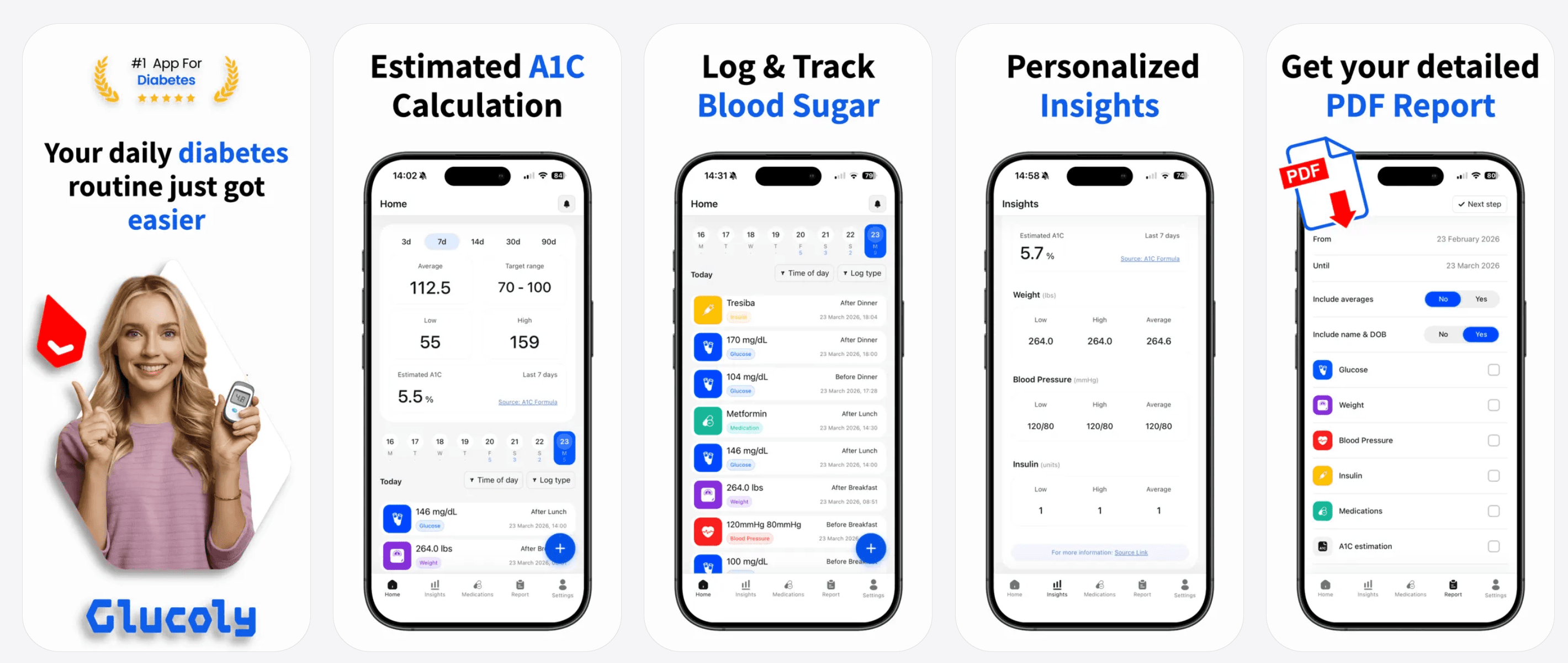
Not sure what your numbers mean? Log them in Glucoly and watch the trend — free to download with unlimited logging, plus Glucoly Premium for estimated A1C and detailed reports.
Download GlucolySources
- American Diabetes Association (ADA) — diabetes.org
- Mayo Clinic — mayoclinic.org
- Centers for Disease Control and Prevention (CDC) — cdc.gov/diabetes
- National Institute of Diabetes and Digestive and Kidney Diseases (NIDDK) — niddk.nih.gov
Share this article
Related Posts
What Is LADA (Type 1.5 Diabetes)? Symptoms and How It Differs from Type 1 and Type 2
LADA (type 1.5 diabetes) is autoimmune diabetes that develops slowly in adults, often misdiagnosed as type 2.…
Read more →EducationDiabetic Retinopathy: How Diabetes Affects Your Eyes (and How to Protect Them)
Diabetic retinopathy is the leading cause of blindness in adults — largely preventable. Learn the stages, symp…
Read more →EducationWhat Is Diabetic Ketoacidosis (DKA)? Warning Signs You Must Know
DKA is a life-threatening diabetes emergency. Know the warning signs — fruity breath, vomiting, confusion — an…
Read more →